
The room goes quiet in a particular way when a blindfold goes on. The hum of the fridge gets louder. A hand hovers near your shoulder, and you feel it a full second before it lands.
Nothing has happened yet, and your whole body is paying attention.
That is the idea behind sensory play: slowing down and narrowing the senses on purpose, so that attention does the work that novelty usually does. It needs very little gear. A soft, well-fitted blindfold is often the whole kit.
Our guide to blindfolds and sensory play already covers the how-to: sequence, touch, aftercare. This guide asks the question underneath it. Why does taking one sense away bring two people closer?
What sensory play changes between two people
Most intimacy runs on a script. Same room, same order, one eye on the clock. Sensory play interrupts the script without asking anyone to do anything dramatic.
Three things shift when it works: attention, anticipation and trust. None of them needs an expert. All of them are easier to get with the right few objects, and easier to lose with the wrong ones, which is why this guide also names the pieces we stock.
Attention: the quiet gift of one fewer input
Curious why a plain scarf over the eyes can feel like more than it should? Because attention is limited, and sight makes a big claim on it.
Take sight out and the attention has to go somewhere. It goes to skin, to breath, to the sound of a voice a few inches away. The person giving touch notices more too, because they are watching a face that has stopped performing. This is the same kind of closeness we describe in the intimacy pyramid, where sensory closeness is one of three layers that build on each other.
Try this: pick one sense to quiet and leave the rest alone. A blindfold for twenty minutes beats a blindfold, earplugs and a playlist all at once.
There is a reason this suits a tired evening as well as a planned one. If your days leave little attention to spare, intimacy after a long day is worth reading alongside this.
Anticipation: the part that happens before touch
Why does the second before a touch often matter more than the touch? Because the wait is where the feeling builds.
When you cannot see what is coming, every small sound becomes a question. Where? How soft? How soon? That held-open not-knowing is the point, and it costs nothing. A slow pause does more than any new object.
Try this: announce nothing. Let the first contact be a forearm or a fingertip, then wait longer than feels natural before the next one.
If you want to talk about this beforehand, and most couples do, the conversation before the conversation is a gentle way to open it.
Trust: why handing over control is the point
Why does lying still with your eyes covered feel closer than a dozen good conversations? Because you are letting someone else carry the watching.
The person who cannot see is relying on the other to be careful, and the careful partner is relying on honest signals back. Every evening that goes well adds to a small, real stock of trust. This is the same ground what emotional intimacy actually means covers from the other direction: closeness comes first, and the physical part follows it.
It also depends, and that is worth saying plainly. For some people, losing sight feels unsafe rather than soft. If a blindfold makes your heart race in a way you do not enjoy, that is information, not a failure. Start with eyes open and one other sense changed, or skip the blindfold entirely.
What to look for in a blindfold
Wondering what separates a blindfold you forget about from one you keep adjusting? Three details: how it closes around the nose, what touches the skin, and how it fastens.
The fit matters more than it sounds. A mask that slips every time someone turns their head breaks the quiet it was bought to protect.
No-peek fit: Black Label LoveBlind, black microfiber
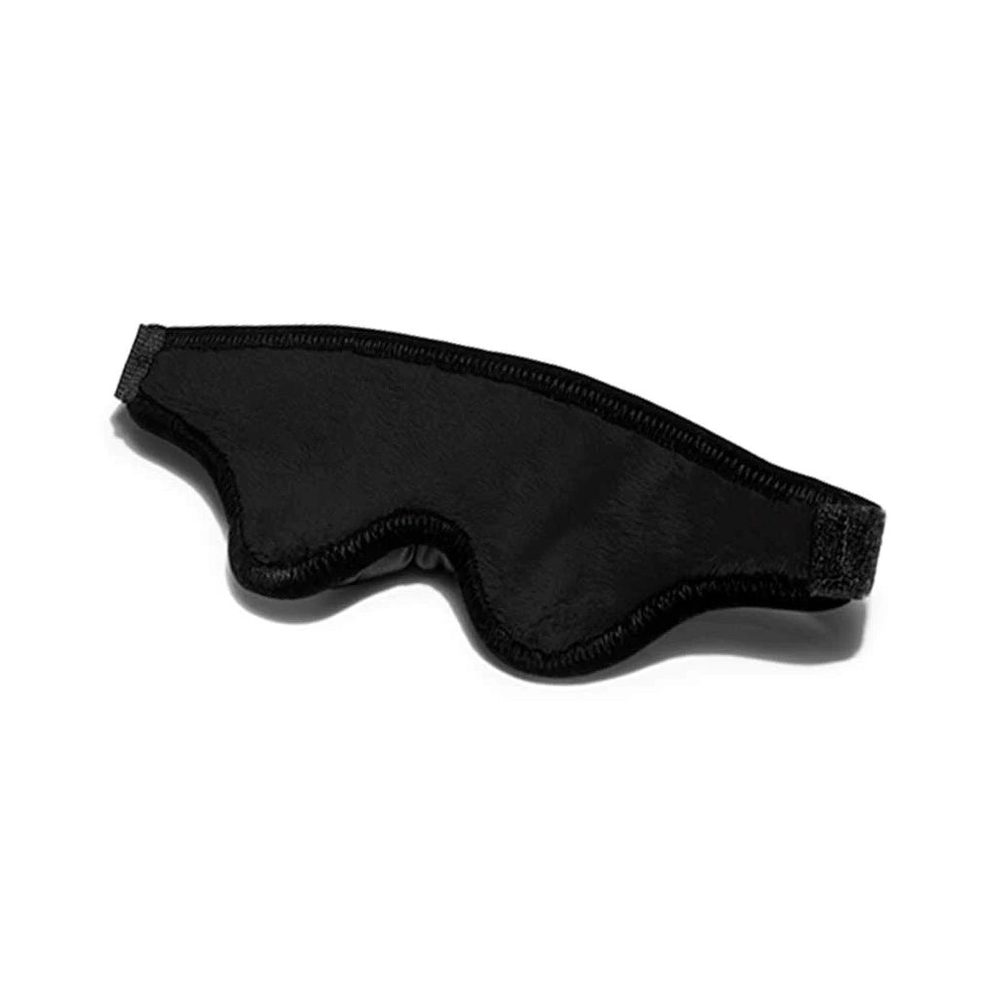
The Black Label LoveBlind Plush Blindfold in black microfiber ($79.99) is the one we would start with. Its own page lists an adjustable hook-and-loop strap, a shaped no-peek nose bridge and microfiber edges where the mask meets the skin.
The listing does not publish a light-blocking figure or a mask width. It is wrong for anyone who wants total darkness verified by a number, and for anyone who finds a strap across the back of the head restless.
A softer face: LoveBlind, fluffy red
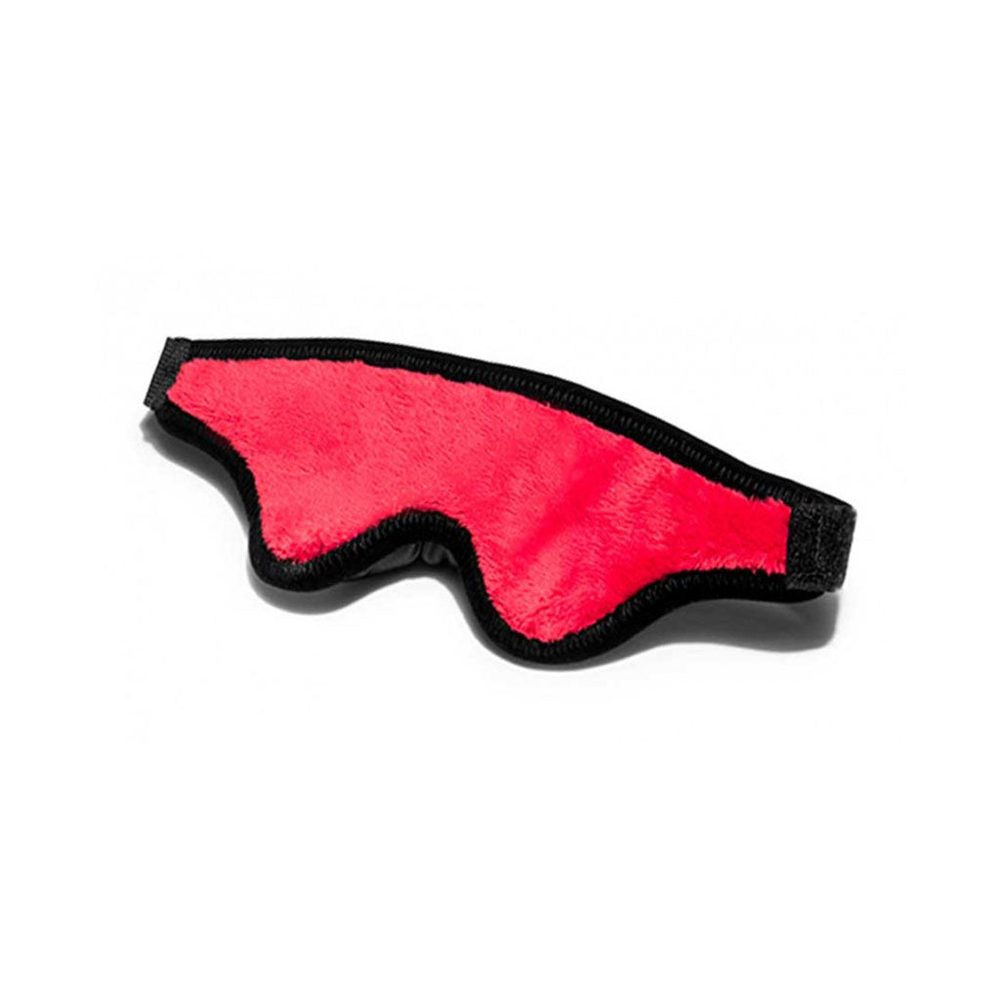
The fluffy red LoveBlind ($69.99) shares the same strap and nose-bridge design, with a plush red face. It costs $10 less than the black version, and it suits someone who wants the feel to be as gentle as possible.
It is not the better choice if you want the mask to disappear visually. The red is a statement, and some people prefer black precisely because it asks for nothing.
Ribbon instead of a mask: Silky Tie-ups

Silky Tie-ups in red satin ($89.99, also in black) are ribbon ties made of satin. Liberator describes them as usable over the eyes as a blindfold or looped around wrists or ankles. Our listing states two 48-inch sashes, though Liberator’s own page does not publish a length.
A tied ribbon adjusts to any head shape and releases quickly. The listing does not mention a nose bridge, so it will not block light the way a shaped mask does. It is the wrong pick if you need the room to be dark. Black satin is the same product in another colour.
Touch and temperature: what to add after the blindfold
Once sight is quiet, what should the skin be given? The answer is rarely a gadget. It is usually one warm thing, delivered slowly.
A massage candle fits that role. The two candles below are both made by Intamo Pleasurables, with soy wax that the maker says melts at a lower temperature and cools quickly on contact with skin. Intamo publishes a 30 to 40 hour burn time and a 180 g candle on its own product page, and no melt temperature in degrees.
Warm and woody: Lovely Day
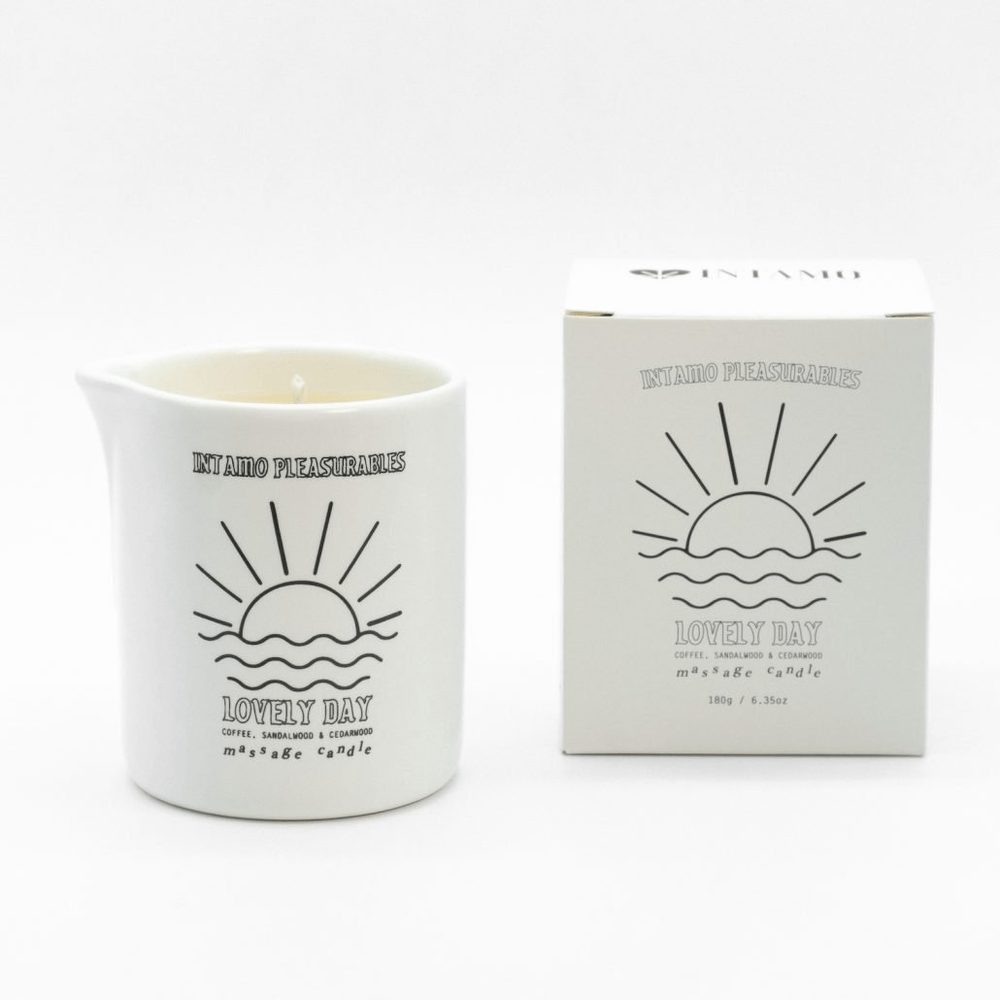
Lovely Day ($64.99) is scented with coffee, sandalwood and cedarwood oils. It suits an evening you want to feel grounded and slow.
Cool and clean: Space Oddity
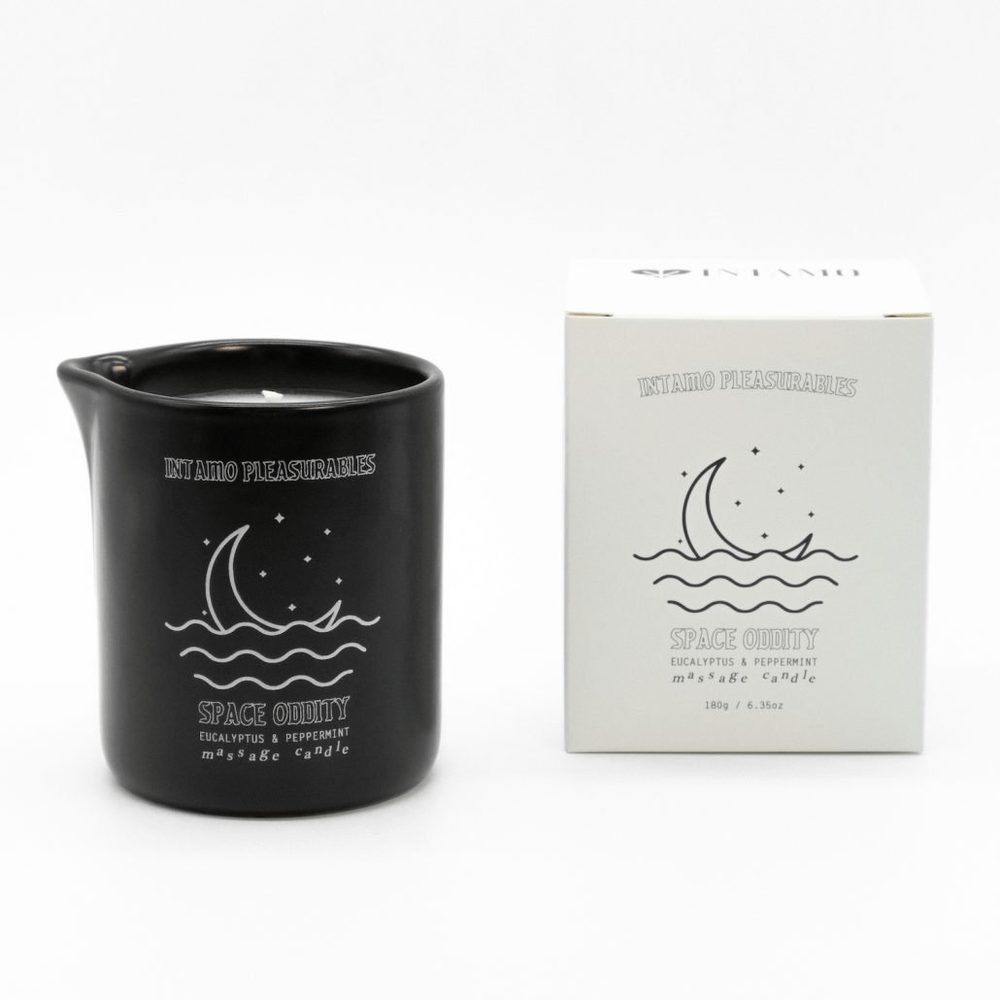
Space Oddity ($64.99) pairs eucalyptus and peppermint. It reads fresher and lighter than Lovely Day.
Both are wrong for anyone with a tree nut allergy, since the ingredient lists include sweet almond oil, and for anyone sensitive to strong scent. Before the first pour, test the wax on your own inner wrist. The wider massage oils and candles range has other scents.
Light, sound and the room itself
What does the room need to do its part? Less than you would think, and it should be settled before anyone is blindfolded.
Keep the space warm, because a person lying still cools down quickly. Silence your phone. Keep anything breakable off the nearby surfaces, and keep a lit candle where nobody can knock it over. Never leave a candle burning unattended.
A blindfolded person cannot see you reach for something. Say the room is ready before you begin, and keep the logistics unsurprising so the surprise can live in the touch.
How to use all of this so it feels easy, not awkward
Plan the evening in the order it should unfold. This is a suggestion, not a script.
- Agree a stop signal first, in plain words or a spoken word. Safe words and consent covers this in full.
- Put the blindfold on before anything else, and let eyes and breathing settle for a minute.
- Change one thing at a time: a hand, a warm palm, a voice, then a pause.
- Check in with a question that takes one word to answer.
- Remove the blindfold slowly, and let the person look at you before anyone speaks.
If you want something to talk about before or after, intimacy questions that go somewhere is a good place to start.
The trade-offs: when sensory play is right, and when it is not
It is right for couples who feel rushed, who want closeness without escalation, or who are curious about handing over control in a very small way. It is a gentle first step before anything more structured, such as playful control built on trust.
It is not right for an evening when either person is tense, distracted or irritated. It is not right if one person is saying yes only to be agreeable. And it is a poor fit for anyone who wants the physical equipment to carry the experience. The objects here do very little. The attention does the rest.
If you do want to explore further, a beginner’s guide to restraints is the careful next step.
Care and longevity
Liberator’s page lists the Silky Tie-ups as machine washable. The LoveBlind listing publishes no care instructions that we could find, so spot-clean it gently and let it dry in the open air rather than assuming a wash cycle is safe.
Let a massage candle cool fully before you move it, and keep it where the jar will not tip. Afterwards, give the evening its own ending: warmth, water, a few quiet minutes. Aftercare is not only for intense scenes.
Finding your fit
Pick the one that matches the evening you are planning.
- First blindfold: Black Label LoveBlind, black microfiber, $79.99, shaped no-peek nose bridge.
- A softer, lower-cost mask: LoveBlind, fluffy red, $69.99, plush face.
- Ribbon, adjustable: Silky Tie-ups, red satin, $89.99.
- Warm and grounding: Lovely Day massage candle, $64.99.
- Cool and fresh: Space Oddity massage candle, $64.99.
- Everything in one box: Naughty Gift Set, $144.99, a satin blindfold and restraint, a massage candle, a card game and a small vibrator. Choose it as a gift, not as a sensory-play starter.
- More to look at: Gags & Blindfolds, Massage Oils & Candles and gift sets.
Sensory play is not about the objects. It is a way of giving someone your whole attention and trusting them with theirs.
Start small, go slowly, and let the quiet do the work.
The Wednesday letter
The 7-Day Spark, free, then one letter every Wednesday
Seven small evenings to start, plus a short guide to your first piece. After that, one considered letter each Wednesday, never more than one a week.
By subscribing you agree to receive emails from XtasyXperience. Unsubscribe any time. See our Privacy Policy.
