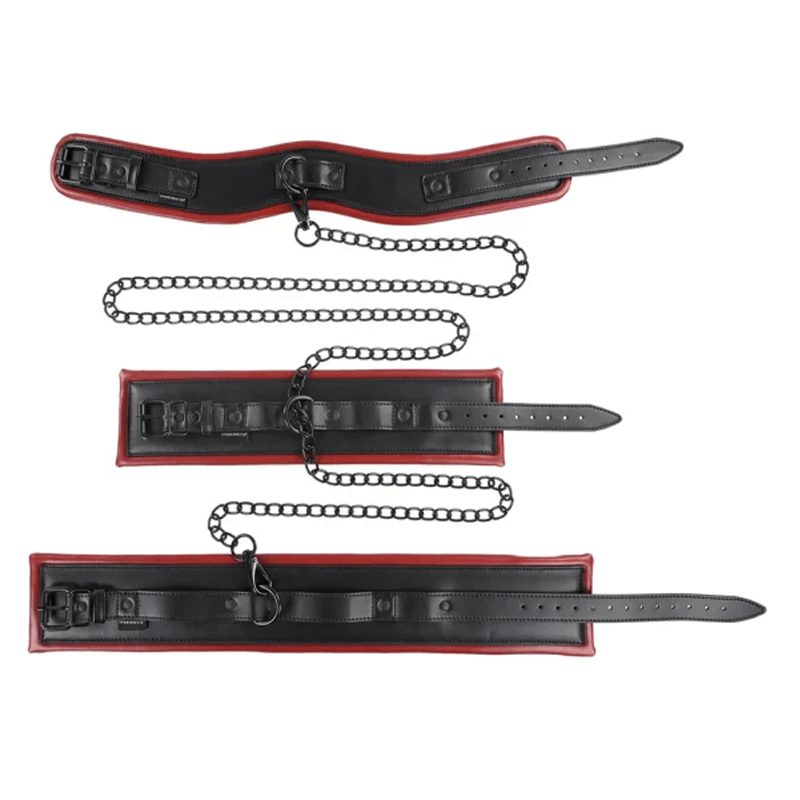

Posted on

Blindfolds and Sensory Play

Blindfolds and Sensory Play

Remove one sense and the others become extraordinary. Blindfolds are among the simplest, most accessible, and most transformative tools in sensory play — here’s how to use them well.

A blindfold is technically the simplest restraint in existence. No knots. No mechanisms. No skill required beyond placing it over your partner’s eyes. And yet the experience it creates is disproportionately profound — often described by first-timers as among the most intense intimate experiences they’ve had, without any escalation in what’s physically happening.

The reason is neurological. When vision is removed, the brain doesn’t go quiet — it heightens everything else. Auditory processing sharpens. Touch becomes more vivid. The anticipatory circuits go into overdrive: what’s coming? Where? When? That sustained not-knowing, combined with sustained trust, produces a state that’s genuinely difficult to achieve through other means.

What Sensory Deprivation Does, Specifically

Sensory play is the intentional restriction or alteration of one or more senses to amplify intimate experience. Blindfolds are the most common entry point — but the category includes anything that changes the sensory environment: earplugs, specific textures against skin, temperature, scent.

In the context of restraint play, sensory deprivation and physical restraint are natural complements. Blindfolded and lightly restrained, the person receiving attention is entirely dependent on their partner’s choices. The person giving attention has the full range of sensation available to them as tools. Both positions require and create a quality of attention that ordinary intimacy rarely produces.

Starting with a Blindfold

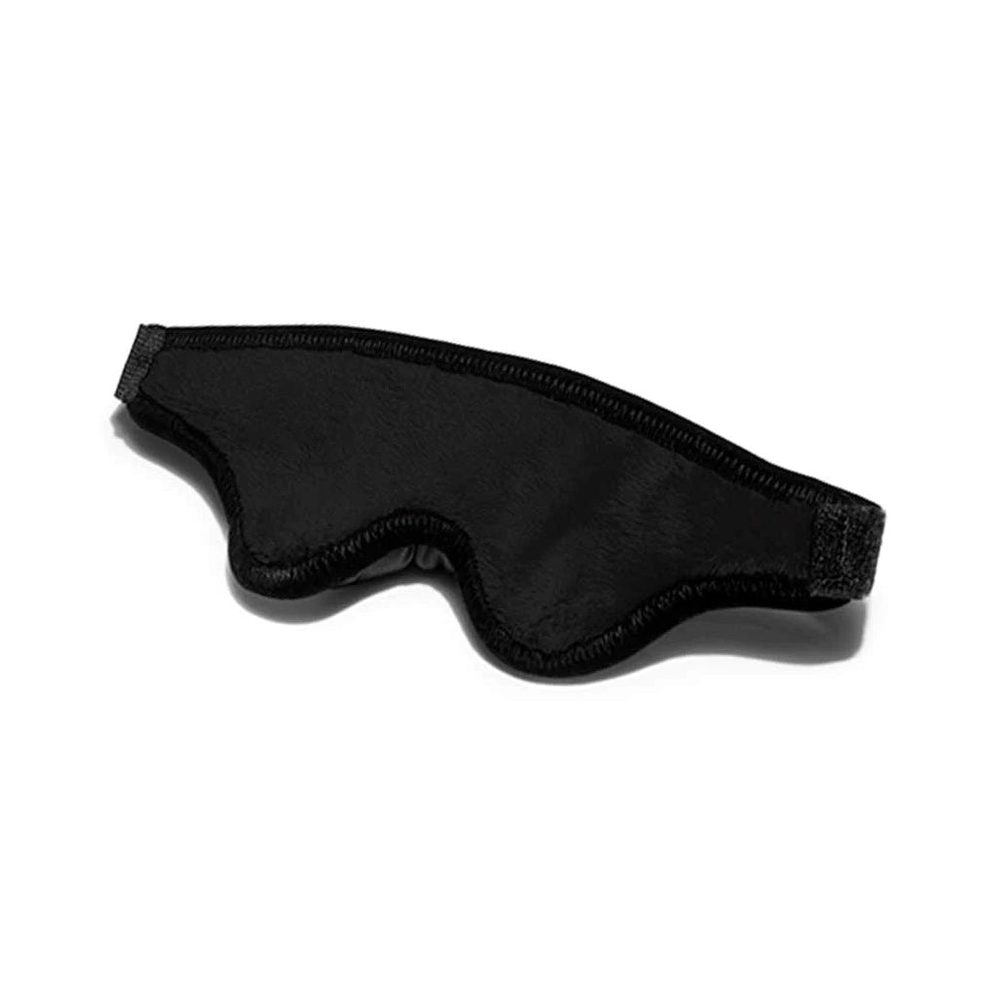
A note on the catalogue first, in the interest of not sending you looking for something that isn’t here: an earlier version of this guide named a “Sportsheets Satin Blindfold,” which this store has never carried. The blindfold actually worth recommending is the Black Label LoveBlind Plush Blindfold, $79.99 in black microfiber (also available in fluffy red, $69.99). Its own product page lists an adjustable velcro strap for a fit that holds without pressure, plus a shaped “no-peek” nose bridge and high-quality microfiber edges against the eye area — the same comfortable, quick-to-remove qualities that make soft cuffs the right starting point for physical restraint.
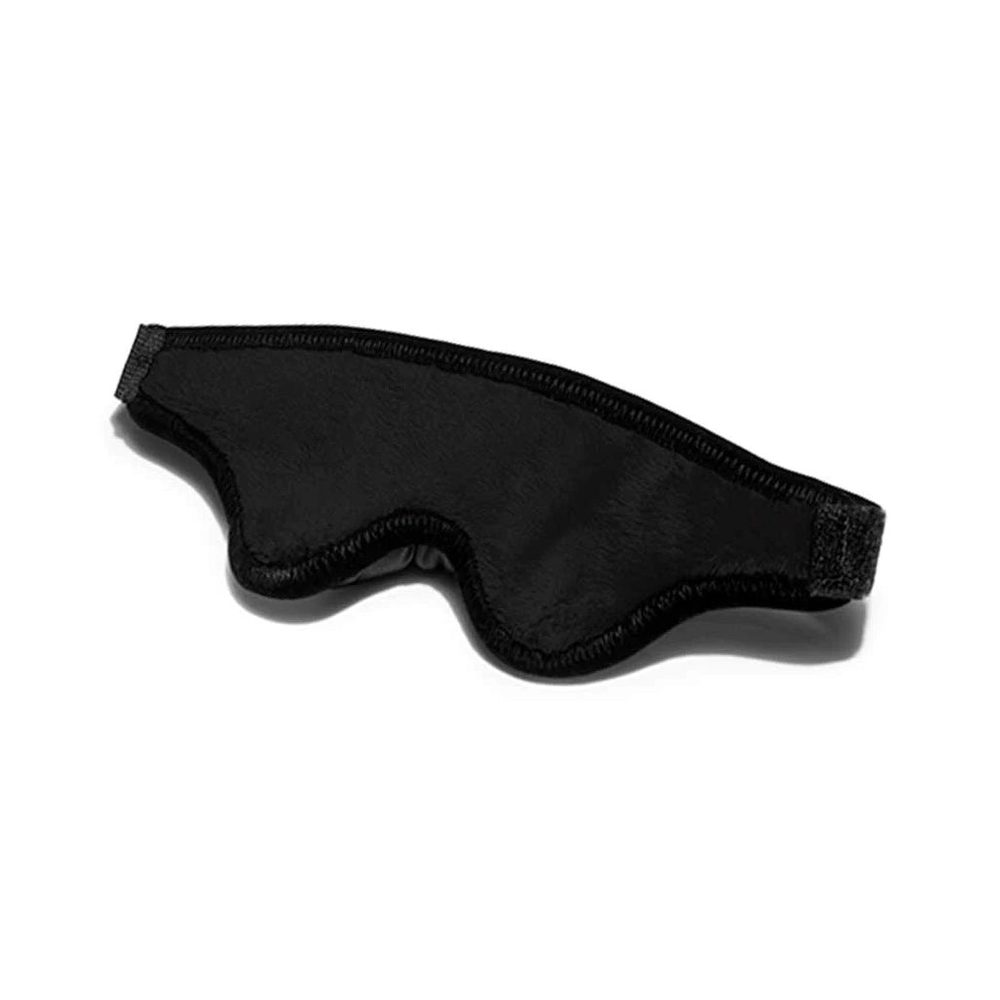
Black Label LoveBlind plush microfiber blindfold with adjustable velcro strap and contoured no-peek nose bridge, shown against a white background

A basic blindfold doesn’t have to be purpose-made. A soft, clean scarf or sleep mask can work for an initial exploration. But if the experience resonates — and it usually does — a quality blindfold designed for intimacy is worth having. The difference in comfort and light-blocking performance is noticeable.

The Four Sensory Dimensions Worth Exploring

Vision

The most accessible starting point. Remove sight and everything else intensifies. Particularly powerful when the sighted partner moves silently, uses varied touch, or introduces temperature — anything that becomes unpredictable.

Touch & Texture

Vary what touches the skin: fingertips, fabric, a feather, ice, breath at different distances. With vision removed, the skin reads each texture as if for the first time. This is the dimension that surprises people most.

Sound

Silence amplifies sensation. So does deliberate sound — whispering close to an ear, describing what’s about to happen, or using ambient music to shift mood. The blindfolded person’s auditory sensitivity is genuinely heightened.

Anticipation

Technically not a sense — but the most powerful element in the room. The pause before touch. The approach announced and then delayed. Anticipation is built on the impossibility of seeing what’s coming, and it produces sensation before contact is made.

Combining Blindfolds with Physical Restraint

Blindfolded and lightly restrained — with soft cuffs from the restraints collection ↗ shop — the receiving partner’s experience becomes significantly more focused. There’s nowhere to redirect attention. The only available option is to be present to what is happening, and to trust that the person causing it knows what they’re doing.

That trust is the real subject of sensory play. Every session where both partners feel genuinely safe and genuinely present builds more of it. Which is why this kind of play, done well, tends to deepen relationships in ways that extend well beyond the bedroom.

Make sure a safe word and check-in protocol is established before any session that combines physical restraint with sensory restriction — our companion guide to safe words and consent in restraint play covers this in full.

What to Try in Your First Sensory Play Session

  • Apply the blindfold first, before any physical restraint. Let your partner adjust to the darkness and trust their other senses before adding more.

  • Move slowly and with deliberation. Silence before touch is its own form of sensation.

  • Vary touch pressure, temperature, and location unpredictably. The unexpectedness is the point.

  • Narrate — or don’t. Both approaches work; choose intentionally based on what you know your partner responds to.

  • End the session by removing the blindfold slowly and making soft visual contact before speaking. The return to ordinary sensory experience is itself a transition worth marking.

For those who find that sensory play and restraint open up an interest in more structured power exchange, our guide to dominance and submission explores where this experience can lead — and how to navigate it with the same intentionality you’ve brought to this one.

The aftercare note

Sensory deprivation, like physical restraint, can produce an altered state in the receiving partner — a floating, disconnected feeling that takes time to ground. Plan for aftercare: warmth, skin contact, gentle conversation, time. The transition back to ordinary reality is part of the experience.

Explore blindfolds, sensory play accessories, and the full restraints collection.
Shop Gags & Blindfolds

Posted on

Safe Words and Consent in Restraint Play

Safe Words and Consent in Restraint Play

A safe word isn’t a buzzkill — it’s what makes everything else possible. Here’s how to establish yours, what systems actually work, and why consent is the most intimate act in restraint play.

There’s a common misconception about safe words: that having one is a sign you don’t quite trust each other. The reality is precisely backwards. A safe word is what trust looks like in practice — a shared agreement that says: we are choosing this together, and we can unchoose it together, at any moment, without explanation or consequence.

That structure is what makes restraint play emotionally safe enough to be worth exploring. Without it, one partner is always holding a piece of themselves back — monitoring, calculating, managing, rather than fully present. With it, both people can actually inhabit the experience. This post covers how to set up a consent framework that works from your very first session.

What a Safe Word Actually Is — and Isn’t

A safe word is a pre-agreed signal that causes everything to stop immediately. That’s it. It’s not a complaint, not a failure, not a criticism of your partner. It’s a word that functions like an emergency exit: you hope not to need it, but its presence is what makes the building worth entering.

Safe words work because they are unambiguous in a way that normal language isn’t. During intimacy, “stop” or “no” can sometimes be part of the experience — said in play, used to heighten tension, or moaned rather than meant. A safe word removes all ambiguity. When it’s said, everything pauses. No interpretation required.

Choosing a Safe Word That Works

The word should be easy to remember under pressure and easy to say under any physical circumstances. Short, clear words work best. Single-syllable words are even better. Some options that hold up well:

  • Red— drawn from the traffic light system (red = stop, yellow = slow down, green = all good). Most widely recognised; minimal explanation needed.

  • Pause— specific and unambiguous. Especially useful if you want to distinguish between stopping completely and slowing to check in.

  • A word with no erotic association— “pineapple,” “Tuesday,” “umbrella.” The strangeness of the word is itself a feature: it’s impossible to say accidentally or ambiguously.

Avoid: words that sound like enthusiasm, words that could be misheard as another common word, and words that require explanation mid-session.

The Traffic Light System: Built for Ongoing Communication

The traffic light system goes beyond a single stop word and gives you a three-state vocabulary that works throughout a session:

🟢

Green: Everything is good

Used proactively to signal comfort, enjoyment, and willingness to continue or escalate. Asking “colour?” mid-session and receiving “green” gives the active partner confidence to proceed.

🟡

Yellow: Slow down or adjust

Not a stop — a recalibration signal. Something needs attention: a position is getting uncomfortable, intensity should decrease, a check-in is needed. The session continues, adjusted.

🔴

Red: Full stop

Everything stops immediately. No questions asked, no explanations required. The only acceptable response to “red” is to stop, release, and check in with genuine care.

Consent Before, During, and After

Consent in restraint play isn’t a single moment — it’s a practice that spans the entire arc of a session.

Before

Have the conversation before you’re in the moment. This means: what are you each interested in trying? What are you not ready for? Are there specific sensations, positions, or scenarios that feel off-limits right now? Establish the safe word. Establish a check-in frequency if you plan a longer session. This conversation is itself an intimate act — it requires honesty and vulnerability that carries over into everything that follows.

During

Check in periodically, especially in early sessions. Simple questions — “how are you feeling?” or “colour?” — don’t interrupt the experience; they deepen it. They demonstrate presence and attention. The restrained person’s signals — body language, breathing, facial expression — are data too. Reading them well is a skill worth developing.

After

Aftercare is the part that inexperienced guides often skip. It matters. After a restraint session — especially one with any intensity — both partners benefit from returning to ordinary connection: physical warmth, verbal reassurance, time together without agenda. This isn’t optional politeness. It’s the completion of the experience.

For those interested in exploring power exchange in a more structured way, our guide to dominance and submission dynamics explores how the consent framework developed in restraint play translates into longer-form power exchange.

What Happens If the Safe Word Is Used

Stop. That’s the entire protocol. Physically release the restraint or step back from whatever was happening. Bring your full attention to your partner. Ask what they need — more warmth, more space, more water, just quiet company. Do not ask for explanations, offer defences, or minimise what happened.

Using the safe word is not a failure of the session. It’s proof the system works. Many long-term restraint practitioners report that the sessions where the safe word was used taught them the most — about their own limits, their partner’s experience, and the communication that makes future sessions genuinely better.

Non-verbal safe signals

If a session involves a gag or any restraint of the mouth, a verbal safe word isn’t possible. Establish a non-verbal alternative before the session begins — a held object that can be dropped, three taps on a surface, a specific hand gesture. Treat the non-verbal signal with identical weight to the verbal one.

Ready to explore what becomes possible once the framework is in place? Our guides to restraint and sensory play cover what comes next, once consent is established.

The right restraints, used with the right communication, create something extraordinary.

Finding your fit

Three pieces that make the system above easier to run, rather than more elaborate.

  • Black Label Loveblind Plush Blindfold — plush, with a no-peek nose bridge. It takes sight and nothing else, so the verbal safe word stays available throughout. The one to start with.
  • Edge Interchangeable Ring Gag — interchangeable rings for varying openness. This is the case the non-verbal section above is written for: agree a dropped object or three taps before anything goes in.
  • Saffron Cuffs — vegan-leather wrist restraints with soft inner linings. They link together like a standard set or separate to attach elsewhere, so you choose how much is holding at once.

The honest trade-off: every piece here adds something to undo. Know how each one comes off before you use it under pressure, because a safe word only works as fast as the release does.

Shop Restraints Collection

Posted on

A Beginner’s Guide to Restraints

Abstract espresso and gold brand image for A Beginner's Guide to Restraints

Curious about restraint play but not sure where to begin? This guide walks you through materials, safety, communication, and what to buy first — without the overwhelm.

The conversation usually starts the same way. One partner mentions it — lightly, maybe as a question more than a statement — and the other either feels a flicker of curiosity or a flash of uncertainty. Restraints have a way of arriving in relationships like that: tentatively, hopefully, often without a roadmap.

This guide is the roadmap. It’s written for people who are curious and careful — who want to explore restraint play in a way that feels intentional rather than improvised. We’re going to cover materials, safety, how to communicate before you begin, and what to buy if this is your very first time. By the end, you’ll know exactly where to start.

What Restraint Play Actually Does

Before we get to products, it’s worth understanding the mechanism. Restraints work on two levels simultaneously. The person being restrained loses voluntary movement — and that loss, counterintuitively, produces a form of psychological release. When you cannot reach, cannot adjust, cannot redirect what’s happening, your nervous system stops its usual anticipatory work. What remains is heightened presence. Sensation feels amplified. Time slows down.

For the person doing the restraining, there’s a complementary shift: a greater sense of care and attentiveness. Good restraint play — at any level, even a soft tie looped loosely around a wrist — requires one partner to read the other closely. That sustained attention is itself intimate, in ways that ordinary touch doesn’t always produce.

This is why so many couples who try restraint play describe it as “unexpectedly connecting.” It’s not primarily about restriction. It’s about the quality of presence the restriction creates.

What This Catalogue Actually Stocks — and What It Doesn’t

A note before we go further: some beginner guides to restraints talk about three material families — soft fabric, rope, and rigid locking metal. We carry two of those, not three. There is no traditional rope in this catalogue, and nothing sold here is a hard-locking metal cuff. What we do carry is soft satin, structured vegan leather, and nylon or webbing tether kits — which, between them, cover most of what a beginner actually needs, just not under those three textbook labels. If rope work specifically is what you’re after, this isn’t the store for it yet; everything below is honestly one of the other two families.

Soft & Satin — the Easiest Place to Start

Long red satin ribbon-style bondage ties, loosely coiled on a white background

Ribbon-style satin ties are gentle on skin, put up no real resistance, and come off in seconds if either partner wants to stop. The Silky Tie-Ups ($89.99, in red or black satin) are the clearest example in the catalogue: no buckles, no hardware, nothing that can pinch. Best for: first-timers, light sessions, anyone who wants the psychological experience of restraint without the sensation of being properly locked down.

Structured Vegan Leather — More Presence, Still Easy to Remove

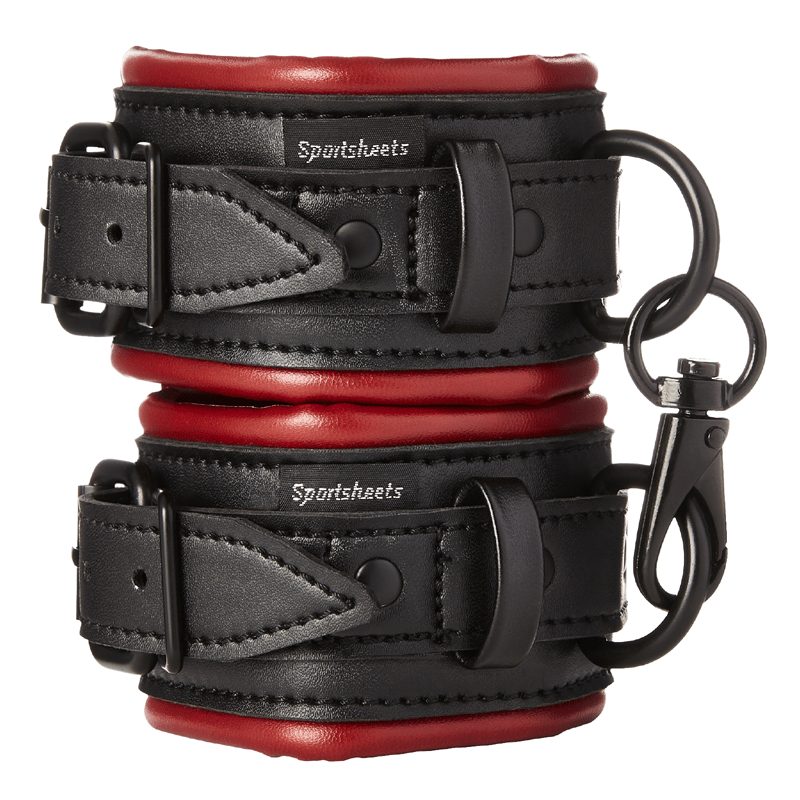
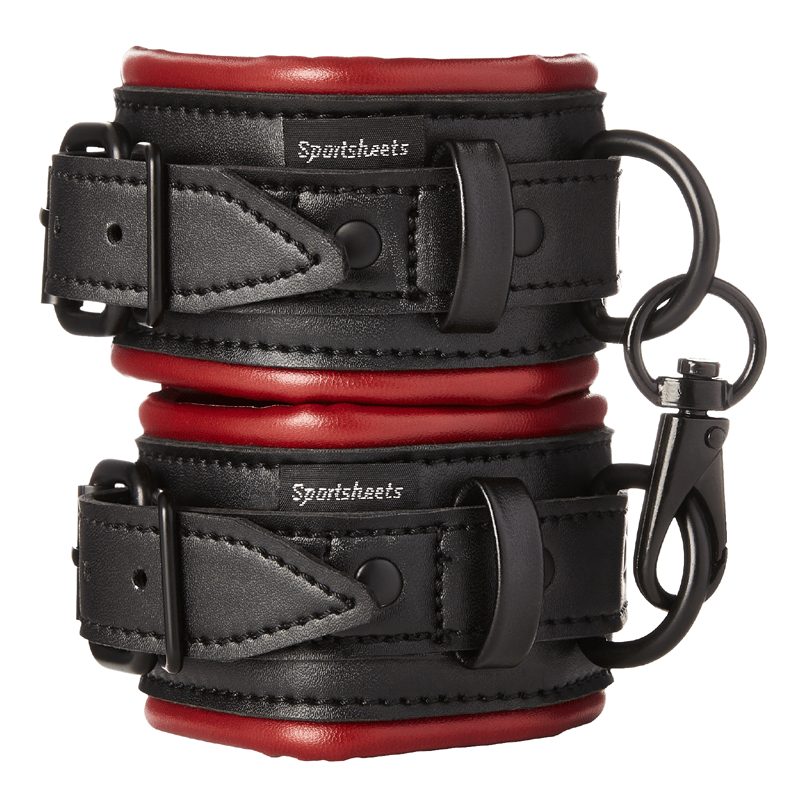
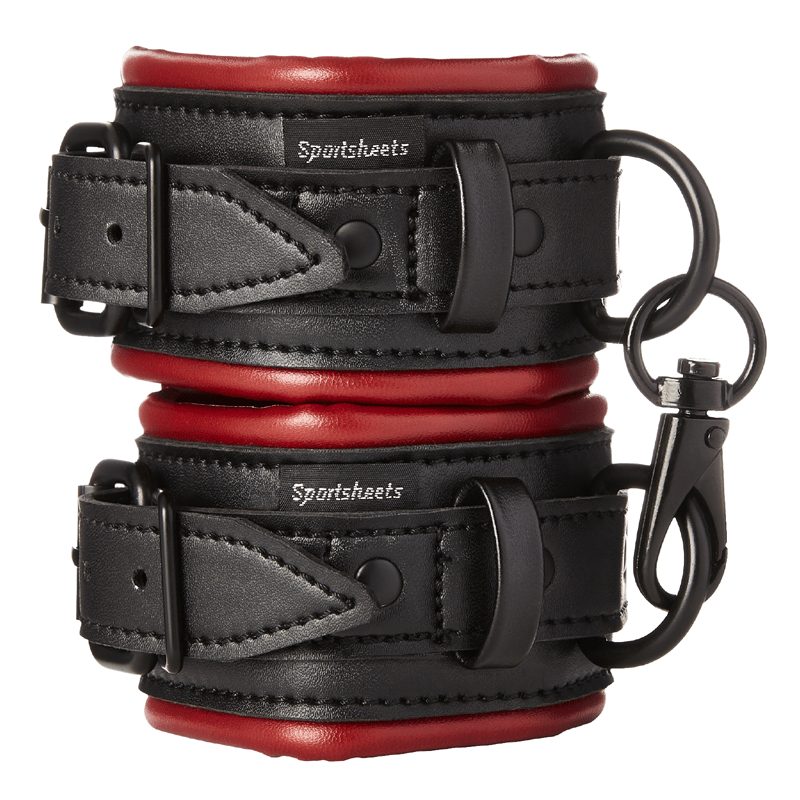
Two black vegan-leather wrist cuffs with red padded trim, linked by a metal clip

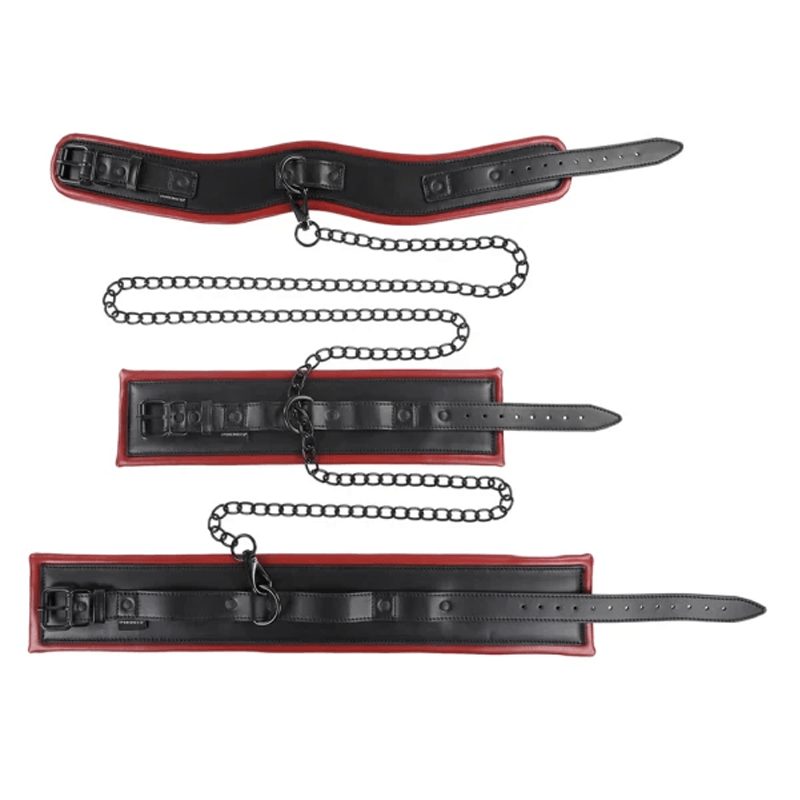
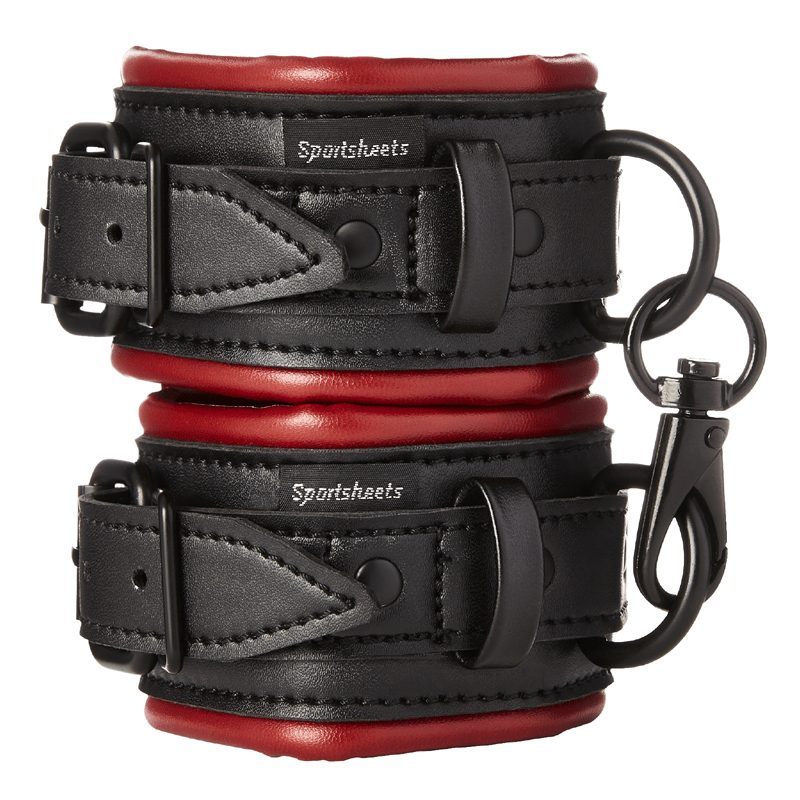
One step up in structure: cuffs built from vegan (faux) leather, which hold shape and look the part while still releasing with a simple buckle or clip rather than a key or a lock. The Saffron Cuffs ($64.99) are the catalogue’s entry point here — genuinely vegan leather, not the real hide the name might suggest, which is worth knowing since it changes how you clean and store them. For a slightly firmer hold with a fixed connecting chain rather than a loose tether, the Saffron Chained & Tamed ($94.99) is a natural second purchase once soft ties feel too gentle. Best for: couples who’ve tried soft ties and want more visual and physical presence, without moving to anything that locks.

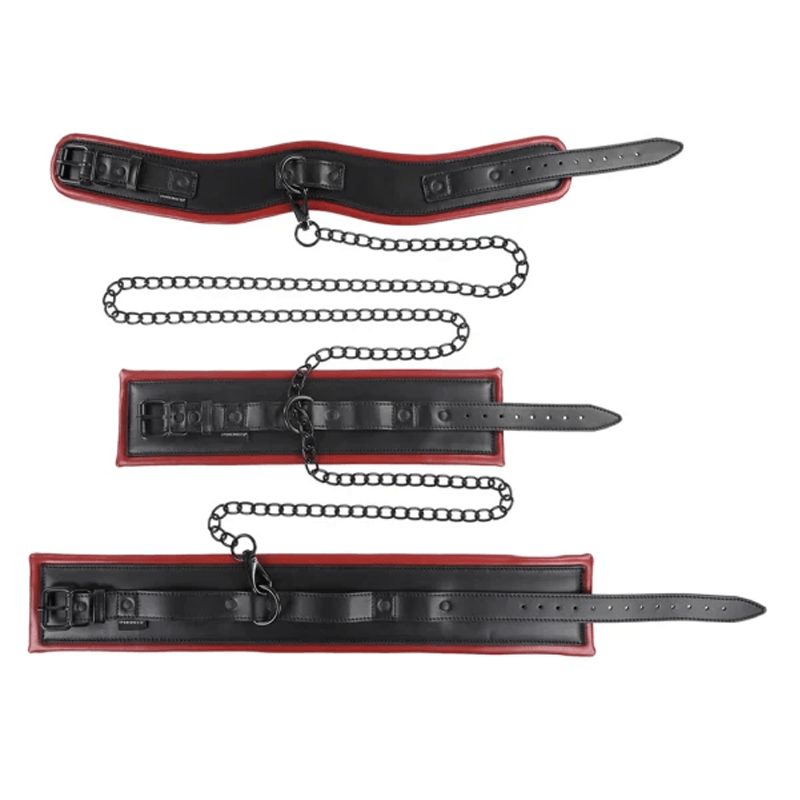
Vegan-leather cuffs and collar connected by a black metal chain

Nylon & Tether Kits — the Closest Thing to Rope’s Versatility

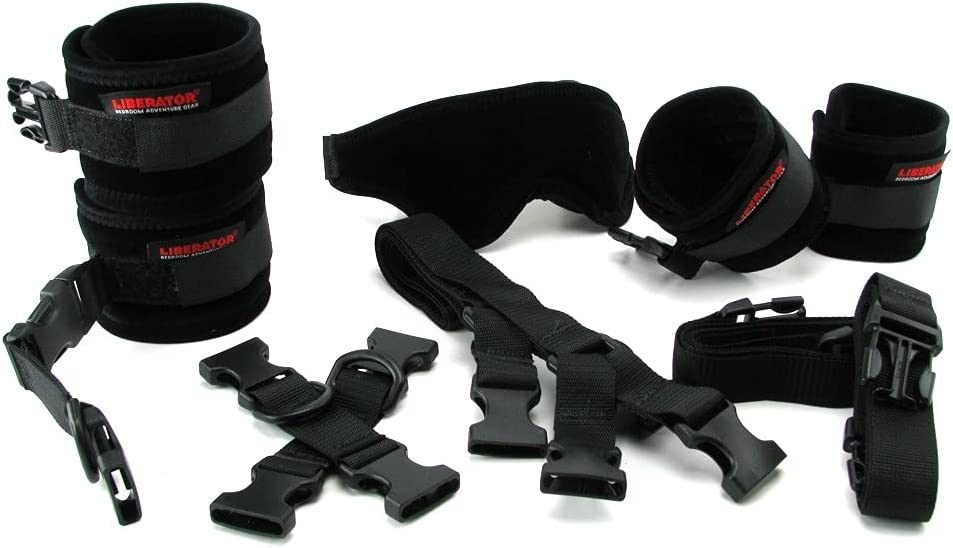
Black microfiber under-the-bed tether and cuff restraint kit laid out flat

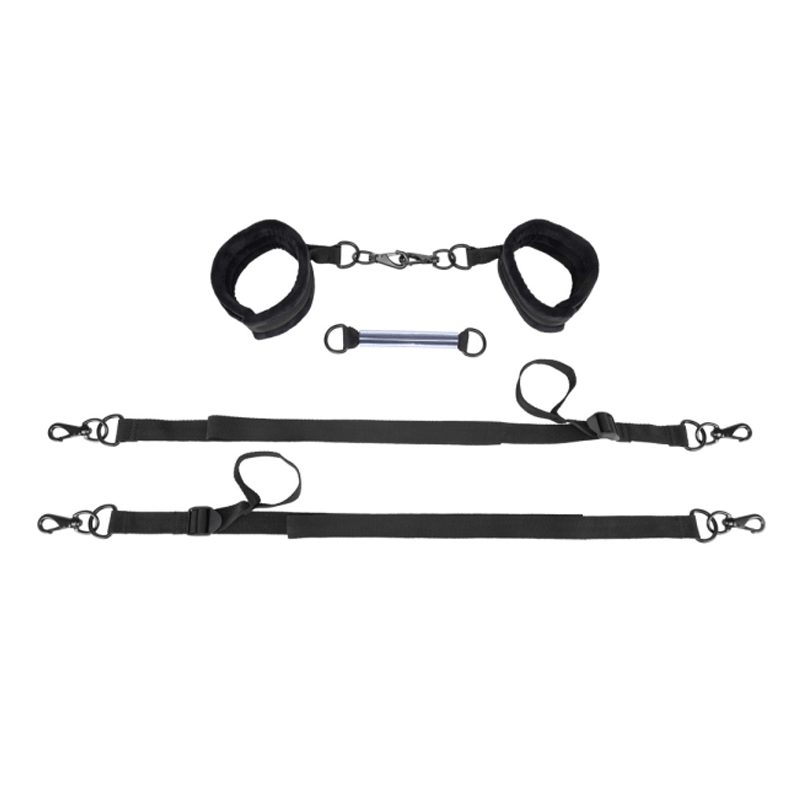
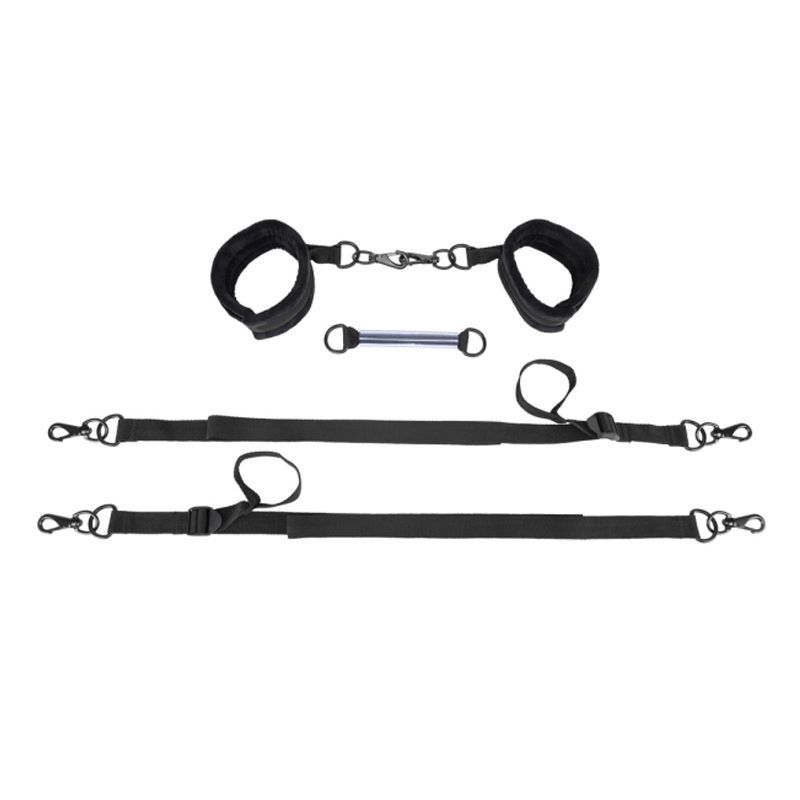
If what appeals to you about rope is the adjustability — being able to change the length, angle, or anchor point of a restraint — the catalogue’s tether kits do that job with webbing and buckles instead of knots. The Bed Buckler Tether and Cuff Restraint Kit ($124.99, genuinely nylon) slips discreetly under a mattress and turns any bed into an anchor point. The Pivot Connection Kit ($84.99, polyester webbing with metal hardware) includes two adjustable tethers that extend from 10 to 47 inches, so you can set up anything from a snug hold to an arms-overhead stretch with the same piece. Best for: couples who want to change the restraint’s shape session to session, the way rope users would, without learning knotwork.

Black nylon cuffs, adjustable tethers, and connecting hardware laid out flat

Explore the full restraints collection for the complete range, including spreader bars and coordinated cuff sets for when you’re ready to go further.

Before You Begin: The Safety Framework That Makes Everything Better

Restraint play has one prerequisite that isn’t optional: a shared safety framework. This isn’t a formality or a buzzkill — it’s the structure that allows both people to be fully present, because neither is holding anxiety in reserve.

01

Establish a safe word before you start — every time

A safe word is a word both partners agree will immediately pause or stop everything. “Red” is common. “Pineapple” works. The word doesn’t matter; the agreement does. Have this conversation before clothing comes off, not during.

02

Never restrain in a position that strains circulation

Hands above the head, wrists pinned at an awkward angle, or arms pulled too far behind the back can restrict blood flow quickly. Check in every few minutes. If fingers start to tingle or feel numb, stop and reposition immediately.

03

Keep a quick-release option within reach

Every restraint recommended above releases with a simple buckle or clip rather than a lock and key — but “quick to release” only helps if the person doing the restraining knows exactly where that release point is before starting, not mid-scene.

04

Start shorter than you think you need to

Ten minutes of restraint that both partners genuinely enjoyed is better than forty minutes where one person was quietly enduring. Short, successful sessions build the trust and vocabulary for longer, more adventurous ones.

We go deeper on consent frameworks and safe-word structures in a companion guide once it’s live — for now, the four steps above cover the essentials for a first session.

What to Buy First

Our recommendation for most first-time buyers is the Silky Tie-Ups or the Saffron Cuffs — something that looks like what it is, feels good on the skin, and releases in one motion. If you want more adjustability without more complexity, the Pivot Connection Kit’s tethers give you that range in a single purchase.

Your First Restraint Session: What to Expect

First sessions are almost always lighter than people imagine — and that’s exactly right. The point isn’t to go as far as possible. It’s to discover how restraint feels for both of you: how it changes the dynamic, what sensations it amplifies, what it opens up in the conversation afterward.

Spend time after the session talking. What felt good? What would you adjust? That debrief — sometimes called aftercare in more structured power-play contexts — is where the real intimacy happens. It’s also where you build the shared language that makes every future session better.

A note on the BDSM label

Restraint play is technically part of the BDSM spectrum — but you don’t need to claim or identify with any label to explore it. Many couples who enjoy the occasional satin tie would never describe themselves as “into BDSM.” The experience belongs to you, not to a category.

Ready to explore? Start with something soft, something beautiful, and something that feels like you.

Shop Restraints Collection

Posted on

How to Introduce D/s to a Partner

Abstract espresso and gold brand image for How to Introduce D/s to a Partner

Bringing up power exchange with a partner who hasn’t expressed interest requires honesty, patience, and a willingness to meet them where they actually are. Here’s how to do it without pressure or awkwardness.

The most common D/s problem isn’t consent, or safety, or even compatibility. It’s the conversation before any of that — the one where one partner reveals an interest they’ve been carrying alone, often for a long time, to a partner who may have no frame of reference for what they’re describing.

That conversation is nerve-wracking for almost everyone. Not because the desire is unusual — D/s interest is far more common than the silence around it suggests — but because vulnerability is, by definition, uncomfortable. This guide is about how to have that conversation in a way that gives it the best possible chance of going well.

Before You Say Anything: Know What You’re Actually Asking For

The most important preparation for this conversation is clarity about what you actually want — not as an abstract interest, but as a specific, concrete experience. “I’m interested in dominance and submission” is less useful than “I’d like to try an evening where you take the lead on everything that happens, and I follow your direction.” The more specific and bounded your request, the less your partner has to interpret, and the lower the stakes feel.

Think about: what role you’d like to explore first (dominant, submissive, or open to either), what specific practices interest you, what’s off-limits, and how long or bounded you’d like the first experience to be. Come to the conversation knowing these things. It will make you more confident and your partner more comfortable.

When and Where to Have the Conversation

Not during sex, and not immediately before it. The conversation about exploring something new should happen in an ordinary, relaxed moment — over dinner, on a walk, when both of you are comfortable and neither is in a heightened or vulnerable state. Starting the conversation from a neutral place makes it easier for both people to think clearly and respond honestly.

The Conversation Itself: A Framework That Works

01

Start with your own experience, not a definition

Rather than opening with terminology (“I’m interested in D/s dynamics”), open with something you’ve felt or wanted: “Sometimes I’d love it if you just took charge completely and I didn’t have to think about anything.” The feeling is more accessible than the label, and it invites your partner into understanding rather than categorisation.

02

Give your partner time and space to respond

Resist the impulse to fill silence with more explanation, justification, or reassurance. Ask your question, share your interest, and then actually wait. Their first response — whatever it is — is valuable information. Don’t pre-empt it by talking over it.

03

Separate “not yet” from “no”

Many partners who respond with hesitation are not saying no permanently — they’re saying they need more information, more time, or more reassurance before they can respond. Treat hesitation as the beginning of a conversation, not its end. Ask what would help them feel more comfortable engaging with the idea.

04

Make it about shared exploration, not your unfulfilled need

Frame the conversation as something you’d like to discover together, not something you’ve been missing and need them to provide. The former is an invitation. The latter creates pressure — which is the enemy of genuine consent.

05

Accept the possibility that this isn’t for them

Some partners genuinely aren’t interested in power exchange dynamics, and no amount of patient conversation will change that. If that’s the case, the conversation has still been valuable — you know something important about each other. Accept that honestly, and decide together how you navigate it.

A Low-Stakes Starting Point for Curious Partners

If your partner is interested but uncertain, propose a very bounded first experiment: “Would you be willing to take charge completely for one evening — decide what we do and when, and I’ll follow your lead?” That’s D/s in its lightest, most accessible form. It doesn’t require any terminology, any equipment, or any commitment beyond one experience.

If that goes well and both partners want to develop it further, the restraints collection is the natural next conversation — physical restraint is the most common first addition to a developing D/s dynamic. Read our companion guide on dominance and submission dynamics for the broader landscape once it’s live, and take your time with the pacing — there is no schedule to keep to but your own.

And before any first session together, talk through what a safe word means for both of you and agree on what “stop” looks like before anything begins. The conversation that happens before a scene is the thing that makes the scene itself trustworthy.

When the conversation goes well, the next step is choosing the right tools together.

Finding your fit

If the conversation goes well and you both want a first piece, start softer than you think you need to. These are in the order most couples actually move through them, and none of them is a prerequisite for anything in this guide.

  • Silky Tie-ups Black Satin — a pair of synthetic-silk sashes that loop around wrists or ankles, or work as a blindfold instead. Fabric rather than hardware, which is the least intimidating way to make one evening feel different. If you only want one thing, start here.
  • Saffron Cuffs — vegan-leather wrist restraints with soft inner linings. They link together like a standard set, or separate to attach to a spreader bar later, so they stay useful if the dynamic develops.
  • Bed Buckler Tether and Cuff Restraint Kit — four 20-inch adjustable nylon tethers with Velcro wrist and ankle cuffs, which slip under any mattress and come away again in a minute. Worth knowing about if discretion is part of what is making your partner hesitate.
  • Under the Bed Restraint Set – Special Edition — six straps and a blindfold, for couples who have had this conversation more than once and want something more structured.
  • The wider restraints and bondage & kink collections, if you would rather browse before deciding anything.

The honest trade-off: buying the kit first is the most common way this goes wrong. Equipment is easy to acquire and easy to mistake for progress, and a partner who has agreed to a conversation has not yet agreed to a drawer full of gear. Let the first evening happen, then buy for the part you both actually enjoyed.

Explore Bondage & Kink

Posted on

Best Bondage Cuffs for Beginners

Best Bondage Cuffs for Beginners

The first time you try restraints, comfort decides everything. If a cuff pinches, scrapes, or feels intimidating before the scene even begins, the mood disappears before it starts. Finding the best bondage cuffs for beginners is less about looking edgy and more about choosing gear that feels secure, soft, and easy to trust from the first minute you put it on.

This guide covers real cuffs from the current Restraints collection at XtasyXperience, what actually makes a beginner cuff comfortable, and — just as importantly — which styles are honestly better left for later.

What makes a cuff “beginner-friendly” rather than just cheap

Comfort comes from construction, not price. A beginner-friendly cuff needs a soft interior, enough width to spread pressure instead of concentrating it in one band, and a closure that feels secure without forcing a tight fit. Narrow cuffs can look sleek in photos but tend to dig in; wider, padded cuffs distribute contact and feel more stable around a wrist or ankle. Buckle closures generally read as more secure and premium; hook-and-loop closures are faster to get on and off and slightly less intimidating for a genuinely first try.

Why cuff material matters more than it looks like it should

It also depends, and that’s worth saying plainly: the softest-looking material isn’t automatically the most comfortable one. Plush or faux-fur styles feel inviting but can shift during use, and fluffy padding can hide pressure points if the structure underneath is thin. Structured vegan or faux leather with a smooth lining tends to hold its shape and stay put, which for most beginners translates into feeling supported rather than flimsy — though poorly finished synthetic can feel stiff at the edges, so lining quality matters more than the material label by itself.

What to look for in bondage cuffs

Curious what actually separates a comfortable first pair from one that ends up in a drawer? Three things: width and padding, the closure hardware, and how much adjustability the design allows.

Width, padding, and where pressure goes

Scarlet and black vegan leather wrist cuffs, linked together like handcuffs
Saffron Cuffs — vegan leather, $64.99

The Saffron Cuffs ($64.99) are a solid entry point: vegan leather with a soft inner lining, designed to link together like a standard handcuff set or separate to combine with a spreader bar down the line. The listing doesn’t publish an exact circumference range, so fit is a feel judgment rather than a measured one — reasonable for a $64.99 first pair, worth knowing if you have unusually narrow or wide wrists.

Soft ties for the gentlest possible entry

Red satin ribbon-style tie-up restraints laid flat
Silky Tie-Ups, red satin — $89.99

If rigid hardware feels like too much for a first try, Silky Tie-Ups ($89.99, also in black) are smooth satin ribbon restraints with no buckles or clasps at all — you tie them yourself, which means the pressure is entirely in your own hands. They trade the “locked in” feeling some beginners want for something gentler and easier to undo mid-scene, which is exactly the point for a genuinely cautious first attempt.

A coordinated kit, for a beginner who wants the setup decided for them

Black microfiber under-mattress restraint kit with soft cuffs and tether straps
Bed Buckler Tether and Cuff Restraint Kit, black microfiber — $124.99

The Bed Buckler Tether and Cuff Restraint Kit ($124.99) is genuinely Nylon-tagged on its own listing and pairs soft cuffs with tethers that slip under any mattress, box spring, or futon — no fixed bed frame required, which rules out a common beginner-kit dealbreaker. It’s a tether-plus-cuffs system rather than a single pair, so it suits someone ready to try a full restrained position rather than just wrists alone.

Adjustability: the feature beginners underrate

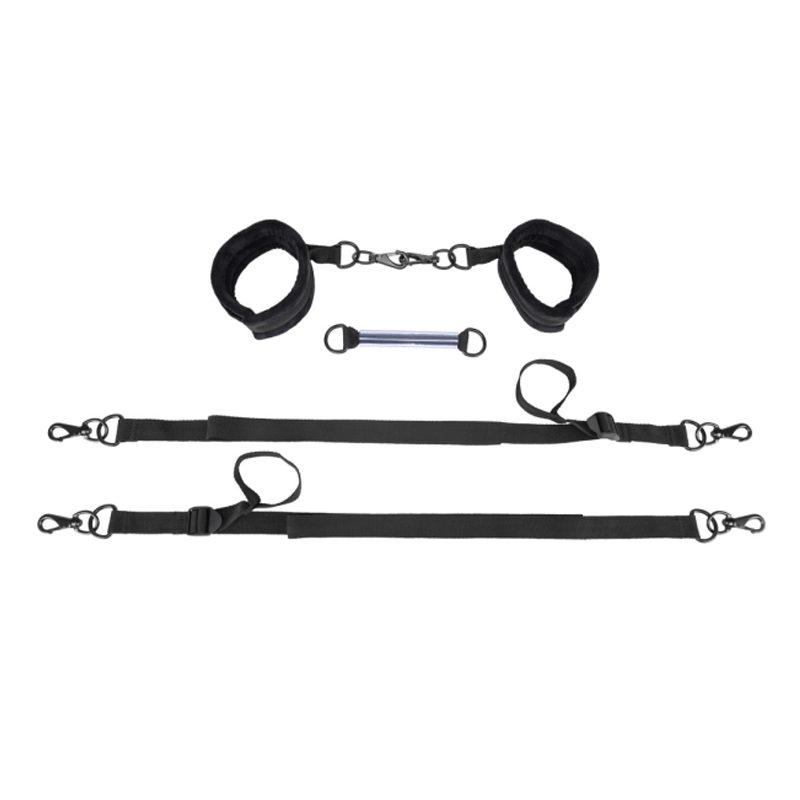
Black adjustable tether and cuff connection kit with push-clip hardware
Pivot Connection Kit — $84.99

The Pivot Connection Kit ($84.99) publishes a real spec worth pointing at directly: its tethers extend from 10 to 47 inches (26 to 119cm), with push-clip connectors for quick changes between wrist and ankle use. Its material is polyester and hardware, not nylon — an earlier internal note on this catalogue grouped it with the nylon products by mistake, and it’s worth correcting rather than repeating. As a beginner pick it’s less about the cuffs themselves and more about the adjustable range, which is genuinely rare to see published at all in this category.

What beginners should honestly skip

Chain-linked leather — not wrong, just not first

Black and red faux leather cuffs connected by a metal chain
Saffron Chained & Tamed — $94.99

The Saffron Chained & Tamed ($94.99) is faux leather with a metal chain link between the cuffs, built for a partner who’s designed to stay put rather than shift position easily. It’s a fine second or third purchase. As a first pair, the fixed metal chain removes the flexibility a beginner usually wants while still learning what positions and durations actually feel good, which is exactly the kind of “looks intense, wears differently” gap worth flagging before checkout rather than after.

Kits labeled “advanced” by their own maker — believe them

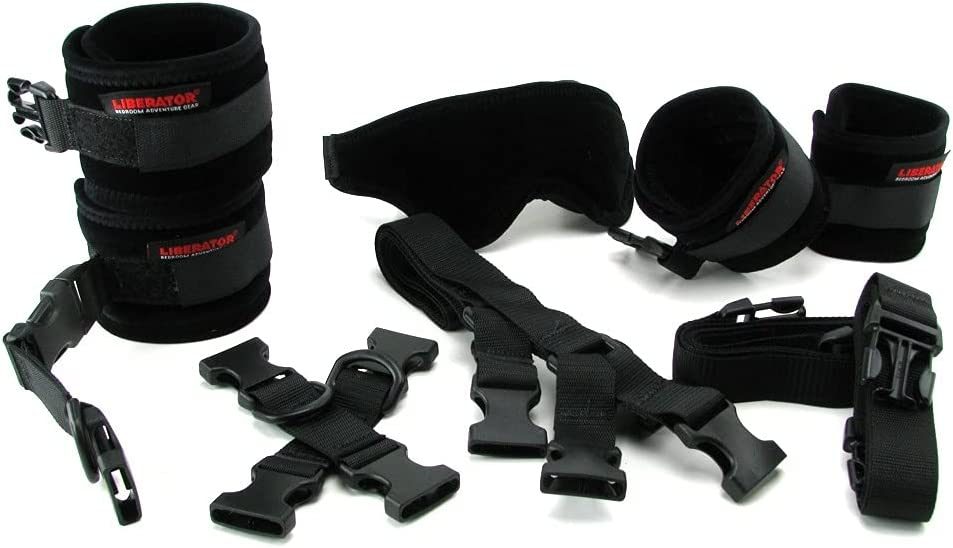
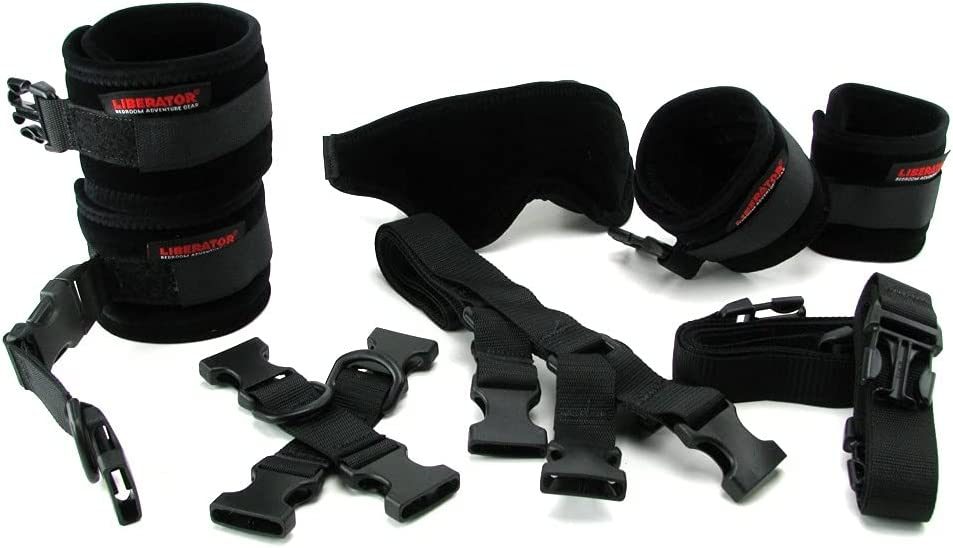
Black microfiber multi-piece restraint kit with wrist and ankle cuffs and connector straps
Black Label Seduction Cuff Kit — $144.99

The Black Label Seduction Cuff Kit ($144.99) is a genuinely well-made set — faux-fur-lined wrist and ankle cuffs, six connectors, and six 20-inch tie-downs for a full four-point layout. Liberator’s own product description calls it “great for advanced restraint bondage play,” and that’s not marketing caution to ignore. A four-point layout is a bigger commitment than most first sessions call for, both in setup time and in how much movement it actually removes. Worth knowing about for later, and worth skipping on a first order.

How fit changes the experience

A beginner cuff should sit snugly enough to stay in place but never so tight it compresses circulation. Multiple buckle holes or a generous hook-and-loop surface make a real difference while you’re still learning your own preferences — a one-size design can work, but adjustable is the safer investment for a first purchase. Wrists and ankles also want different things: ankles tolerate more structure, while wrists are more sensitive to pressure and rotation, so a cuff marketed as interchangeable for both is worth a closer look at width and flexibility before assuming it suits either equally well.

The trade-offs: when a padded cuff is right, and when it isn’t

A padded, adjustable cuff like the Saffron Cuffs or a satin tie-up is the right call for a first session, for short scenes, and for anyone still learning what intensity they actually enjoy. It’s the wrong call if you already know you want a fixed, secure four-point setup for a longer scene — buying a soft beginner pair for that purpose just means an unnecessary second purchase later. Buy for the session you’re actually planning, not the one you might eventually want.

Care and longevity

Wipe vegan and faux leather cuffs down with a damp cloth after use and let them air dry away from direct heat, which is what cracks the finish over time, not normal wear. Nylon and microfiber pieces like the Bed Buckler kit can typically go through a gentle hand wash; check the listing before machine washing anything with metal hardware attached. Satin ties should be hand-washed and hung to dry to keep the ribbon from fraying at the edges.

Finding your fit

The best beginner cuffs don’t pull focus — they support the mood and let both people stay present instead of managing the equipment. Start with soft, adjustable, and honestly sized for a first try; the more committed gear will still be there once you know what you actually want from it.

Posted on

Playful Control, Built on Trust

Playful Control, Built on Trust

The first time someone hands over control, the surprise is never the restraint. It’s the relief — the moment the pressure to perform or decide anything simply stops, and the body settles into being led. That single shift, given and received on purpose, is what power exchange actually offers a couple, long before any specific tool enters the room.

This isn’t a guide to extreme bondage & kink play. It’s a guide to the slower, more common version most couples are actually curious about — the one that starts with a conversation, one tool, and a clear signal for when to stop.

What makes a power exchange dynamic different from “just trying bondage”

The mechanism isn’t the equipment. It’s the agreement underneath it — that one person leads and one follows, that both know it, and that both chose it out loud. A cuff or a blindfold gives that agreement a physical shape, but the shape isn’t the point. Couples who skip the agreement and go straight to the gear tend to describe the experience as flat; couples who have the conversation first describe it as some of the most connected sex they’ve had, restraint or no restraint.

The two roles feel almost opposite. The person surrendering control most often reports relief, not vulnerability — the pressure to initiate or decide disappears, and sensation gets sharper because there’s nothing left to manage. The person holding control reports something closer to total presence: reading a partner’s breathing, pacing, and stillness closely enough that drifting isn’t an option. Neither role is more advanced than the other. What makes it work is the contrast, held up by trust.

Why this is worth its own category, and who it’s genuinely not for

Power exchange sits in its own category because it asks for something most sex advice skips: a conversation before anything physical happens. That’s also the honest disqualifier. If either partner isn’t ready to say plainly what’s welcome, what’s off the table, and what stops the scene, this isn’t the place to start — not because the desire is wrong, but because the format depends on that conversation actually happening. It’s worth saying plainly: this is not for a couple hoping equipment will do the communicating for them.

What to look for in your first session

The instinct when this is new is to prepare everything at once — restraints, a blindfold, a whole scripted plan. That instinct usually works against you. Too many elements at once make it hard to tell what’s actually creating the experience and what’s just noise.

The conversation that makes everything else possible

The most important part of a first session happens before either of you touches anything, in ordinary light, with ordinary words. It can be as simple as “I’ve been thinking about taking the lead for a night, if you’re open to it” or “I’ve been curious what it would feel like to just let go for a while.” What you’re building in that conversation is a container: what kind of touch is welcome, what’s off the table entirely, and what either person can say or do to slow things down or stop. A spoken safe word is reliable; it’s worth also agreeing on a nonverbal signal — a hand squeeze, tapping twice, dropping something — for moments when speaking feels disruptive.

A quiet guide · free

Before you choose a first tool

Where to Start names the one piece we’d begin with, the three agreements that come before it, and how your order arrives: a plain box and a discreet statement. Free, by email.

You’ll also receive the Wednesday letter, one email a week. Unsubscribe any time. See our Privacy Policy.

Choosing one tool, not five

Pick one thing for the first session. Restraint is usually the most revealing starting point, because it creates the dynamic cleanly: one person's movement narrows, the other person's responsibility for pacing expands.

A pair of scarlet and black vegan leather wrist cuffs with soft lining, linked together
Saffron Cuffs — vegan leather with a soft inner lining, $64.99

The Saffron Cuffs ($64.99) are a reasonable first pair: vegan leather with a padded inner lining, adjustable, and designed to link together like a standard cuff set or separate and pair with a spreader bar later. The brand doesn't publish an exact wrist circumference range for them — worth knowing up front if precise fit matters to you, since you'll be judging fit by feel rather than a number on the listing.

If you'd rather start without limiting movement at all, a blindfold does something equally effective by removing one sense instead. When sight goes, touch gets louder and anticipation gets tangible — often described by first-timers as one of the most intense experiences they've had, with nothing physically restrained at all.

A black microfiber sleep mask style blindfold with a padded no-peek nose bridge
Black Label Loveblind Plush Blindfold, black microfiber — $79.99

The Black Label Loveblind Plush Blindfold ($79.99) uses a padded no-peek nose bridge and an adjustable velcro strap rather than a fixed elastic band, which matters more than it sounds — a blindfold that lets in light at the edges undercuts the entire point of it. It comes in a red fluffy version as well, if the aesthetic matters more to you than the microfiber finish.

What the first session actually feels like

Here's the honest version: it will probably feel a little awkward at some point, and that's fine. You're learning a shared language. The most common mistake is trying to hold the dynamic continuously from start to finish with no breaks in character — which is exhausting and unnecessary. Pausing to check in doesn't break the scene. It deepens the trust that makes the scene possible in the first place.

If you're leading, your job is attention: watch for tension or a change in breathing, move slowly, and narrate what you're about to do. "I'm going to hold you here for a moment" does something different than silence followed by the same action — your words are part of how your partner feels held. If you're receiving, your job is to keep communicating even when it feels like it interrupts the moment. Silence tends to read as contentment, so say something if you're uncertain.

The trade-offs: when this is exactly right, and when it isn't

This approach is right for a couple who already trusts each other in ordinary life and wants a structured way to explore control without a script written by someone else. It is not right for a couple using restraint to paper over a communication problem that exists outside the bedroom too — that gap tends to show up mid-scene, not before it. It's also not the place to start if either partner is looking for intensity for its own sake; the slow version described here is deliberately the less dramatic on-ramp, not the ceiling.

Aftercare: the part most guides underemphasize

After any session involving power exchange, take a few minutes to come back to each other as equals. It doesn't need to be elaborate — water, physical closeness, and a few honest words about how things felt is usually enough. For many couples, this brief reconnection becomes one of the most intimate parts of the whole experience, not an afterthought tacked onto the end of it.

Care and longevity

Vegan leather cuffs like the Saffron Cuffs hold up best wiped down with a damp cloth after use and kept away from direct heat, which can crack the finish over time. A microfiber blindfold should air out between uses rather than being folded away damp — trapped moisture is what shortens the padding's life, not normal wear.

Building from here

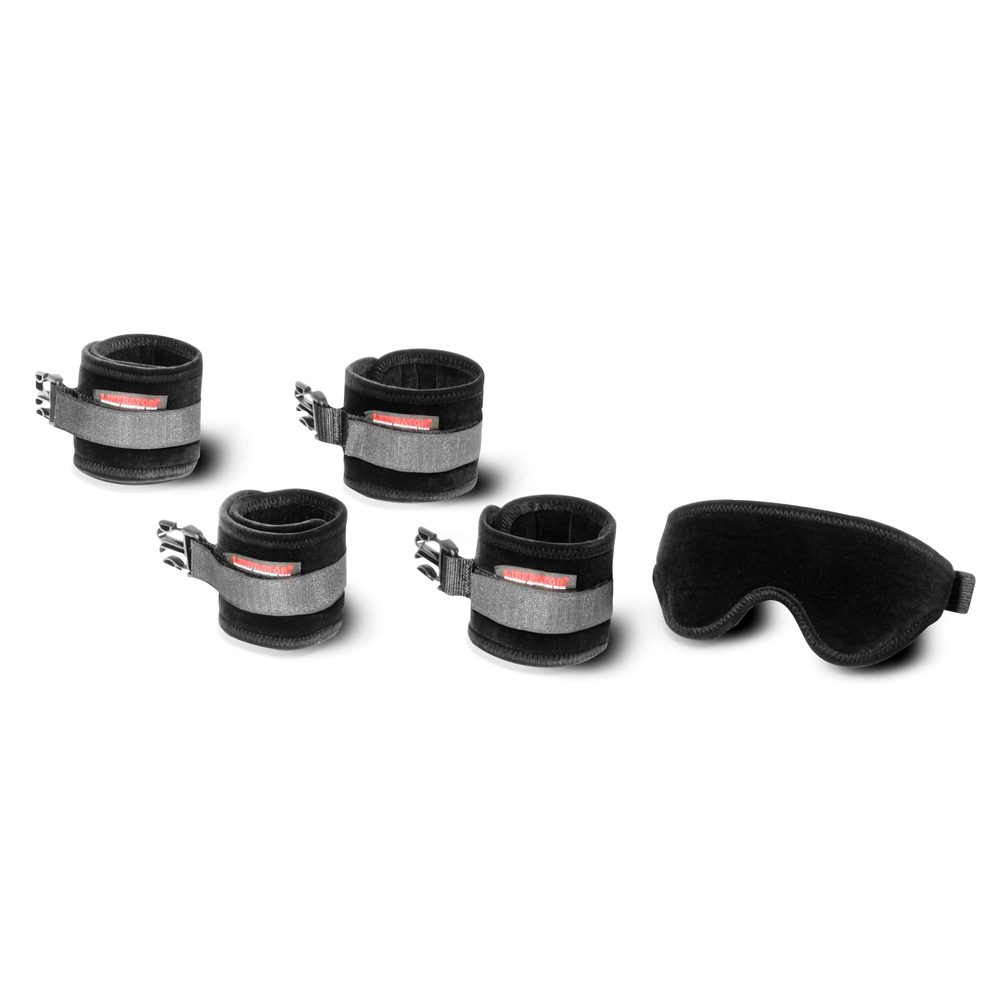
If wrist restraint felt right, ankle cuffs extend the dynamic without adding much complexity. If a blindfold was the starting point, layering in light restraint on a later occasion adds sensation without overwhelming the first good experience you had. For a coordinated next step, the Bed Buckler Tether and Cuff Restraint Kit ($124.99) pairs a set of soft, nylon-lined cuffs with a tether system that slips discreetly under a mattress — it's a tether-and-cuffs pairing, not a blindfold-included set, so know that going in rather than assuming more is boxed than actually is.

If you outgrow a fixed-length tether, look for a connection system that publishes an actual adjustable range rather than a vague "flexible fit" — the Pivot Connection Kit's tethers extend from 10 to 47 inches (26–119cm) with quick push-clip connectors, a number most tether accessories in this category simply don't publish. Browse the full Restraints collection once you have a clearer sense of the intensity and aesthetic you actually prefer — you'll shop very differently after one real session than you would have before it.

Finding your fit

Power exchange, at this scale, was never about the hardware. It's a structured way for two people to practice trusting each other on purpose, with words, before anything else happens. Whichever tool you start with, the conversation is the part worth taking slowly — the rest tends to follow.

Posted on

Leather Cuffs vs Nylon Restraints

Leather Cuffs vs Nylon Restraints

Both materials will hold a wrist. The difference that shows up three or four uses in is what each one asks of you afterwards, and what it asks of the room. In this catalogue a faux-leather restraint is an object you fasten to a body. A nylon restraint is almost always a system you build around a piece of furniture. That distinction decides more than texture does.

If the question underneath this one is what the store actually stocks, and whether “leather” here means hide, that is settled in Silicone Cuffs vs Leather Restraints. The short answer is that every leather piece here is vegan or faux, and this page takes that as read.

The choice is not texture, it is what it attaches to

Red and black vegan-leather wrist cuffs linked with a metal clasp, shown against a white background

Faux leather here fastens to the body and to itself. The Saffron Cuffs ($64.99) are vegan leather with soft inners, adjustable across a range of sizes, and they link together like a standard pair or separate to join a spreader bar or chain. The Saffron Chained & Tamed set ($94.99) extends the same idea to a posture collar, a double wrist cuff and a double ankle cuff that doubles as a thigh cuff. The Edge Collar & Leash ($99.99) is a padded faux-leather collar with a centre ring and two side connection points, described by its maker as built for extended wear. Not one of these needs anything in the room to function.

Black nylon tether and cuff restraint kit with adjustable straps and Velcro cuffs, shown laid out flat

Nylon and soft fabric mostly fasten to furniture. The Bed Buckler Tether and Cuff Kit ($124.99) slides four 20-inch adjustable nylon tethers beneath a mattress, box spring or futon, with Velcro wrist and ankle cuffs at the corners and bonus D-rings that accept scarves, rope or cuffs you already own. The Original Sportsheet ($199.99 king, $219.99 queen) is a soft bedsheet with four hook-and-loop anchor pads that stick anywhere on its surface. The No Matter Where system ($104.99) carries nearly ten feet of adjustable strap and will mount to a door for standing positions as readily as to a bed.

So the useful question is not which material feels better on skin. It is whether you want a restraint that works in any room and lives in a drawer, or a system that converts one particular piece of furniture into the setup and stays there.

Adjustment: stepped or continuous

Two black adjustable tether cuffs with push-clip connectors and a padded handle grip, shown against a white background

This is the difference most buyers do not think about until it matters. A buckled faux-leather cuff adjusts in steps, from one hole to the next. A nylon tether adjusts continuously, anywhere along its length. The Pivot Connection Kit ($84.99) publishes the most specific figure in the collection: two tethers extending from 10 to 47 inches, 26 to 119 cm, with push clips at both the cuff and the tether end.

Two consequences follow. First, partners with noticeably different wrist or ankle sizes get on better with continuous adjustment, because a buckle step that fits one person can sit a little loose or a little tight on the other. Second, a continuous tether can be lengthened or shortened during a scene without unfastening anything, which a buckle cannot do. If either of those describes you, that is a stronger argument than any difference in how the two materials feel.

Comfort over a long scene is about lining, not material

Faux leather has a reputation for being the less comfortable option, and it is not really deserved. What causes complaints is a narrow, unlined strap, in any material. A wide cuff with a soft inner surface is comfortable whether that surface is vegan leather or microfiber.

The products bear this out. The Saffron Cuffs specify soft inners. The Edge Collar is padded and thicker precisely so it can be worn for longer. The Black Label Seduction Cuff Kit ($144.99) lines its cuffs in soft microfiber. In each case the lining is the feature doing the work, and it is worth reading a listing for that detail rather than for the material name on the label.

Cleaning decides how long you keep it

Faux leather is a coated surface. It wipes clean easily, which is a genuine advantage between partners, but it does not want to be soaked, submerged or left damp, and oil-based products break down polyurethane coatings over time. Dry it before it goes away, and store it flat rather than folded.

Nylon and microfiber tolerate far more. The trade-off sits in the closures: hook-and-loop collects lint, hair and fibres, and loses grip as it fills up. Both the Bed Buckler cuffs and the Sportsheet anchor pads depend on hook-and-loop, so picking the fuzzy side clean now and then is the actual maintenance task for the soft end of this collection. It takes a minute and it is the difference between a cuff that still holds in a year and one that does not.
What fails first

Faux leather fails at the fold and at the buckle holes, in that order. A cuff stored creased develops a line that never fully relaxes, and the coating thins where a buckle pin has worked through the same hole for a year. Hook-and-loop fails by losing grip. Plastic clips and D-rings fail as hardware does, suddenly rather than gradually, which is worth knowing if a piece is bearing weight rather than just marking a limit.

The Saffron Spreader Bar & Cuff Set ($114.99) is the outlier here, and the only stainless steel item in the collection. Its rings are welded rather than clipped, and its own listing is blunt about what that means: there is no escape, only release. Steel does not crease, thin or lose grip, so it will outlast everything else on this page. It also removes the option of getting out of it quickly, which makes it a different conversation about trust rather than a straightforward upgrade.

When the cuff is not the limiting factor

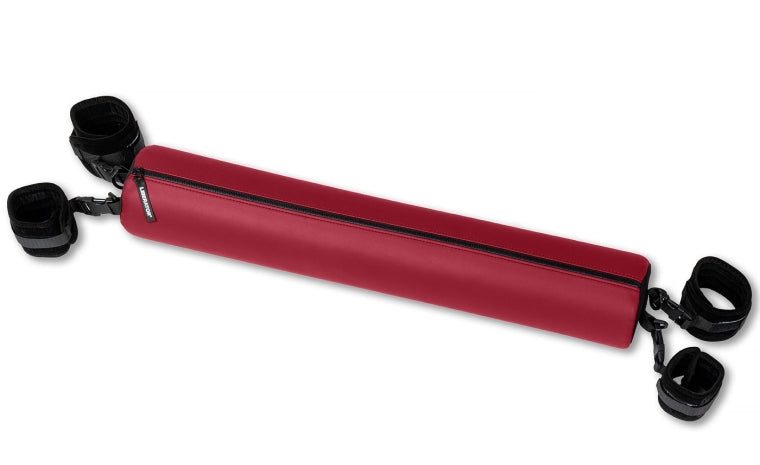
Padded claret faux-leather spreader bar with cuff connector points at each end and two attached wrist cuffs

Sometimes the thing you want is not a tighter cuff but a held position, and then the material question moves from the wrist to the structure. The Talea Spreader Bar ($239.99) is a padded faux-leather-covered bar with cuff connector points at each end and included snap clips, and it doubles as a positioning bolster rather than only a restraint anchor. The steel Saffron bar above answers the same need with less give and less exit.

Matching red-trimmed faux-leather collar, wrist cuffs and ankle cuffs connected by a chain, laid flat

At the other end of the same idea, the Under the Bed Restraint Set, Special Edition ($134.99) runs six straps under a mattress with six double-sided clasps and includes a blindfold, and the Bondi Portable Playscape ($489.99) is a trifold platform with sixteen reinforced attachment points, each with a D-ring and a clip, that folds into a bench and travels in a nylon case. Those are furniture decisions more than material ones, and they are the right place to look if the answer to leather-or-nylon keeps coming out as neither.

Choosing between them

  • You want it to work in any room and store small — faux leather. Saffron Cuffs ($64.99) to start, Saffron Chained & Tamed ($94.99) when one pair of wrists is not enough.
  • Two people with different wrist sizes, or adjustment mid-scene — nylon. Pivot Connection Kit ($84.99) for its published 10 to 47 inch range, Bed Buckler ($124.99) if there is a mattress to work with.
  • Long sessions — read for the lining, not the material. Wide and lined beats narrow and bare in either family.
  • Least upkeep — nylon, as long as the hook-and-loop gets picked clean occasionally.
  • Longest life — the stainless steel Saffron Spreader Bar & Cuff Set ($114.99), with the caveat that welded rings change what you are agreeing to.
  • A held position rather than a held wrist — Talea Spreader Bar ($239.99), or the Bondi Playscape ($489.99) if the furniture is the project.

Browse the full restraints collection to compare the two families side by side.

Leather and nylon are not competing to do the same job better. One gives you an object that goes anywhere; the other gives you a room that is already set up. Decide which of those you actually want and the material stops being the question.

Posted on

Aftercare for Kink Scenes: The Work

Aftercare for Kink Scenes: The Work

The scene may end when the restraints come off or the impact play stops, but the experience is not actually over. For many people, the most intimate part begins afterward – when adrenaline drops, bodies recalibrate, and both partners need a clear path back to center.

That is what aftercare is for. In any thoughtful guide to bondage and kink aftercare, the goal is not to prescribe one perfect ritual. It is to understand what helps each person feel safe, seen, and settled once intensity gives way to vulnerability.

What aftercare really does

Aftercare is the transition from scene space back into everyday connection. Depending on the kind of play involved, that transition might be physical, emotional, or both. A high-intensity spanking scene can leave someone shaky, thirsty, and sensitive to touch. A control dynamic or humiliation scene can create a different kind of drop later, where the body seems fine but emotions feel unexpectedly raw.

That is why aftercare is less about a scripted checklist and more about regulation. It helps the nervous system come down gradually. It also reinforces trust. When one person has surrendered control, pushed limits, or delivered intense stimulation, attentive care afterward confirms that the connection was mutual, intentional, and well held.

For some couples, aftercare is soft blankets, water, and quiet praise. For others, it is space, minimal touch, and a simple check-in an hour later. Good aftercare feels specific, not generic.

A guide to aftercare for kink scenes starts before the scene

The strongest aftercare usually begins in negotiation, not after the fact. If you only start asking what someone needs once the scene is over, you are already late.

Before play, talk through what tends to happen for each of you afterward. Does one partner get cold? Does the other need verbal reassurance? Is anyone likely to cry, go quiet, or want to be left alone for a short stretch? None of these responses are inherently good or bad. They are simply useful information.

This is also the right time to discuss practical details. If you are using cuffs, rope, paddles, or any gags or blindfolds that create marks or physical fatigue, have recovery items nearby. Water, a snack, a soft robe, lotion, a blanket, and any agreed-upon soothing products should be easy to reach. Thoughtful scenes feel more refined when recovery is curated with the same care as the play itself.

If you are shopping for impact tools, restraints, or sensory play essentials, the same design-minded approach applies. Products that feel intentional, body-aware, and well made often support a smoother arc from anticipation to play to aftercare, which is very much in line with the intimacy-elevated approach at XtasyXperience.

Physical aftercare: tending to the body first

The most immediate needs are often physical. After an intense scene, the body may be dealing with dehydration, elevated heart rate, soreness, or a sudden temperature drop. Start there.

Offer water before a long conversation. If blood sugar seems low, bring something light and easy to eat. If skin has been struck, rubbed, compressed, or exposed to clamps or bondage, check the affected areas with care. You are not just looking for marks. You are paying attention to heat, swelling, numbness, or anything that feels outside the range of what was expected.

Touch can help, but only if it is welcome. Some people want to be held immediately. Others cannot tolerate contact right away, especially after overstimulation, pain play, or orgasm-focused scenes. The elegant move is to ask directly instead of assuming. “Do you want closeness, or a little space?” works far better than forcing tenderness on someone whose body is still buzzing.

Warmth matters more than many beginners expect. A blanket, hoodie, or fresh sheet can make a surprising difference once the body comes down. If touch is welcome, a slow massage oil or warming candle can turn the come-down itself into part of the connection rather than just a recovery step. If the scene involved kneeling, restraint positions, or extended physical effort, a pillow under the knees or lower back may be the detail that shifts someone from discomfort to relief.

Emotional aftercare: where trust gets reinforced

Not every reaction shows up right away. Sometimes a partner looks composed, even glowing, and then feels unexpectedly fragile 30 minutes later. Sometimes the person who was in control during the scene is the one who drops hardest afterward. This is normal.

Emotional aftercare is not therapy, and it does not need to be overly serious. It is simply a way of making contact again as full people, outside the roles you just played. Gentle praise, reassurance, and gratitude often go a long way. “You did beautifully.” “Thank you for trusting me.” “I loved how tuned in we were.” Those kinds of statements can help integrate the intensity rather than leaving it hanging.

Still, reassurance should match the scene. If the play involved degradation, fear, punishment, or strict authority, aftercare may need to be especially explicit. Even if everyone consented enthusiastically, words used in role can echo differently after the scene ends. A clear return to warmth helps both partners separate fantasy from harm.

This is where nuance matters. Some people want to debrief immediately. They want to talk through favorite moments, any surprises, and what they would change next time. Others need silence first and conversation later. Neither is more evolved. The right timing depends on temperament, scene intensity, and experience level.

When aftercare looks different for tops, bottoms, and switches

A common mistake is treating aftercare as something only one partner receives. In reality, everyone involved may need care.

Bottoms or submissives may need comfort after physical or emotional intensity, especially if they have been restrained, pushed, or made to endure sensation. But tops and dominants can also experience a drop. Holding responsibility, monitoring safety, and maintaining control takes energy. Once the scene ends, that focused state can give way to fatigue, self-doubt, or a delayed emotional crash.

Switches often know this from both sides. The point is simple: aftercare should be mutual, even if it is not symmetrical. One person may need a cuddle and verbal affirmation. The other may need a drink, a shower, and a few minutes to breathe before reconnecting. Both needs count.

The scenes that need more deliberate aftercare

Some scenes call for a more intentional plan. Heavy impact, restraint, humiliation, service dynamics, and orgasm control can all create a stronger after-effect than light teasing or beginner bondage. The more intense the headspace, the more important the landing becomes.

If there are visible marks, have a realistic conversation about care and discretion. If the scene touched on emotional triggers, shame, or authority themes, build in more time for reassurance. If the play was new for either of you, expect a little uncertainty afterward. Novelty can feel thrilling in the moment and emotionally louder once the body settles.

It also helps to think beyond the first 20 minutes. Some people experience sub drop or top drop the next day. That can look like sadness, irritability, exhaustion, insecurity, or a strange emotional flatness. A text check-in, a kind message, or a brief phone call the next morning can be part of aftercare too.

What to say when you are not sure what they need

You do not need perfect instincts to do aftercare well. You need presence and a willingness to ask.

A few questions tend to open the right door. “How is your body feeling?” helps distinguish soreness from distress. “Do you want touch, water, food, quiet, or words?” gives options without pressure. “Anything feel off or unfinished?” can catch the small discomforts people sometimes hesitate to mention.

Keep your tone calm and clean. Avoid turning the moment into a performance of care. The point is not to prove you are attentive. The point is to actually be attentive.

A quiet guide · free

Make the moments after a ritual

Where to Start is a short, private guide to your first piece, including the aftercare ritual we’d begin with and exactly how your order arrives. Free, by email.

You’ll also receive the Wednesday letter, one email a week. Unsubscribe any time. See our Privacy Policy.

Building your own aftercare style

The best guide to aftercare for kink scenes is the one you refine over time. What works in a light sensory scene may not work after a more intense power exchange. What worked with one partner may be completely wrong for another.

Treat aftercare as part of your erotic language. Curate it with the same intention you bring to the scene itself. That might mean a particular blanket, a favorite electrolyte drink, soothing skincare for impact areas, a playlist that helps shift the mood, or a standing ritual of checking in the next morning. Small details create a stronger sense of safety than grand gestures.

And if something did not land well, adjust without defensiveness. That is not failure. It is information. Mature kink is rarely about getting everything right the first time. It is about paying attention closely enough to make the next experience even more connected.

Finding what you need

  • Massage Oil Candle Soft Touch — a plant-based massage oil candle with a pouring spout, so one object covers both the light and the oil. The simplest single addition if aftercare for you happens through touch.
  • Touch My Body – Ylang-Ylang — a 2-in-1 massage and lubricant fluid, for a wind-down that does not have a clean edge.
  • Massage Indulgence Kit — five small Kama Sutra Naturals oils in a zippered case, for finding out which one actually settles each of you.
  • The full Bondage & Kink collection, for browsing gear alongside the scenes it supports.
  • Restraints, if the scene you're planning for calls for something to hold onto.
  • Massage oils and candles, for the part of aftercare that happens through touch.

Aftercare is where intensity becomes intimacy – not because it softens the scene, but because it honors what the scene asked of both of you.

Posted on

Silicone Cuffs vs Leather Restraints

Silicone Cuffs vs Leather Restraints — cover image

You notice a restraint on your skin before you notice anything else about it — not the buckle, not the price tag, the material. That’s the real question behind “silicone or leather,” and it deserves a straight answer before anything else: this store doesn’t stock silicone cuffs, and what it sells as “leather” isn’t leather either. Here’s what’s actually on the shelf, and why the real trade-off is more useful than the one the title promises.

A quick disclosure, up front. Every cuff and restraint in this catalogue’s Restraints collection is tagged, in the product data itself, as either “Leather / Faux Leather,” “Nylon,” or “Stainless Steel.” Silicone shows up in this catalogue exactly once — on a line of impact paddles, not cuffs. And the “leather” pieces are consistently vegan or faux leather in their own descriptions — nowhere is a hide product sold as a restraint here. If a silicone-vs-leather comparison brought you here, that’s the honest state of things before you spend anything.

What actually changes: structured faux leather vs. soft nylon-and-microfiber

The real material split in this catalogue isn’t silicone versus leather. It’s structured versus soft — faux-leather cuffs built around visual presence and a firmer hold, against nylon-and-microfiber tether systems built around comfort, adjustability, and long wear. That split covers most of what people are actually asking when they ask about silicone versus leather: which one is gentler on skin, which one holds its shape, which one disappears into storage.

Faux leather: presence and a firmer hold

The Saffron Cuffs are the clearest example — adjustable vegan-leather wrist restraints with a soft inner lining, priced at $64.99, built to link together like standard cuffs or separate and connect to a spreader bar. They hold their shape the way people expect “leather” to behave: structured, visually deliberate, more ceremonial than casual. The step up is the Saffron Chained & Tamed set at $94.99, which adds a posture collar and a double ankle cuff to the same wrist restraints — genuinely built for full-body positioning rather than a single pair of wrists.

Faux leather asks for a little care: kept dry, wiped down rather than soaked, stored flat so the buckles don’t crease the material. In exchange it looks and feels the most “serious” of anything on this list, and that visual weight is exactly what a lot of buyers are shopping for when they say “leather.”

Nylon and microfiber: adjustability and comfort

The Bed Buckler Tether and Cuff Restraint Kit is the catalogue’s actual nylon entry — four 20-inch adjustable nylon tethers with Velcro wrist and ankle cuffs, priced at $124.99, designed to slip under a mattress or box spring rather than attach to anything rigid. It’s the closest thing here to what a “silicone cuff” shopper is usually after: soft against the skin, machine-washable in spirit if not in instructions, and forgiving of a beginner’s first few sessions. The bonus D-rings also make it compatible with rope, scarves, or the leather cuffs above, so the two material families aren’t mutually exclusive purchases.

If portability matters more than a bed setup, the Pivot Connection Kit uses the same soft-tether logic in a smaller footprint — its two tethers adjust from 10 to 47 inches, a specific, published range rather than a vague “adjustable,” which is worth knowing before you buy for anything other than a bed frame.

The trade-offs: when each one is right

Faux leather is the better pick when the visual and psychological weight of the restraint matters as much as the function — when part of the point is what it looks like on the nightstand, not just what it does. It is the wrong pick for anyone who wants to machine-forget about maintenance, or whose skin reacts to synthetic leather’s stiffer surface during longer sessions.

Nylon and microfiber are the better pick for first-timers, for anyone prioritizing comfort over ceremony, and for couples who want a setup that disappears into a drawer between uses. It is the wrong pick for anyone who wants the restraint itself to carry visual authority — a soft tether under a mattress doesn’t do the same work in the room that a structured cuff does.

Neither material solves the problem silicone is usually marketed to solve — full waterproofing and zero absorbency — because nothing in this catalogue’s restraints line is silicone. If that specific property matters more than anything else here, it’s worth saying plainly rather than stretching a faux-leather or nylon product to fit a claim it can’t back up.

Care and longevity

Faux leather lasts longest kept dry and stored flat; a damp cuff left folded is the most common way these develop a crease that never fully relaxes. Nylon tethers and Velcro cuffs hold up to far more casual handling and the occasional wipe-down, which is part of why they’re the easier recommendation for anyone still deciding how often this gear will actually get used.

Finding your fit

  • Saffron Cuffs ($64.99) — adjustable vegan-leather wrist cuffs with a soft lining; the structured, visually deliberate option.
  • Saffron Chained & Tamed ($94.99) — posture collar plus wrist and ankle cuffs, for full-body positioning once you’ve outgrown a single pair.
  • Bed Buckler Tether and Cuff Restraint Kit ($124.99) — genuine nylon tethers with Velcro cuffs, the softest and most beginner-forgiving option here.
  • Pivot Connection Kit ($84.99) — the same soft-tether comfort in a compact, 10–47 inch adjustable form for setups away from a bed frame.
  • The full restraints collection, for comparing materials side by side before deciding.

The honest version of “silicone or leather” is “structured or soft” — and once the actual materials are on the table, that’s a much easier decision to make well.

Posted on

Dominance and Submission, Explained

Dominance and Submission, Explained — cover image

The word “dominance” tends to arrive with equipment already attached — a room, a wardrobe, a scripted scene. For most couples who actually try it, the first version is smaller than that: one partner says “let me take this tonight,” the other says yes, and something in the evening changes shape. That is the whole mechanism. Everything else is refinement.

D/s — dominance and submission — is one of the most misread dynamics in intimate relationships, usually cast as either extreme or transgressive. In practice it tends to be one of the most communication-heavy, consent-driven things two people can choose to do together. This is the plain version, without the costume.

What makes power exchange different from “being in charge”

Every relationship has moments of one partner leading and the other following — deciding where to eat, whose week was harder, who plans the trip. D/s takes that ordinary asymmetry and makes it explicit, temporary, and negotiated. The dominant partner takes an active, directing role for a defined stretch of time. The submissive partner chooses, on purpose and repeatedly, to hand that direction over.

The difference from everyday leading and following is the word “chooses.” Nothing here is passive. The dominant is reading, pacing and taking responsibility for another person’s experience in real time. The submissive is exercising a specific, active form of trust — one that can be withdrawn at any point, which is exactly what keeps it from being anything else.

Why this is its own category, and who it’s actually for

Power exchange sits on a spectrum. At the light end, one partner asks the other to follow their lead for a single encounter, with no roles outside that hour. At the structured end, a couple negotiates an ongoing dynamic with explicit agreements that extend past the bedroom. Most people trying this for the first time land near the light end — and there is nothing preliminary about that. Plenty of couples keep it there permanently and are done exploring.

It is worth saying plainly who this is not for. If either partner is uncomfortable with any imbalance of control, if the relationship doesn’t yet have a baseline of trust and honest conflict, or if one person is hoping the dynamic will fix a communication problem rather than express one that’s already healthy, D/s is the wrong tool. It rewards a relationship that already works. It does not repair one that doesn’t.

What to look for before you start

The instinct is to shop first. The more useful order is roles, then structure, then equipment — because gear only works once the conversation underneath it exists.

The pre-scene conversation

Before anything is attempted, both partners need a plain-language account of three things: what interests them, what is off-limits without exception, and what safe word or signal will stop everything immediately, no questions asked in the moment. This conversation is not a formality standing between you and the fun part. Done honestly, it is itself a form of intimacy — arguably a more vulnerable one than what follows it.

The roles

The dominant partner directs: what happens, at what pace, at what intensity, and — continuously — how the submissive partner is actually doing, not how the script says they should be doing. A dominant who stops paying attention has stopped doing the role. The submissive partner yields, on purpose, renewing that choice throughout rather than surrendering it once. Their leverage is real: the safe word, the stated limits, and the consent that makes the entire arrangement possible in the first place. Plenty of people don’t settle into one side consistently — “switch” describes someone comfortable in either role, often because having done both makes them better at each.

Structure: how much, how often

A dynamic can be a once-a-month arrangement confined entirely to the bedroom, or something with its own vocabulary and rituals that touches daily life. Neither end is more legitimate than the other. The honest question is whether the level of structure you’re choosing matches what both people actually want, rather than what looks more serious from the outside.

Safety framework and aftercare

The safe word system needs to be simple enough to use under stress — a single word, or a traffic-light scale, agreed in advance and never relitigated mid-scene. Aftercare is the part beginners most often skip and experienced practitioners most often credit for making a dynamic sustainable: after anything with real intensity, both partners need deliberate time to come back down together, not just the one who was receiving direction.

The trade-offs: when this fits, and when it doesn’t

D/s tends to work best for couples who already communicate well under ordinary circumstances and want a structured way to deepen that. It tends to go badly when it’s introduced to paper over resentment, when one partner agrees out of a fear of disappointing the other rather than genuine interest, or when either person treats the safe word as something to be talked out of rather than honored instantly. None of that makes the dynamic itself unhealthy — it means the timing or the footing is wrong, and that is worth noticing before anything physical is involved.

It is also fine to try a single light session and decide it isn’t for you. Nothing about D/s requires an ongoing identity or a permanent label, and plenty of curious people confirm it isn’t their thing after one evening. That is a complete and useful outcome, not a failed one.

A quiet guide · free

Curious where to begin?

Where to Start is a short, private guide to your first piece: the one soft tool we’d begin with for trust and surrender, three agreements to make before anything, and exactly how your order arrives. Free, by email.

You’ll also receive the Wednesday letter, one email a week. Unsubscribe any time. See our Privacy Policy.

Where gear enters, once the conversation exists

Products are a way to make an already-agreed dynamic physical, not a substitute for agreeing to it. Restraints are usually the first addition, because they give a verbal agreement something to hold onto. The Edge Collar & Leash is a common starting point for exactly that reason — a padded faux-leather collar built for extended wear, with a large center ring for the leash and two additional side connection points for positioning, which is a fair example of gear doing nothing more than making a role visible.

From there, most people move into restraints proper — simple wrist and ankle cuffs before anything more structured — and eventually into the wider bondage and kink range, including impact tools for sensation-focused play or nipple play for couples working with a lighter touch. That is usually a later step, not a first one.

The questions people actually ask

Do I need to identify as dominant or submissive?

No. A single session carries no obligation to claim an ongoing identity. The experience doesn't require the label.

Is D/s the same as BDSM?

D/s is one piece of the BDSM umbrella, which also covers bondage and discipline and sadism and masochism. Plenty of people practice D/s without the other elements. The overlap is real but not total.

What if one partner is curious and the other isn't?

This is common, not a sign of incompatibility. It calls for patience and a genuinely honest account of what each person is comfortable with — not persuasion, and not silent disappointment on either side.

How important is aftercare, really?

Central, not optional. After anything with real intensity, both partners need intentional time to reconnect and re-ground. It is the piece beginners most often underestimate and experienced couples most often name as the reason their dynamic lasts.

Finding your fit

A short list of where to start, in the order most couples actually move through it:

  • Edge Collar & Leash — padded faux leather, a large center ring plus two side connection points; the clearest way to make a role visible without committing to a full kit.
  • Saffron Cuffs — adjustable vegan-leather wrist restraints with a soft inner lining, made to link together or attach to a spreader bar as the dynamic develops.
  • Saffron Chained & Tamed — a posture collar with matching wrist and ankle cuffs, for couples who have already found their footing and want a more structured full-body option.
  • The wider restraints and bondage & kink collections, for anyone who wants to browse before deciding what the first piece should be.

None of this is about how much equipment ends up in the drawer. It's about whether the conversation underneath it was honest.

D/s, done well, is not a performance of extremity — it is a structured, unusually attentive way of paying attention to another person. Start with the conversation, keep the safe word sacred, and let the rest follow at whatever pace actually suits the two of you.