
Posted on — Leave a comment

Kegel Balls & Pelvic Floor Trainers: What to Look For

Abstract illustration of small muted orbs and a single larger gilded orb glowing at top right, on an espresso ground, paired with the title Kegel Balls and Pelvic Floor Trainers

The first sign is usually small — a laugh that catches you off guard, a jump on a trampoline, a sneeze mid-sentence. Most people never train their pelvic floor on purpose until something reminds them it’s there. If you’re ready to start, this is what’s actually worth knowing before you buy anything from our kegel balls and pelvic floor trainers shelf.

What makes kegel balls different

A kegel — the exercise — is a squeeze and release, done on its own, with nothing to tell you whether you’re doing it right. Kegel balls add passive resistance instead: the muscle contracts around actual weight, the same way a dumbbell does more for a bicep than air does.

That’s the whole mechanism. No app, no charging, no guesswork about form. You insert it, and your body makes small, automatic corrections to hold it in place. The training happens in the background of an ordinary afternoon, not in a dedicated session.

Why this is its own category

This only works as general conditioning, and that’s worth saying plainly. If you’re training after childbirth, or for something a doctor has actually named — an over-tight pelvic floor, a specific diagnosed weakness — a pelvic floor physiotherapist is worth talking to before you buy anything here. An over-tight pelvic floor needs close to the opposite of weighted training, and the two are easy to confuse from the outside.

It also depends on what you’re actually shopping for, and that’s worth saying plainly too: nothing in this category is a menstrual product, and we don’t currently carry one separately. Kegel balls are a wellness tool for general conditioning — not a diagnosis, and not a period product.

What to look for in kegel balls and pelvic floor trainers

Most of the difference between one set and another comes down to three things: what weight you start at, whether the resistance is passive or electrical, and how comfortably it retrieves. Get those right and the rest is mostly colour.

Starting weight, and how it progresses
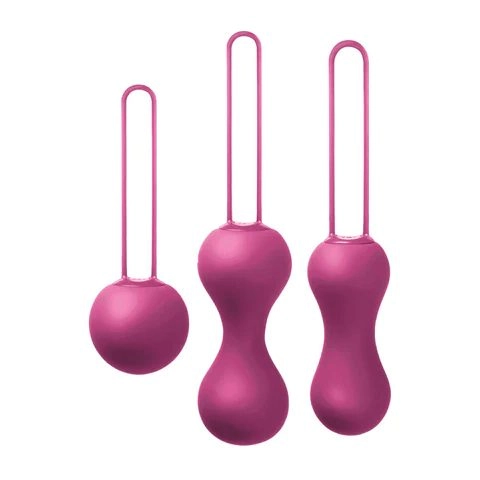
Three magenta-pink kegel balls of increasing size and weight, each with a soft fabric retrieval loop, arranged side by side
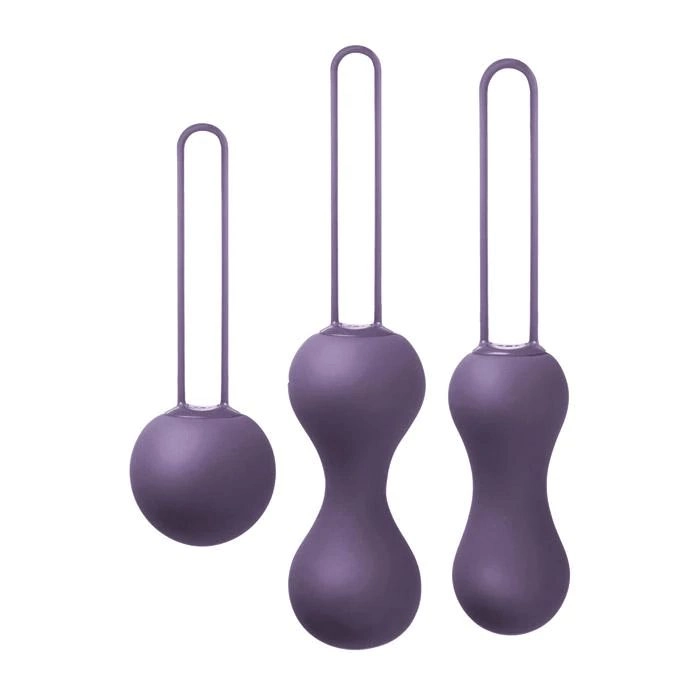
Three lavender-purple kegel balls of increasing size and weight, each with a fabric retrieval loop, arranged side by side
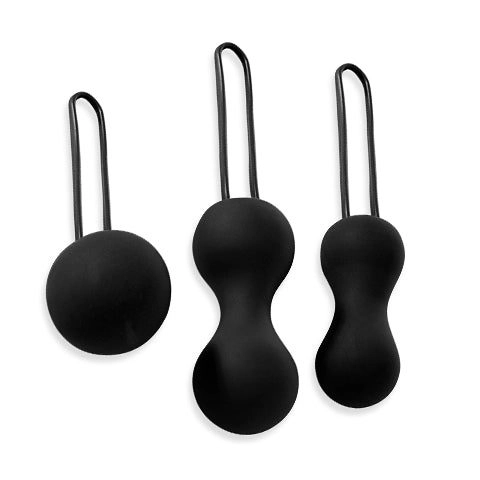
Three matte black kegel balls of increasing size and weight, each with a fabric retrieval loop, arranged side by side

The biggest mistake with kegel balls isn’t the brand — it’s starting too heavy. A muscle that’s never been trained doesn’t get stronger from a weight it can’t hold; it just tires out and gets abandoned in a drawer.

Je Joue’s Ami set makes the progression the product. It ships as three separate weights — 47 g, 78 g and 106 g — so you start at the one you can comfortably hold for fifteen to thirty minutes and move up only once the current weight has stopped being effort. All three colourways — Fuchsia, Purple and Black — are the identical three-stage set. Colour is the only choice you’re actually making between them.

Passive weight versus electrical stimulation
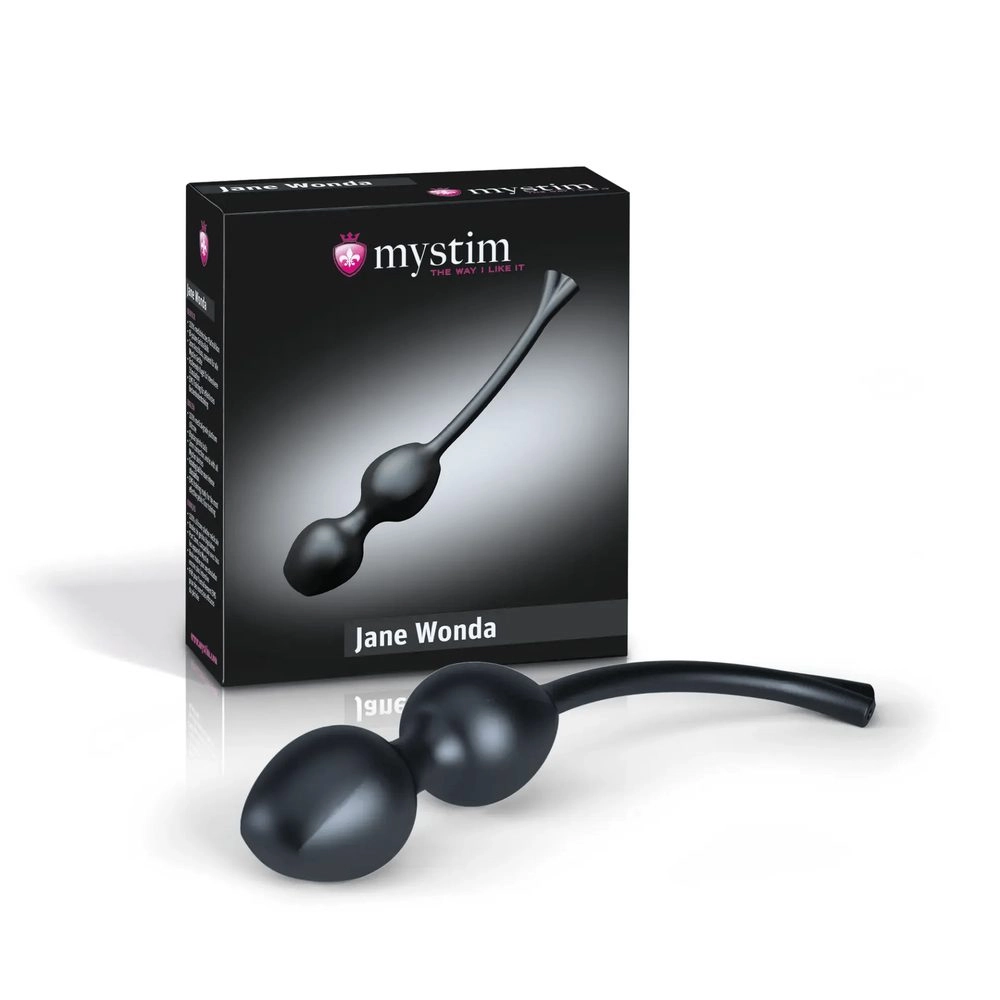
A black e-stim geisha-ball duo connected by a thin cable, shown beside its retail box printed with the Jane Wonda name

Every kegel-ball product does one of two things: it sits there and makes your muscles work to hold it, or it actively stimulates the muscle for you.

The Ami set is entirely passive — no batteries, no app, nothing to charge. Mystim’s Jane Wonda Geisha Balls Duo works differently: it pairs mechanical weight training with electrical stimulation, run through a separate Mystim Cluster Buster controller that isn’t included and has to be bought alongside it. That’s worth knowing before it goes in your cart — this isn’t a self-contained toy the way the Ami set is. It’s the first piece of a small e-stim system.

Material and shape

All four products here are body-safe silicone, which matters more with an insertable product than almost anywhere else — it doesn’t harbour bacteria the way porous materials can, and it can be washed rather than just rinsed. The Ami set is a single ball at the lightest weight and a double-ball shape at the two heavier stages; Jane Wonda is a double-ball shape throughout.

Retrieval

Every set here uses a retrieval loop or cord rather than relying on a finger — worth checking on anything you’re considering elsewhere. A set with no retrieval method at all is a real design flaw, not a minor one.

Noise, weight, and bedroom confidence

None of this is loud, and none of it needs to be. The passive Ami set makes no sound at all — it’s silicone and gravity, nothing electronic to hum. Jane Wonda is nearly silent mid-session too, which matters if you’re planning to wear it around the house rather than during a dedicated block of time — though anything running through a separate controller is a little less discreet to carry than something entirely self-contained.

How to use it so it feels incredible, not awkward

Start with the lightest weight you have, and start short — fifteen to thirty minutes, not all day. Use a water-based lubricant to insert it; anything silicone-based will slowly break down silicone toys over the same sessions that are supposed to be building you up, so water-based is the only sensible pairing here regardless of what you’d reach for otherwise.

Move to the next weight only once the current one genuinely stops registering as effort — not on a schedule, and not because a box said four weeks. If you’re using the e-stim option, start at the lowest intensity the controller offers and adjust up. There’s no reason to find your ceiling on day one.

The trade-offs: when it’s perfect, and when it is not

This is a good fit if you want a passive, low-effort way to build pelvic floor strength over weeks, and you’d rather it happen while you’re doing something else than carve out gym time for it. The Ami set in particular is close to foolproof — no charging, no app, no controller to lose.

It’s the wrong fit if you’re managing a diagnosed condition rather than general conditioning, or if you’re specifically shopping for a menstrual product — see above on both counts. And Jane Wonda specifically is the wrong first purchase if you don’t already have, or aren’t ready to buy, a compatible Mystim controller. The balls alone don’t do the electrical half of what makes it different.

Care and longevity

Wash before first use and after every session — warm water and a mild soap, or a dedicated toy cleaner, is enough. Silicone is non-porous, so it genuinely gets clean rather than just rinsed. Let it air dry fully before storing, and keep it apart from other silicone items in storage the same way you’d keep it apart from silicone lube — silicone against silicone degrades over time either way.

Finding your fit

Pelvic floor strength isn’t a performance metric, and it was never supposed to be something you either have or don’t. It’s closer to any other kind of consistency — small, unglamorous, and compounding whether or not anyone’s watching. Whichever set you start with, the only real failure mode is starting too heavy and quitting in week one.
Posted on

Bondage Gag Types and Safety Basics

Bondage gag types and safety basics, XtasyXperience

The moment a gag goes in, a scene changes shape. Speech disappears, and everything else – breath, posture, the small involuntary sounds a body makes – gets louder in its place. That shift is the entire appeal, and it is also exactly why fit and communication matter more here than in almost any other category of gear.

Here’s how the two gag styles actually sold today differ, and the safety habits that make either one feel confident instead of risky.

What a gag actually changes in a scene

A gag doesn’t just quiet someone – it removes the primary channel most couples use to communicate mid-scene. That forces everything else to do more work: agreed hand signals, a dropped object as a stop cue, and much closer attention from whoever is in control. The sensory trade is real too. Some people find that losing speech intensifies focus and surrender; others find it unexpectedly disorienting the first time, even if they were confident going in.

Why this deserves its own decision, not an impulse buy

Gag play sits at the intersection of two different needs – the symbolism of restriction, and the physical reality of breathing through it. A ball gag and an O-ring gag create very different versions of that experience, and the right one depends on jaw comfort, experience level, and what specifically you’re trying to feel.

It also depends on physical readiness, and that is worth saying plainly: if either partner has nasal congestion, allergies, or any illness that makes breathing through the nose uncertain, this is not the night for a gag – not as a mood-killer rule, but as basic scene design. That condition passes; the gag will still be there next week.

What to look for in a bondage gag

The current range here comes down to a choice between fullness and openness – a ball gag fills the mouth, an O-ring gag holds it open – plus the material and hardware that decide how the strap actually wears over time.

Ball gags: fullness and a clean silhouette

The Saffron Ball Gag is the style most people picture first – a silicone ball on a PU-leather strap with a locking buckle and nickel-free metal hardware, adjustable to fit a range of head sizes. Exact ball diameter isn’t a spec most manufacturers publish, including this one, which is worth knowing going in: you’re sizing by strap adjustability and general fit description, not a published millimeter figure, so err toward a listing described as beginner-friendly if this is a first purchase.

O-ring gags: openness and access

The Edge Interchangeable Ring Gag is the more precisely specified of the two: it ships with two stainless-look rings sized 1.5 inches and 2 inches, swappable depending on how much opening you want, and can be worn with either ring alone or both snapped together for more intensity. The strap is 70% polyurethane, 20% zinc alloy, and 10% iron. An O-ring holds the mouth open rather than filling it, which creates a more visually exposed dynamic and dries the mouth out faster – keep water nearby and plan for shorter wear than you would with a ball gag.

Styles this catalogue doesn’t carry yet

Two other styles come up often in searches about gag types – bit gags, which sit between the teeth like a horse bit and are generally gentler on the jaw than a full ball, and inflatable gags, which start small and expand with a pump for a highly adjustable but advanced experience. Neither is currently stocked here. If one of those is specifically what you’re after, this isn’t the place to find it yet; what the current range does cover well is the more fundamental decision most first-time buyers actually face – fullness versus openness – and that choice matters more to a first purchase than which sub-style you start with.

Pairing with sensory play

Removing sight tends to intensify a gag’s effect more than any other addition. A well-made plush blindfold that fully blocks light pairs naturally with either gag style, since both work by narrowing the senses a partner has left to rely on.

Comfort, breathing, and confidence

The rule that overrides every other consideration: the gagged partner must be able to breathe comfortably through the nose for the entire time the gag is worn. Agree on a clear nonverbal stop signal before starting – dropping a held object, a repeated tap, a specific hand motion – and have the partner in control stay close and sober enough to watch for it. Never leave a gagged person alone, even briefly; bondage already reduces freedom of movement, and removing speech on top of that shrinks the margin for error further than most people expect the first time.

How to use one so it feels elevated, not overwhelming

Keep the first session short – a few minutes, not a full scene – so you both learn how the specific gag feels before committing to longer wear. Introduce one new element at a time rather than combining a gag with heavy restraints and sensory deprivation on the same night; that makes it much easier to tell what’s actually working. Check in with your nonverbal signal periodically even if nothing seems wrong, and treat the first few uses as information-gathering rather than a performance either partner needs to get right immediately.

The trade-offs: when each style is right, and when it isn’t

A ball gag is right for you if you want the classic, symbolic fullness and a clean visual without extra hardware. It is wrong for you if you or your partner have jaw tension or a smaller mouth and haven’t tried a beginner-sized option first – a ball that looks modest in a product photo can still feel demanding in practice.

An O-ring gag is right for you if the visual of an open mouth and easier oral access is specifically what you’re after, and you’re prepared for shorter sessions. It is wrong for you if dry mouth or a feeling of exposure is likely to pull you out of the moment rather than into it – that reaction is common and not a sign you’re doing it wrong.

Care and longevity

Silicone ball gags clean easily with mild soap and warm water and carry no taste or smell when properly maintained. Hardware-heavy pieces like the O-ring gag need the buckle, snaps, and rings inspected before every use – retire it if a strap is cracking or a buckle no longer holds securely. Don’t share gag gear between partners without thoroughly sanitizing it first, and let anything with a strap dry fully before storing so it doesn’t develop mildew or a permanent crease.

Finding your fit

Browse the full gags and blindfolds collection, or add a set of restraints once a gag feels familiar and you’re ready to build toward a fuller scene.


A gag isn’t really about silence for its own sake. It’s about how much more everything else – breath, trust, the wait for the next touch – comes forward once speech is out of the way.

Choose the style that matches the specific feeling you’re after, agree on your signal before it goes in, and let comfort set the pace rather than compete with it.

Posted on

Paddle vs Flogger Differences Explained

Paddle vs Flogger Differences Explained

One of these lands as a single, flat strike you can predict before it arrives. The other lands as a dozen strikes at once, spread wide enough that you feel the shape of the tool as much as the impact. That difference is the whole decision, and it has almost nothing to do with which one looks more serious in a photo.

Here’s what a paddle and a flogger actually do differently, with the fall counts and materials their makers publish.

What actually separates a paddle from a flogger

A paddle strikes with one unified surface. Contact is instant and total — there is no travel time between the swing and the sensation, and no spread across the target area beyond the paddle’s own shape. That makes it the more precise of the two tools, in the literal sense: you know exactly where it will land before it does.

A flogger replaces that single surface with multiple falls — cords, chains, or strips that travel through the air before they arrive.

The Saffron Flogger carries thirty falls; the Saffron Finger Flogger carries forty. More falls generally means a wider, softer-edged spread of sensation across a single strike.

Fewer, heavier falls work the opposite way — the Edge Chain Flogger uses just eight, concentrating more force into each point of contact instead of spreading it thin.

Why this isn’t a beginner-versus-advanced question

It’s tempting to file paddles under “simple” and floggers under “advanced,” but that maps intensity onto the wrong axis. A rigid paddle can deliver more raw sting on the first strike than a soft flogger ever will. What actually separates the two is control style, not difficulty: a paddle asks you to control force and placement; a flogger asks you to control distance, timing, and follow-through as well.

And it depends, which is worth saying plainly: a couple that wants clean, decisive impact with minimal learning curve should start with a paddle regardless of experience level. A couple more interested in the buildup — the sound and motion of the falls before they land — should start with a flogger, even as total beginners to impact play.

What to look for in a paddle or flogger

Material and construction decide almost everything about how a given tool actually feels — far more than shape does.

Fall count and material, for floggers

Faux leather, like the 30 falls on the Edge Flogger, delivers a broad, thuddy strike that softens at the edges. More falls at a lighter weight, like the finger flogger’s forty, trades force for texture and coverage.

Metal changes that completely: the Edge Chain Flogger’s eight chain falls are listed at 85% iron, and chain can also be chilled beforehand for a temperature-play strike that a soft material can’t produce.

Surface and reinforcement, for paddles

Solid silicone paddles are the most consistent surface available — the Edge MINE and Edge Spiked paddles are both built on a metal-reinforced core (listed at roughly 50% silicone, 50% iron alloy), which adds swing weight without changing the strike surface.

Textured heads, like the raised spikes on the Edge Spiked or the fine bristles on the Edge Pins & Needles, concentrate force into smaller contact points for a sharper sensation at the same swing effort.

Handle design

Several of the silicone paddles in this category, including the Edge MINE and Edge Spiked, use a handle that is also fully insertable — a detail worth checking for if you want one tool that does more than one job. On floggers, handle length matters for reach and swing arc; the Saffron Flogger’s 6-inch metal handle with 17-inch falls gives a 23-inch total reach, which is a useful number to compare against before assuming all floggers swing the same.

Noise, weight, and bedroom confidence

Neither category is quiet in the way a vibrator can be quiet — the sound of a flogger’s falls moving through the air, or a paddle’s crack on contact, is part of the experience rather than a side effect to minimize. If discretion for household noise matters, softer faux leather falls travel and land more quietly than chain or wood, and a padded paddle strike is quieter than a rigid one. Weight matters differently here than with vibrators: a metal-reinforced paddle or a chain flogger requires more forearm control to use safely at speed, so factor your own arm strength into which one you can keep controlled through a full scene, not just which one looks striking in hand.

How to use either one so it builds trust, not just sensation

Start lighter than you think you need to, on both tools. With a paddle, warm up the area with your hand first, then let the paddle’s own weight do most of the work rather than swinging hard from the shoulder — a paddle needs far less force than it looks like it does. With a flogger, practice the swing on a pillow or your own palm first so the falls’ behavior is familiar before they ever meet skin; most flogger mistakes come from misjudging distance, not from too much force.

Stay on the fleshy parts of the body — glutes, upper back, thighs — and away from the spine, kidneys, and joints on both tools. Check in with words, not just body language, especially the first several times with a new implement.

The trade-offs: when each one is perfect, and when it isn’t

A paddle is right for you if you want a tool that gives immediate, unambiguous feedback and requires the least technique to use with confidence. It is wrong for you if what you’re actually after is buildup and anticipation — a paddle simply doesn’t create that; the sensation exists only at the moment of contact.

A flogger is right for you if you want the motion and sound before the strike to be part of the scene, and you’re willing to practice the swing before using it on a partner. It is wrong for you if you want a tool you can pick up and use accurately with zero practice — that’s the one thing a flogger doesn’t offer, no matter how well it’s made.

Care and longevity

Silicone paddle heads clean easily with a dedicated toy cleaner and warm water; let them dry fully before storing. Faux leather and chain falls should be wiped down, never soaked, and hung rather than coiled in a drawer so the falls keep their shape and don’t develop a permanent bend. Metal handles and chain falls benefit from an occasional wipe with a dry cloth to prevent tarnish, especially if they’re ever used for temperature play and go from freezer to skin and back.

Finding your fit

  • Saffron Flogger · $64.99 — 30 faux leather falls, 23-inch total reach. The most forgiving flogger to learn on.
  • Saffron Finger Flogger · $64.99 — 40 falls with finger loops for a lighter, more textured strike.
  • Edge MINE Silicone Paddle · $74.99 — metal-reinforced, fully insertable handle, the most versatile single piece here.
  • Edge Chain Flogger · $79.99 — 8 chain falls, built for weighted impact and temperature play.
  • Edge Flogger · $84.99 — 30 faux leather falls on a stainless steel handle, the reference all-leather flogger.
  • Edge Spiked Silicone Paddle · $89.99 — raised silicone spikes for a sharper, more concentrated sting.
  • Edge Pins & Needles Silicone Paddle · $89.99 — fine bristled head for a prickling, textured strike rather than a flat one.

Or browse the full whips and paddles collection to compare fall counts and materials side by side.

Pair either tool with a set of restraints if you want to build toward a fuller scene once impact alone feels familiar.


A paddle and a flogger aren’t two versions of the same idea — one compresses sensation into a single instant, the other spreads it across motion, sound, and a dozen points of contact at once.

Choose based on whether you want the anticipation or the certainty. Most couples who stay in this category long-term end up owning both, for exactly that reason.

Posted on

Rabbit vs Wand Vibrator: Which Is Best?

Rabbit vs Wand Vibrator: Which Is Best?

Somewhere between the first vibrator and the fifth, most people hit the same fork: do you want a toy that does two things to your body at once, or one that does a single thing hard enough that two doesn’t matter? That question is the entire rabbit-versus-wand decision, and almost nothing else about it matters as much as getting that one part right.

Both categories are excellent. Neither is the “advanced” one. Here’s what actually separates them, with the numbers their makers publish.

What actually separates a rabbit from a wand

A rabbit vibrator is two toys built into one body: an insertable shaft for internal, usually G-spot-curved stimulation, and an external arm positioned against the clitoris. The engineering problem it solves is coordination — holding two contact points in place at once without hands.

A wand vibrator solves a different problem: delivering more motor, in a broader head, than a body-shaped toy usually can. There’s no internal component and no fixed geometry. You place it, and you control the pressure, angle and pace yourself.

Neither replaces the other. The Le Wand Thrust Rabbit and a wand like the Le Wand Dive come from the same maker and are not competing products — they’re answers to different questions.

Why this is its own decision, not a hierarchy

People shopping for their second or third toy often assume the rabbit is the upgrade — more features, more surface area, more going on. That’s backwards. A rabbit only outperforms a wand for the specific person whose anatomy and preferences line up with fixed dual contact. For everyone else, it’s a wand with extra hardware in the way.

And it depends, which is worth saying plainly: if you’ve never used either, buying a rabbit first is a bet on an anatomy fit you haven’t tested yet. Buying a wand first is a bet on nothing — it works on almost every body, which is exactly why it’s the more common first purchase.

What to look for in a rabbit or wand vibrator

The spec sheet matters more here than the marketing copy, because the four things below are the actual difference between a toy you reach for and one that ends up in a drawer.

Insertable length and girth, for rabbits

The Furious Rabbit publishes its full geometry — 245 mm total length, 165 mm insertable, 36 mm diameter — which is unusually specific for this category and worth using as your baseline. If a listing won’t tell you the insertable figure, assume it’s shorter than the total length suggests, because total length always includes the external arm and handle.

Motor count and independent control

The best rabbits run the internal and external motors on separate controls, so you’re not stuck with one intensity for both. The Duo 2 is built this way — its Pleasure Air clitoral stimulator and G-spot vibrator run independently across 14 intensity levels — and the G-Stormer splits the difference with 10 clitoral vibration settings against 7 separate thrusting intensities. A single shared dial, common on cheaper rabbits, is the first thing to check for and rule out.

Rumble versus buzz, for wands

This is the single biggest quality gap in wands and the hardest one to shop for, because it almost never appears on a spec sheet. A cheap wand motor produces a high-frequency buzz that stays on the skin’s surface. A well-built motor produces a lower-frequency rumble that carries further into tissue at the same output level. The BRUNO uses a dual-motor design specifically to push more of that rumble at a lower, more comfortable frequency — a two-motor build is a reasonable proxy for this when a listing doesn’t publish frequency directly.

Waterproofing and where you’ll actually use it

IPX7 means fully submersible; IPX8, like the Le Wand Dive, goes further and is rated for sustained underwater use rather than an accidental drop. If bath or shower use matters to you, check for the number rather than the word “waterproof” alone — splash-resistant and submersible are marketed with the same adjective far too often.

Noise, weight, and bedroom confidence

Wands are the louder category on average, because more motor output tends to mean more audible motor. The Le Wand Dive publishes a maximum of 68 dB; the smaller Le Wand Petite publishes under 72 dB despite its size — proof that noise tracks motor design more than toy size. If thin walls are a real constraint, ask for the decibel figure before you ask about power.

Weight follows the same logic in reverse. The Le Wand Thrust Rabbit weighs 295 g; the Prowand weighs 177 g. A lighter toy is easier to hold in position for a long session and easier to travel with — but a heavier one often means a larger motor housed inside it, which is usually the tradeoff you’re actually making.

How to use either one so it feels incredible, not awkward

With a rabbit, fit the internal shaft first, at whatever depth is comfortable, before you engage the external arm — trying to line up both at once from a cold start is where most first sessions go wrong. Once the shaft is placed, adjust the whole toy’s angle rather than pressing the external arm harder; the arm is designed to sit against you, not push into you.

With a wand, start on the lowest setting and away from direct contact — against the outer lips or through underwear — for the first minute. Wands are strong enough that direct, full-power contact from the first second reads as too much for most people, even those who end up loving high intensity once they’re warmed up.

The trade-offs: when each one is perfect, and when it isn’t

A rabbit is right for you if you already know blended internal-and-external stimulation is what gets you there, and you’re willing to spend a session or two finding the angle that fits your body. It is wrong for you if you want something that works reliably on the first try with zero adjustment — fit variance is real, and a rabbit that doesn’t match your proportions can undersell the entire category.

A wand is right for you if you want one toy that works solo, with a partner, and across a wide range of moods and intensities without any setup. It is wrong for you if you specifically want penetration or internal fullness — a wand does not do that, and no amount of external power substitutes for it.

Care and longevity

Both categories are typically molded in body-safe silicone over an ABS or metal chassis. Clean with a dedicated toy cleaner after every use, and let it dry fully before storing.

Use only water-based lubricant with silicone toys — silicone-based lube degrades silicone toys over repeated use, which is the single most common way a well-built toy gets ruined early. Charge fully before first use and avoid leaving any rechargeable toy plugged in long after it reaches 100%.

Finding your fit

  • Furious Rabbit · $89.99 — the most specific geometry published in the category: 165 mm insertable, 36 mm diameter. The one to try first if budget is the constraint.
  • Prowand · $104.99 — 177 g, the lightest wand here, with an LED accent for anyone who wants that.
  • Le Wand Thrust Rabbit · $139.99 — adds thrusting motion to the rabbit format, IPX7, 50–60 minute runtime.
  • G-Stormer · $199.99 — fully independent controls, 10 clitoral settings against 7 thrusting intensities.
  • Le Wand Dive · $169.99 — IPX8 submersible, 68 dB max, the wand for anyone who wants shower or bath use.
  • BRUNO · $179.99 — dual-motor design built for the deepest rumble in this list.
  • Duo 2 · $194.99 — independently controlled Pleasure Air and G-spot motors, 14 intensity levels.
  • LELO INA Twist · $229.99 — app-connected, 16 intensity levels, the most customizable rabbit here.
  • Switch Aqua · $229.99 — a dual-ended wand format rather than a true rabbit, for anyone who wants two motors without internal insertion.

Or browse the full vibrators collection with the one question that actually decides this settled first: do you want the toy to hold two positions for you, or do you want to hold the toy?

If you’re still working out what you like before either, our guide to choosing a vibrator starts a step earlier than this one.


A rabbit and a wand aren’t competing for the same job. One is built to hold a specific, blended sensation in place. The other is built to put a lot of motor exactly where you point it and let you do the rest.

Buy for the sensation you already know you want, not the one with more features listed on the box — and if you genuinely don’t know yet, that uncertainty is itself the answer: start with the wand.

Posted on

8 Best Sex Machines of 2026

8 Best Sex Machines of 2026

Most “best sex machine” lists rank by price and call everything powerful. Almost none of them mention that one of these weighs 7 kilos, another holds 400 pounds, and the difference between 60 and 68 decibels decides whether you can use it in a flat with thin walls.

This ranks the eight sex machines we actually stock by the numbers their makers publish — stroke rate, depth, noise, weight capacity — and says plainly who each one is wrong for. Every one is in stock and ships across Canada.

How these are ranked

Not by price. By the four things that actually change the experience.

Form. This category splits cleanly in two, and picking the wrong side is the most expensive mistake here. A thrusting machine drives a shaft back and forth on a frame. A ride-on sits on the floor and you move against it. They are not competing versions of the same thing.

Stroke rate and depth. Two of these publish strokes per minute. One publishes stroke length. The rest do not.

Noise. Seven of these eight publish a decibel figure, and almost none of them say from how far away — which makes the numbers look comparable when they are not.

Mass. Machines that move a shaft need weight to stay put; ride-ons need weight capacity to feel safe. Both are published more often than you would expect, and both matter more than the motor.


Best way in — Cowgirl Rodeo Rumbler · $154.99

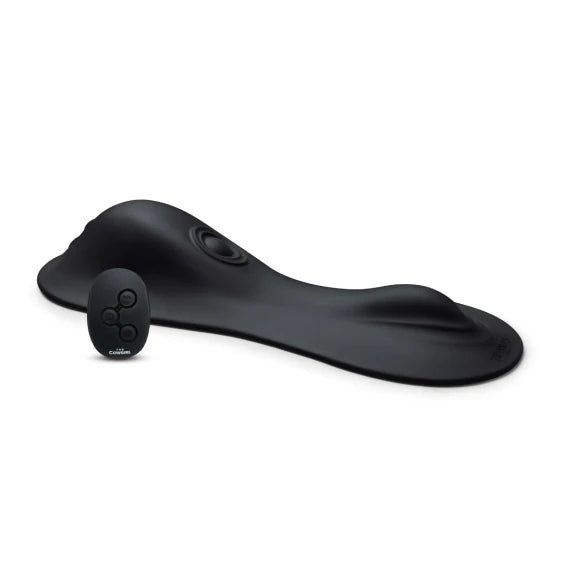
Cowgirl Rodeo Rumbler ride-on sex machine in black silicone, shown with its wireless remote

At a fraction of the price of anything else here, the Rumbler is the only machine on this list you can buy to find out whether you like the category at all, rather than committing to the answer in advance.

It is a ride-on: hands-free grinding with a clitoral tapper running independently of the vibration, so you can dial each separately. It publishes its numbers, which at this price is unusual — 68 decibels, one hour of use on a two-hour charge, 352 grams.

Not for you if you want penetration. This is external stimulation you ride, nothing more. And at 68 dB, it is louder than the Thrust Rider, the Lovense Mini and the Saddle Machine, which all publish 60.

Best rocking motion — Cowgirl Saddle Machine · $359.99

Cowgirl Saddle Machine, a black saddle-shaped ride-on, shown with both included attachments

A self-rocking saddle rather than a vibrating one — the motion mimics riding rather than buzzing, which is a genuinely different sensation and the reason people who find vibration numbing sometimes get on with this.

Two interchangeable attachments are included, and the vibration is mapped to the movement rather than running independently of it.

Not for you if you want data before you buy. Its own page publishes two different noise figures — 60 dB in one place, 72 dB in another — and little else.

Best compact thruster — Lovense Mini Sex Machine · $469.99

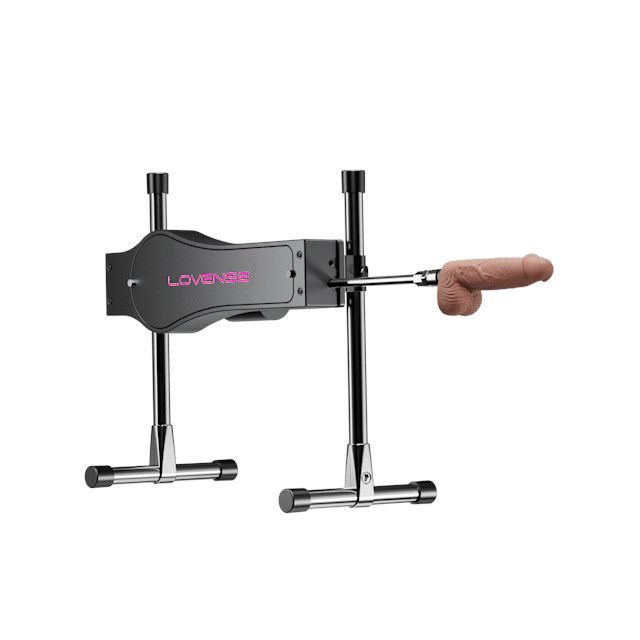
Lovense Mini Sex Machine, a compact thrusting frame on folding legs with adjustable angle

Up to 260 strokes per minute and 33 degrees of tool-free angle adjustment — the first real thrusting machine on this list, and the one that fits in a cupboard.

Angle adjustment is the spec to care about on any thrusting frame. A machine drives along a fixed axis, and if that axis does not match your body you will spend the session fighting it. Being able to change the angle without tools is the difference between a machine you use and one you resent.

Full app control comes as standard, including from another city.

Not for you if you want the stability of a heavy frame. Compact means light, and light means it needs a surface that helps.

Best published spec sheet — The Cowgirl Thrust Rider · $509.99

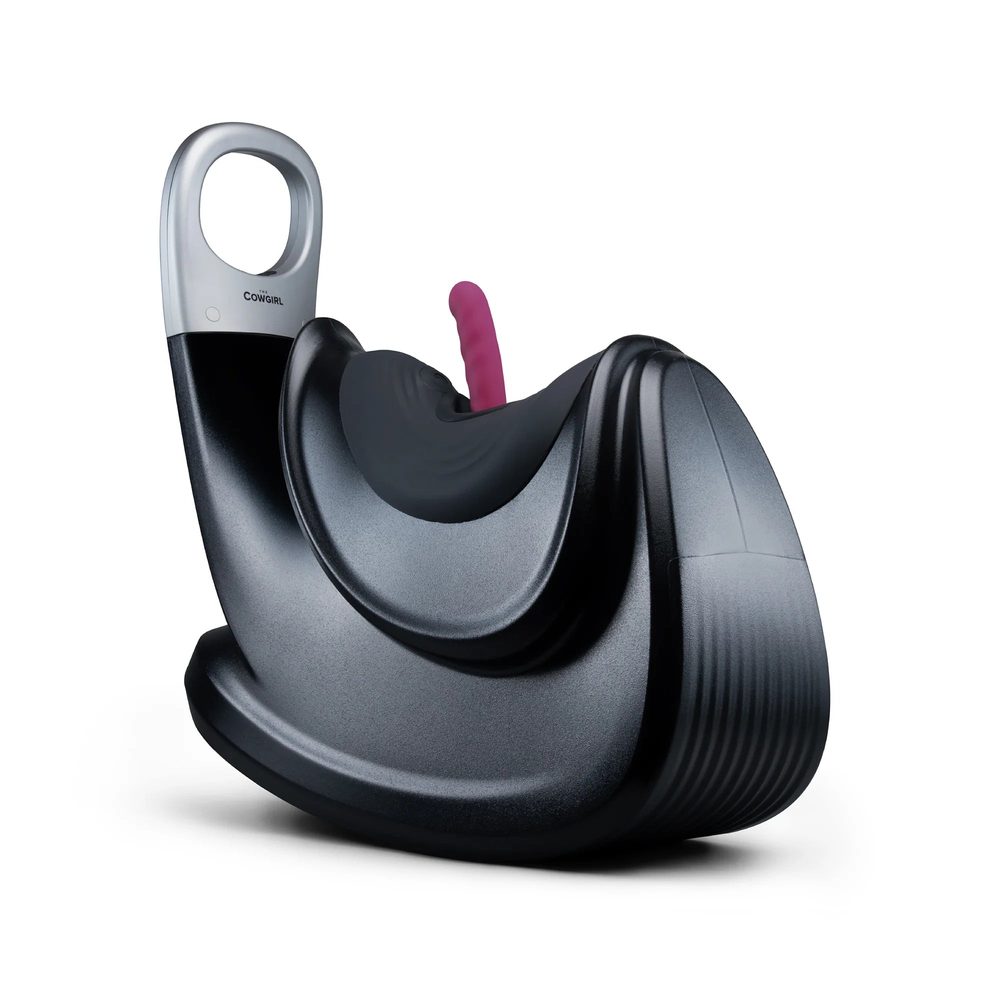
The Cowgirl Thrust Rider ride-on machine in black with a carry handle and ribbed body

The only device here that publishes everything you would want to know, and the reason it earns a place above machines that cost twice as much.

8 thrusting modes at five speeds each, up to 4 inches of variable depth, 6 clitoral tapping speeds, a 300 lb rider capacity, roughly 2 hours of use on a 4.5-hour charge, and a maximum of 60 decibels. An 11 lb base keeps it planted.

It is also the only one that combines both forms — it thrusts and rocks, with external tapping running alongside. If you cannot decide between the two halves of this category, this is the machine that refuses to make you.

Not for you if you want depth beyond 4 inches. That ceiling is published, which is more than most will tell you, but it is still a ceiling.

Best built — Kiiroo Pleasure Drive · $779.99

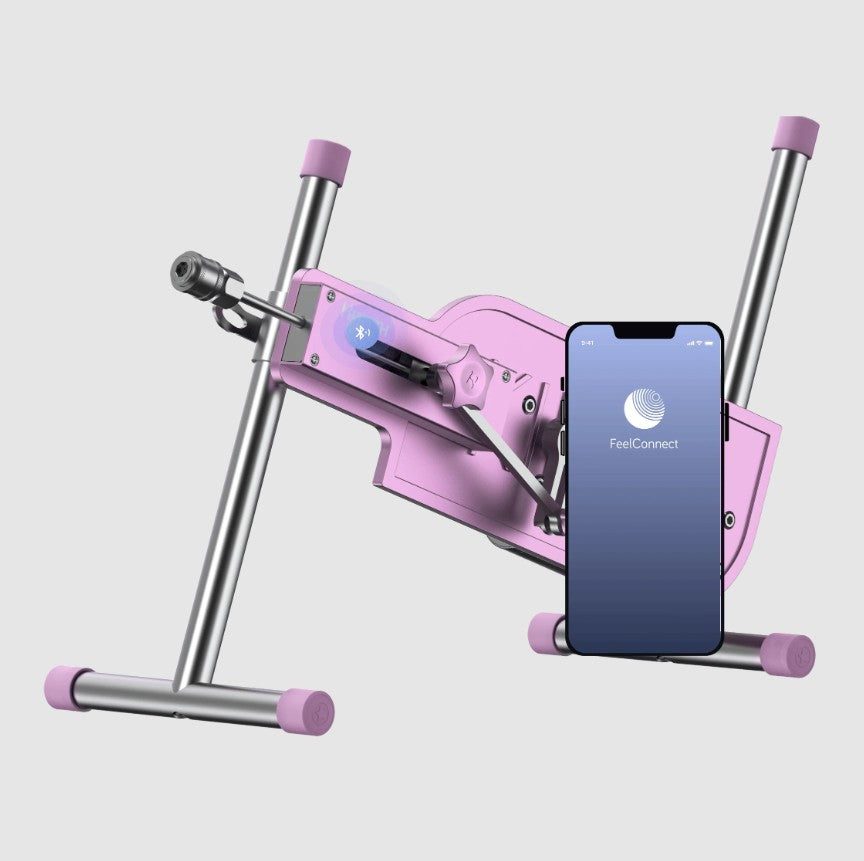
Kiiroo Pleasure Drive thrusting machine in pink and steel, shown beside its phone app control

Designed with HiSmith, a specialist sex-machine frame manufacturer, and built from 7 kilos of stainless steel and aluminium.

That mass is the feature. A thrusting machine pushes against you, and anything the machine’s own weight does not absorb goes into moving the machine — walking it across the floor, rattling, forcing you to reposition. Seven kilos does not walk anywhere.

An 18 cm silicone dildo is included, and it runs from the remote or the FeelConnect app for long-distance play.

Not for you if storage is tight. 7 kilos of steel is not something you slide under a bed one-handed.

Best for couples — Lovense Sex Machine · $1,199.99

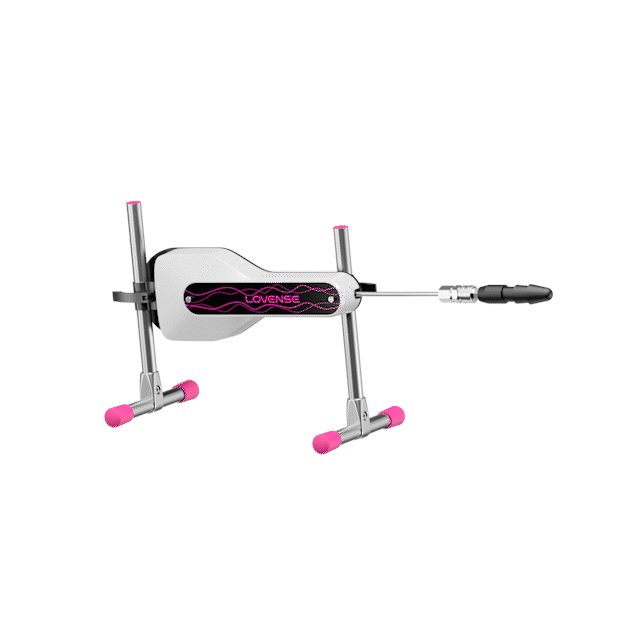
Lovense Sex Machine, a full-size dual-ended thrusting frame on a steel base

Up to 300 strokes per minute and up to 4.5 inches of stroke — the fastest and deepest published figures on this page — from a dual-ended frame that drives two people at once.

Both ends run simultaneously, which is a genuinely different proposition from one person operating a machine on another. Height and angle adjust fully, 7-inch and 6-inch silicone dildos are included, and Vac-U-Lock adaptors mean you are not locked into them.

Not for you if you are buying for solo use. You would be paying for a second end you never switch on — the Mini gives you the same brand’s thrusting for $730 less.

Best ride-on — The Unicorn Premium · $2,339.99

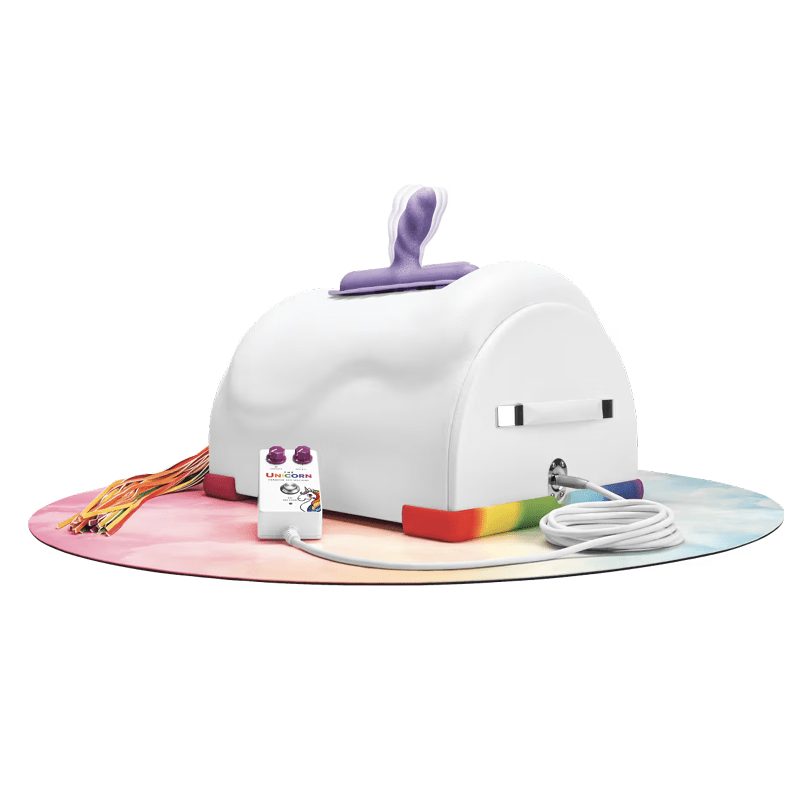
The Unicorn Premium riding sex machine in white, shown with its five-piece accessory set

6,500 RPM of vibration, 360-degree swivel rotation, and a 400 lb weight capacity — the highest published capacity here, and the spec that makes this the most genuinely inclusive machine on the list.

Vibration and rotation run independently. The five-piece set includes two attachments, a corded LED remote, a detachable flogger and a floor mat that exists because 6,500 RPM against a hard floor travels through a building.

Not for you if you want thrusting. This is rotation and vibration you ride — no stroke, no depth.

Best overall, if budget is not the constraint — The Cowgirl Premium · $2,419.99

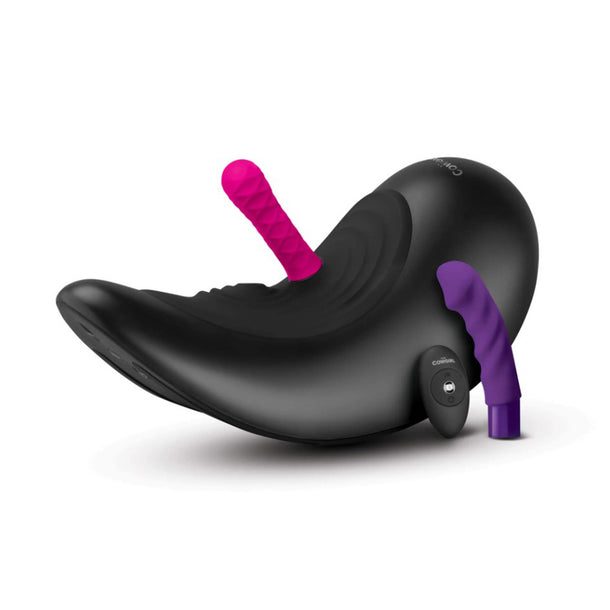
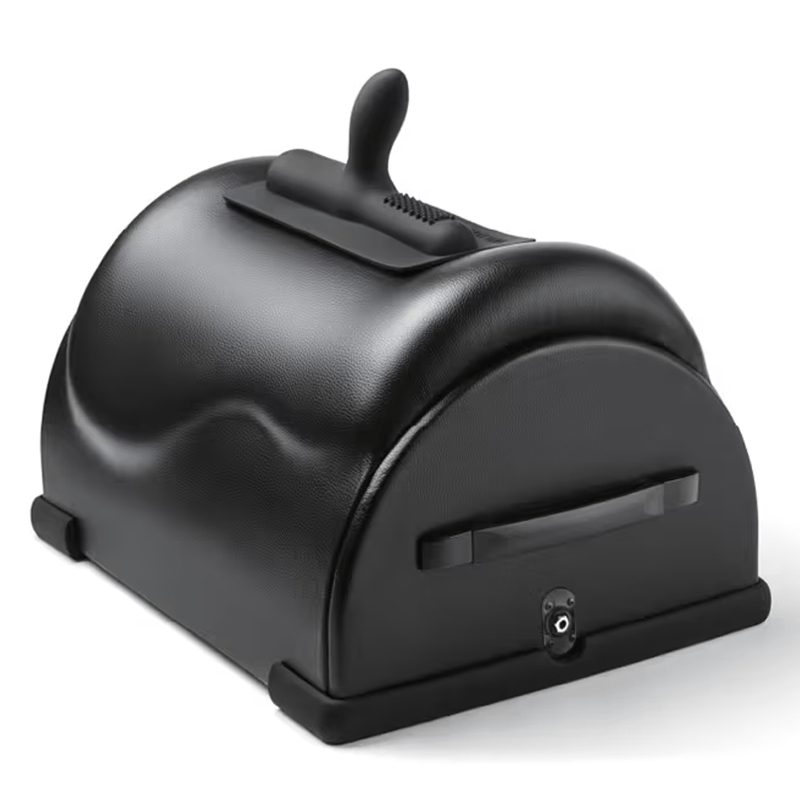
The Cowgirl Premium ride-on sex machine in black with a textured saddle top

The machine the rest of the ride-on category is measured against. 6 vibration patterns, 360 degrees of swivel rotation, up to 6,500 RPM, with vibration and rotation controlled separately.

What justifies the price is the saddle itself — padded, angled for ergonomic support, designed by a certified sex educator rather than an engineer working from a spec. On a device you sit on for an hour, the seat is not a detail.

Not for you if the Unicorn at $80.00 less does the same job with a higher weight capacity and more in the box. Compare the two properly before you spend.

What nobody tells you before you buy one

Decide ride-on or thrusting first. Everything else is detail. A ride-on is external, rhythmic and led by you; a thrusting frame is internal, relentless and led by the machine. People who buy the wrong one rarely fix it with settings.

Weight is a feature, not a shipping cost. The heaviest machines here are the ones that stay where you put them. Light frames need bracing, and bracing is work.

Storage is the real constraint. This is the least discreet category in the shop. Before you spend, decide where it lives when it is not in use — that question ends more purchases than price does.

You will need more lubricant than you think. A machine does not adjust or pause. Use a generous amount of water-based lubricant and reapply rather than pushing on.

Start at the lowest setting, every time. Even once you know the machine. Nothing here is gentle by default, and the slow end exists for a reason.

Quick answers

Cheapest way to try one? Cowgirl Rodeo Rumbler at $154.99.

Quietest published figure? A three-way tie at 60 dB — The Cowgirl Thrust Rider, the Lovense Mini and the Cowgirl Saddle Machine.

Fastest and deepest? Lovense Sex Machine — 300 strokes per minute, 4.5 inches.

Highest weight capacity? The Unicorn Premium — 400 lb.

Best for long distance? Kiiroo Pleasure Drive or the Lovense Mini.

If you only buy one? The Cowgirl Thrust Rider — it does both forms and tells you what it does.

Care, briefly

Attachments come off and get washed properly with a gentle cleanser; the frame or saddle gets wiped, never soaked. Check the fixings before each session on any machine that thrusts — a loose rod is the one failure in this category that is genuinely worth avoiding.

Finding your fit

Or browse the full sex machine collection with your two answers ready — ride-on or thrusting, and where it will live. If a machine is more than you want right now, thrusting vibrators deliver the same idea at a tenth the price and a fraction of the footprint. Everything ships across Canada in plain packaging, under a sender name that gives nothing away.


A sex machine is not a stronger vibrator. It is a machine that keeps a rhythm you did not have to maintain, which is a different thing to want — and the reason the people who love them describe them in terms of surrender rather than intensity.

Decide which half of the category you belong to, then buy the one that publishes its numbers. Everything else is a saddle you have not sat on yet.

Posted on

Chastity Cage Sizing Guide

Chastity Cage Sizing Guide

If a cage pinches, goes numb, or you cannot stop thinking about it, the problem is almost never you. It is almost always one of three measurements — and most people only ever take one of them.

A well-fitted device should fade into the background until you decide it matters. Here is how to get there, and one honest shortcut at the end.

The three numbers that decide the fit

Most sizing mistakes come from chasing length, because length is the number on the front of the box. Fit is a balance of three variables, and getting two right still leaves you uncomfortable.

Base ring diameter is the foundation. It sets how the device anchors and carries the weight.

Cage internal diameter controls how much room there is inside the tube.

Cage length controls forward space. It is the least important of the three and gets the most attention.

Prioritise in that order: ring first, diameter second, length last.

How to measure the base ring

This is the measurement that decides whether a device is wearable for hours or unwearable after twenty minutes.

Measure circumference and convert. Use a soft tape, or a strip of paper and a ruler. Measure soft, standing, with everything relaxed — measuring while aroused or lying down gives you a number that will not hold.

Wrap the tape around the shaft and behind the testicles, where the ring will actually sit. Snug, not tight. Then divide the circumference by 3.14 to get the diameter you need.

Measure three times across a day. Bodies change with temperature and time of day, and the average of three is far more useful than one confident reading.

How to measure length — and why to go shorter

Measure from the base to the tip while soft. Then buy shorter than that number.

A cage matching your full soft length leaves space to move into, which is exactly what you are trying to avoid. Most people are best served by something noticeably shorter than their measurement, and almost nobody regrets going shorter.

The signs you got it wrong

Learn these, because the fix is different for each.

Pinching at the base means the ring is too small, or skin is being caught when you put it on. Never solve this by forcing it.

Slipping or rotating means the ring is too large. A device that moves will chafe, and chafing is what ends long wear.

Numbness, coldness, colour change, or pins and needles is circulation, and it is the one that is not a comfort issue. Remove the device immediately and do not put it back on until everything has returned to normal. If it does not, seek medical advice rather than waiting it out. No sizing chart is worth an injury.

Constant awareness — not pain, just never being able to forget it — usually means the length is wrong rather than the ring.

The honest shortcut: skip rigid entirely

Everything above assumes a rigid device with fixed measurements. That is the format that creates the sizing problem in the first place.

Both devices we stock take the other approach. COCK-LOCK at $79.99 is a soft, super-stretchy cage with no locks and no rigid parts — it fits any size because it deforms to whatever it is on, and doubles as a bulge-enhancing packer. MEATLOCKER at $94.99 is Oxballs’ first full-cover device, made from a silicone-TPR blend that stretches to fit and grips like a glove, built specifically for long-term comfortable wear.

Neither will satisfy someone who wants a locked steel device, and we are not pretending otherwise. But if you are sizing for comfort and long wear rather than security, the honest answer is that the measuring problem is avoidable.

The trade-offs: soft versus rigid

Soft is right if this is new to you, if you want to wear it for hours, if you are still learning your measurements, or if the appeal is sensation and presence rather than genuine denial. It is also the format you can stop wearing in three seconds, which matters more than people admit when they are starting out.

Rigid is right if security is the actual point — if the device needs to be something you cannot simply remove. That is a different want, and a legitimate one. We do not currently stock it, and a soft cage will not scratch that itch.

If what you are after is the dynamic rather than the hardware, that lives in bondage and kink more broadly — restraints and cock rings both build a sense of control without a fit problem to solve.

Wearing it well

Start with short sessions. An hour, then an evening, then overnight — in that order, over weeks rather than days. Skin needs time to adapt and you need time to learn what normal feels like, so that abnormal is obvious.

A little water-based lubricant makes putting it on far easier and prevents the skin-catching that causes most base pinching.

Clean daily with warm water and a gentle cleanser, and dry thoroughly. Anything worn against skin for hours needs more hygiene attention than a toy used for twenty minutes, not less.

And if you are wearing one with a partner holding the terms, agree in advance how it comes off in an emergency. That conversation is not a mood-killer; it is what makes the rest of it possible.

Finding your fit

  • COCK-LOCK · $79.99 — soft, stretchy, no locks or rigid parts. Fits any size, doubles as a packer. The least committal way in.
  • MEATLOCKER · $94.99 — full-cover, silicone-TPR blend, built for long-term wear. Stretches to fit rather than requiring a size.

Both sit in chastity, and both sidestep the measuring exercise entirely. If you want the wider picture on power exchange and where devices fit into it, the bondage and kink range is the place to start. Everything ships across Canada in plain packaging, under a sender name that gives nothing away.


A cage that fits is one you stop noticing. That is the whole target — not tighter, not smaller, not more punishing. Just correct enough to disappear until you want it not to.

Measure three times, buy shorter than you think, and pay attention to what your body reports back in the first week. It will tell you everything a sizing chart cannot.

Posted on

Twitch 2 Vibrator Review

Twitch 2 Vibrator Review

Three motors. Ten speeds each. Two separate pieces that talk to each other without an app. On paper the Twitch 2 answers a question a lot of people actually have — why should I choose between external and internal?

The idea is sound. The execution has one ceiling that decides whether you’ll love it or shelve it, and it is not the one the box warns you about.

First, the honest disclosure

We do not stock the Twitch 2. It was on our previous storefront and Shots is not a brand our current supplier carries, so there is nothing for us to sell you at the end of this review.

The review stays up because the question behind it is a good one, and because the toys that answer it best are ones we do carry. Where that matters, we will say so plainly — including where they cost more.

What the Twitch 2 actually is

Two pieces. A dual-ended external stimulator — a flapping tongue on one end, a clitoral suction mouth on the other — and a separate insertable vibrating egg. Three motors between them, ten speed modes each, and the external unit doubles as the egg’s remote.

That last detail is the quietly clever one. No Bluetooth pairing, no app update at eleven at night, no dead phone ending the evening. The remote is a toy you are already holding.

Both pieces are waterproof, which is less common at this price than it should be, and the silicone reads as more expensive than $124.

The ceiling nobody mentions until it happens

Battery. Three motors drawing from small cells means the Twitch 2 runs out before a long session does, and you end up charging it more often than you use it.

This is the single most common reason a multi-motor toy goes in a drawer, and it is the spec almost nobody shops for. Runtime is not a luxury feature. It is the difference between a toy you reach for and a toy you have to plan around.

Which is why it is worth naming the brands that print the number. Sona 3 Cruise publishes up to 2 hours of use on a 2-hour charge, with a 520 mAh cell and 90 days of standby. Moxie+ publishes up to 2 hours on a 90-minute charge. Those are figures you can plan an evening around.

The second spec worth knowing: the Twitch 2 measures 60 decibels. That is not loud, but it is conversation-across-a-room rather than fridge-in-the-next-flat. If you share thin walls, treat it accordingly.

What to look for in a dual-stimulation toy

Four things separate the ones people keep using from the ones that get charged once and forgotten.

1. One device or two

Two pieces give you independence — external and internal can run at different intensities, and either can be used alone. The cost is two things to charge, two things to clean, two things to lose.

One device that does both is simpler and usually better made at the same price. Enigma is the clearest example we carry: sonic waves against the clitoris and gentle pulses internally, at the same time, from one body. Eight settings rather than thirty, which is the trade — fewer options, better executed.

2. Suction, sonic, or tongue — they are not the same sensation

The Twitch 2 offers a suction mouth and a flapping tongue, and treats them as two flavours of the same thing. They are not.

Suction pulls. Sonic waves press without contact, which suits people who find direct clitoral pressure too sharp — that is what Sila Cruise is built around, with a deliberately wider mouth for broader coverage. A rotating tongue, like the one in Ora 3 with its 12 modes, is a moving, circling sensation rather than a pulsing one.

Knowing which of the three your body answers to narrows the whole clitoral range faster than any feature list.

3. Whether a phone is involved

The Twitch 2’s no-app remote is a genuine advantage and an obvious limitation in the same breath: it works across a room, not across a country.

If in-the-room control is what you want, Tiani Duo runs two motors from a motion-sensitive remote — you change the intensity with a flick of the wrist rather than a menu. If you want distance, that is a different purchase entirely, and the app-controlled range is where to look.

4. How many modes you will genuinely use

Thirty settings across three motors sounds generous. In practice most people find two they like and stay there.

Mode count is the easiest number for a brand to inflate and the least useful one to shop on. What matters is whether the low end is genuinely low — the harder thing to engineer, and the setting more people actually use.

The trade-offs: when the Twitch 2 is right, and when it is not

It is right if you specifically want external and internal running independently, you like the idea of a remote that is also a toy, and your sessions are short enough that battery is not the deciding factor.

It is wrong if this is your first or second toy — a two-piece system is a lot of decisions to make before you know what you like. Start with one function, learn your preference, then buy for it. Lily 2 at $109.99 or Volta at $109.99 are better first purchases than anything with three motors.

It is also wrong if you want long-distance play, or if you need endurance more than variety. And it is worth saying plainly: the toys we would put in its place cost more — $177 to $230 rather than $124. What you get for the difference is published runtime, better silicone and a single device instead of two. Whether that is worth seventy dollars is a fair question, and the answer depends on how often you would actually reach for it.

Care, briefly

Warm water and a gentle cleanser before and after use, dried fully before storage. Anything with a suction mouth or a moving tongue needs the recess cleaned properly rather than wiped — that is where a toy starts to smell before it starts to fail.

Pair silicone with a water-based lubricant rather than a silicone one, which degrades the surface over time.

Finding your fit

If the Twitch 2’s dual-stimulation promise is what brought you here, these answer the same want from stock we actually hold.

  • Volta · $109.99 — flexible fluttering tips, external only. The least intimidating way to find out whether you like this kind of sensation at all.
  • Lily 2 · $109.99 — small, quiet, deliberately simple. A first toy rather than a fourth.
  • Moxie+ · $124.99 — wearable and magnetically held, 10 modes, IPX7, and a published 2-hour runtime on a 90-minute charge.
  • Ora 3 · $179.99 — a rotating tongue node with 12 modes. The closest thing we stock to the Twitch’s tongue end, executed far better.
  • Sila Cruise · $184.99 — sonic rather than suction, with a wider mouth for broad, indirect pressure. For people who find direct contact too sharp.
  • Tiani Duo · $194.99 — two motors, eight settings, motion-sensitive remote. Wearable during sex.
  • Enigma · $229.99 — sonic clitoral and internal pulses simultaneously, in one device. The single best answer to what the Twitch 2 was trying to do.
  • Sona 3 Cruise · $229.99 — the fullest published spec sheet here: 112 × 51 × 55 mm, 128 g, 2-hour runtime, 90-day standby.

Or browse the whole clitoral collection and the couples range with your two answers in hand — which sensation, and how long you need it to last. If you are earlier in the decision than that, our guide to choosing a vibrator works through placement, intensity, pattern, size and noise before you spend anything. Everything ships across Canada in plain packaging, under a sender name that gives nothing away.


The Twitch 2 got the question right. Wanting external and internal at once is not greedy or advanced — it is just how a lot of bodies work, and for a long time the market treated it as a niche.

What it got wrong was assuming more motors was the answer. The better answer turned out to be fewer, running longer, in one hand.

Posted on

Natural Realskin Hot Cock #1 Review

Natural Realskin Hot Cock #1 Review

A dildo that heats itself to 113°F sounds like a solution to a problem nobody has. Then you hold one that has been warming for five minutes, and the thing you notice is not warmth. It is the absence of the small flinch that comes with room-temperature silicone.

That flinch is real, and most people stop noticing they brace for it. The Natural Realskin Hot Cock #1 is built around removing it. This review covers what it does well, the material trade-off almost nobody mentions, and — since we no longer carry it — what in the realistic dildo range solves the same problem without the catch.

First, the honest disclosure

We do not stock the Natural Realskin Hot Cock #1. It was on our previous storefront and it is not in our current supplier’s catalogue, so there is nothing for us to sell you at the end of this page.

We have kept the review up anyway, because it is still the honest answer to the question people arrive with — is a warming realistic dildo worth it? — and because the answer turns out to be more interesting than yes or no.

What the Hot Cock #1 actually is

Ten inches overall, 7.25 inches insertable, moulded from RealSkin — a thermoplastic elastomer engineered to sit closer to skin than silicone does. The shaft heats to 113°F, roughly a degree or two above body temperature. Twelve vibration functions, USB charging, waterproof, and a fully bendable core that holds whatever angle you set it to.

The bendability is the underrated part. Length and girth get all the attention, but angle is where most realistic dildos quietly fail — a shaft that will not sit where your body wants it becomes a toy you fight rather than use.

What the warming function actually does

Not what the marketing implies. It is not a heat sensation and it is not arousing on its own. What 113°F does is remove the moment where your body registers object — the involuntary half-second of adjustment that silicone at room temperature always produces.

It takes several minutes to come up to temperature, so it is not a mid-session toggle. You warm it before you begin, the same way you would warm massage oil in your hands.

Whether that matters depends entirely on why you bought a realistic toy. If realism is the point, it closes a real gap. If you are indifferent to realism and just want good sensation, it will not convert you.

The material catch nobody puts on the box

Here is the part that decides whether this toy is a good buy, and it is not in the feature list.

RealSkin is TPE, and TPE is porous. That porosity is not a defect — it is exactly why the material has give and grip and warms quickly. But porous means microscopic channels that hold moisture, which means it cannot be sterilised, cannot be boiled, and has a finite life measured in months rather than years. It also means a dedicated toy cleaner and full drying time before storage are not optional.

Compare that with a toy like the Tantus Destiny, which is boilable and dishwasher safe. Same category, entirely different relationship with hygiene.

For a long time this was simply the price of realism. Silicone was safe and inert; TPE felt alive. You picked one. That trade-off no longer holds, and it is the single biggest change in this category in the last few years.

What to look for in a realistic dildo

Four things decide it, and only one of them is on the front of the box.

1. Dual-density silicone, not single-density

This is the innovation that made TPE’s compromise unnecessary. A dual-density toy has a firm inner core wrapped in an ultra-soft outer layer, so it gives under pressure and moves against the shaft the way skin does — while remaining completely non-porous.

Strap-On-Me’s Sliding Skin range is the clearest example on our shelves, and b-Vibe’s Slipskin takes the same idea further with pressure-reactive silicone that slides and squishes rather than simply flexing. Both are boilable. Neither has a shelf life.

2. A published insertable length — and the discipline to use it

Overall length is a marketing number. Insertable length is the one your body experiences, and the gap between them is often two or three inches.

The Hot Cock #1 publishes 7.25 inches insertable, which is longer than most people’s actual preference. For comparison, here is a range that publishes every rung: Sliding Skin runs 5.28 inches at M, 5.59 at L, and 6.22 at XXL; the Destiny sits at 5 inches with a 2-inch maximum diameter tapering to 1.5.

If you have never measured what you actually like, start shorter than instinct suggests. Graduating up is easy. Talking your body into something that felt like too much on day one is not.

3. Girth, which matters more than length and gets discussed less

Most disappointment in this category is a diameter problem wearing a length costume. A toy that is too thick registers immediately; a toy that is too long you simply do not insert all the way.

Published diameters are worth hunting for. The Tantus Echo lists 1.55 inches — genuinely slim, and a sensible first realistic toy. The Rotating & Vibrating Realistic lists 1.61 inches at the glans and 1.57 along the shaft, which is the more common realistic build.

4. Whether you want a motor in it at all

Twelve modes sounds generous until you notice most people use two. The question is not how many patterns a toy has — it is whether vibration adds to a realistic toy or fights it.

Vibration through a realistic shaft can break the illusion it was built to create. If you want both, look for something that separates the two: the Rotating & Vibrating Realistic runs two independent motors with three intensity levels, 5.91 inches insertable, IPX7 waterproof, and a published 55 minutes of runtime on a 175-minute charge. The rest of the vibrating dildo range is small and deliberately so.

If it was the warmth you wanted

Then be honest with yourself about which feature you are actually chasing, because warming and realism are separable and almost nobody sells both.

We stock exactly one toy that heats: the Lovense Spinel at $249.99, which combines warming with thrusting and vibration and swaps between interchangeable heads. It is not a realistic dildo and it does not pretend to be. But if the warmth was the part that sold you, it is the only honest answer we have.

There is also a cheaper, older answer that costs nothing: a bowl of warm water and three minutes. Silicone holds heat well. It is less elegant than a heating element and it works.

The trade-offs: when this toy is right, and when it is not

It is right if maximum realism is genuinely the point, 7.25 inches is a length you have already tested and liked, and you are willing to run a stricter cleaning routine and replace the toy sooner than you would a silicone one.

It is wrong if you are buying your first realistic dildo — the length is ambitious and the material is unforgiving. It is wrong if you share toys, because porous material and sharing do not belong in the same sentence. And it is wrong if you want something that lasts, because TPE has a shelf life and silicone does not.

It is also wrong if what you actually want is movement rather than realism. That is a different category entirely — thrusting toys do a thing no static dildo can, and the Lovense Gravity publishes a 1.18-inch stroke at up to 140 strokes per minute if you want to see what that looks like in numbers.

Care, briefly

Non-porous silicone: warm water and a gentle cleanser before and after, dried fully, stored away from dust. Several of the Tantus toys are boilable and dishwasher safe, which is a genuine convenience rather than a spec-sheet flourish.

Pair silicone with a water-based lubricant rather than a silicone one, which degrades the surface over time. And if you are using any of these in a harness, check the base diameter against the harness before you buy, not after.

Finding your fit

If this review brought you here looking for the Hot Cock #1, these are the toys that answer the same want — realism you can feel, in a material you can keep.

  • Tantus Destiny · $79.99 — 5 inches insertable, tapers from 2 inches to 1.5, boilable. The least intimidating way into realistic.
  • Tantus Echo · $84.99 — 6.5 inches insertable at a slim 1.55-inch diameter, with a removable bullet. Realistic plus vibration, without committing to either.
  • Sliding Skin M · $104.99 — dual-density, 5.28 inches insertable. The entry point to the non-porous realism argument.
  • Sliding Skin L · $119.99 — 5.59 inches insertable. The size most people land on.
  • Sliding Skin XXL · $139.99 — 6.22 inches insertable, the closest published match to the Hot Cock’s proportions.
  • Rotating & Vibrating Realistic · $164.99 — two independent motors, 5.91 inches insertable, 55 minutes of runtime. Realism with a motor that does not overwrite it.
  • b-Vibe Slipskin Curvy 8″ · $174.99 — pressure-reactive silicone that slides and squishes. The most convincing realism we stock.
  • b-Vibe Slipskin Girthy 9″ · $194.99 — the same material with substantially more girth, if you already know that is your variable.
  • Lovense Spinel · $249.99 — the only warming toy on the site. Not realistic, but it is the one that heats.

Or browse the full dildo collection with your insertable length and diameter in hand. If you are still working out which category suits you at all, our guide to choosing a vibrator covers the same five-factor framework from the other direction. Everything ships across Canada in plain packaging, under a sender name that gives nothing away.


The Natural Realskin Hot Cock #1 was a good answer to a question the industry had not finished asking. It solved for the feel of realism and paid for it in the material — which was the only deal available at the time.

It is not the only deal any more. Dual-density silicone gives you the same give, the same grip, and a toy you can boil — which means the interesting question is no longer whether realism is worth a compromise, but what you would choose now that it isn’t.