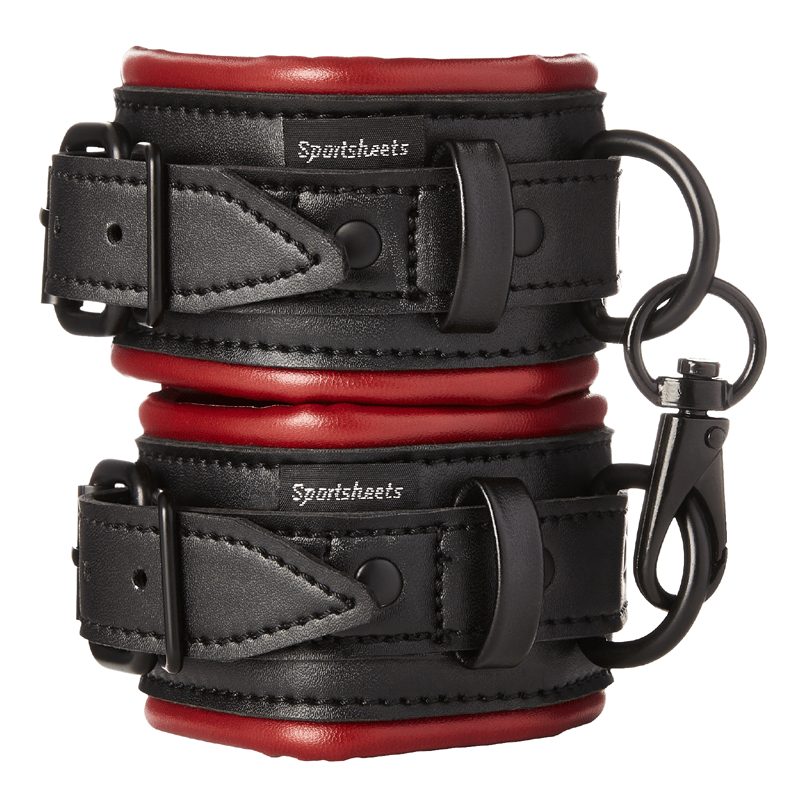
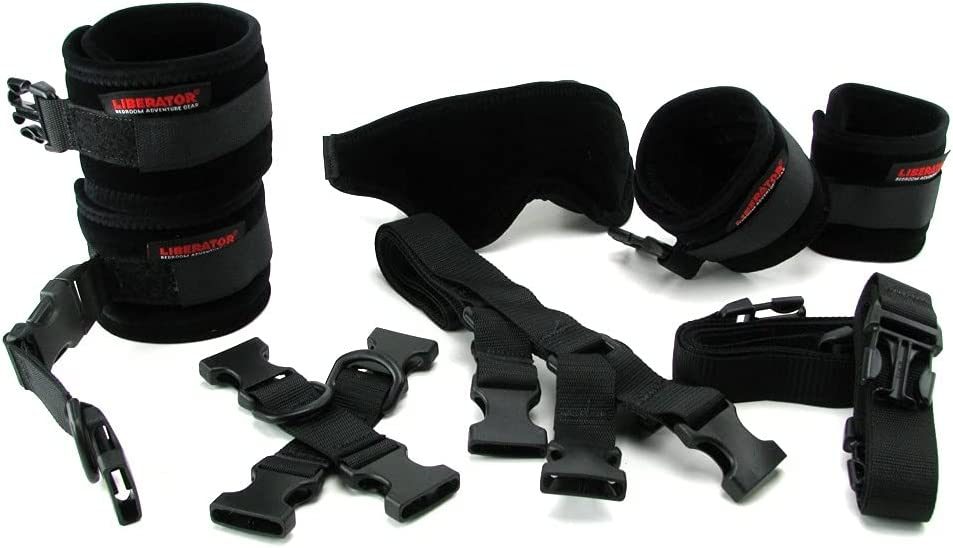
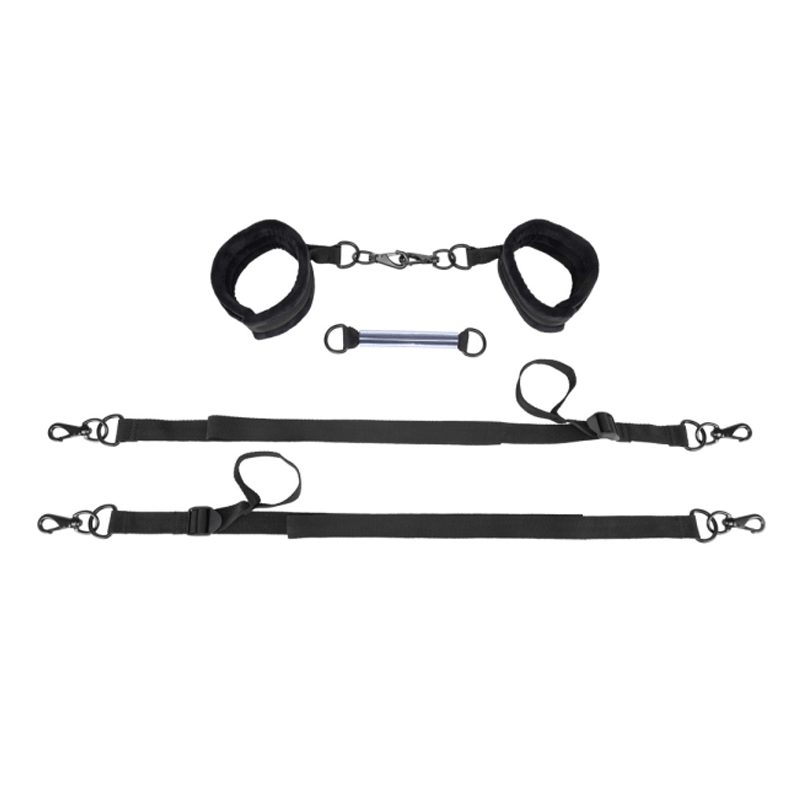
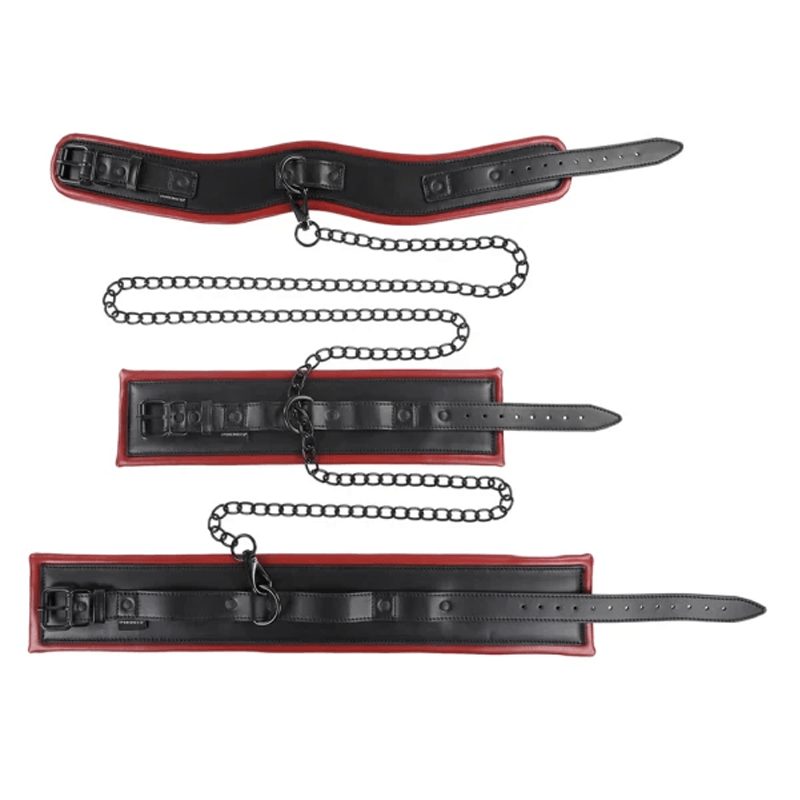
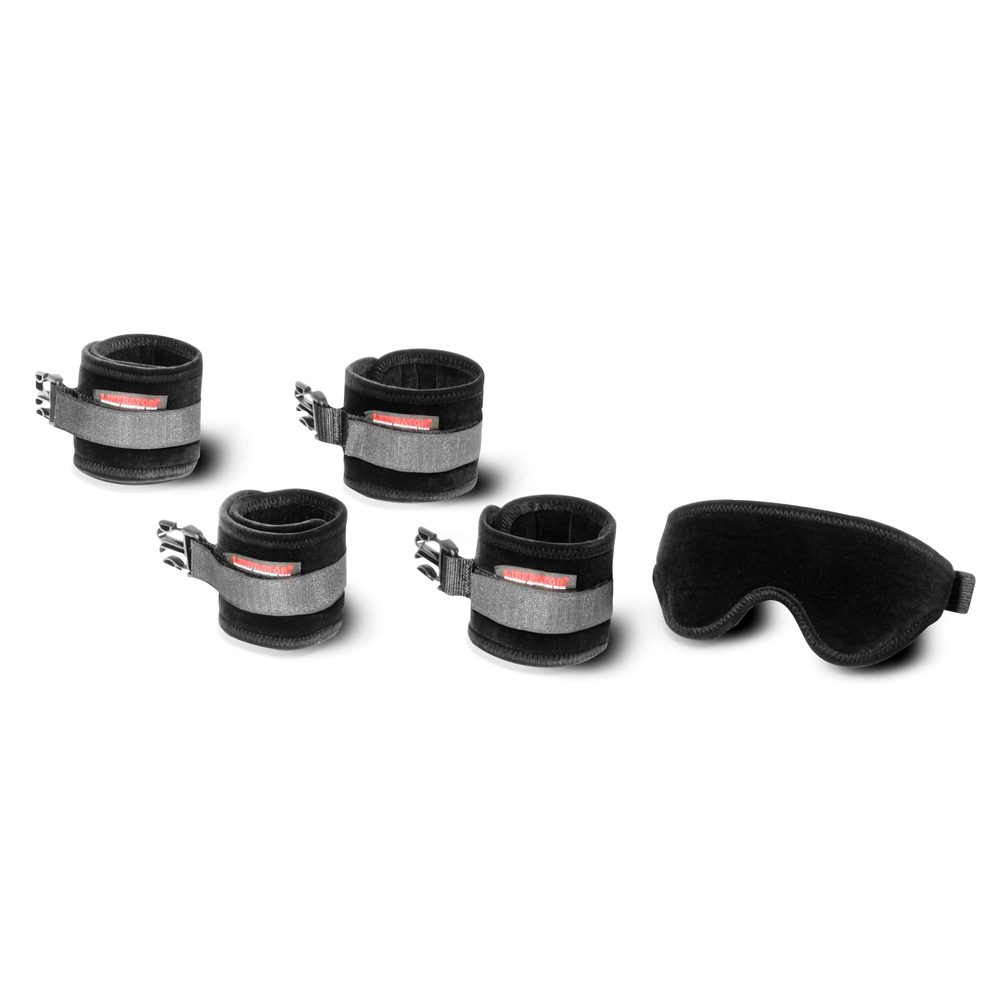
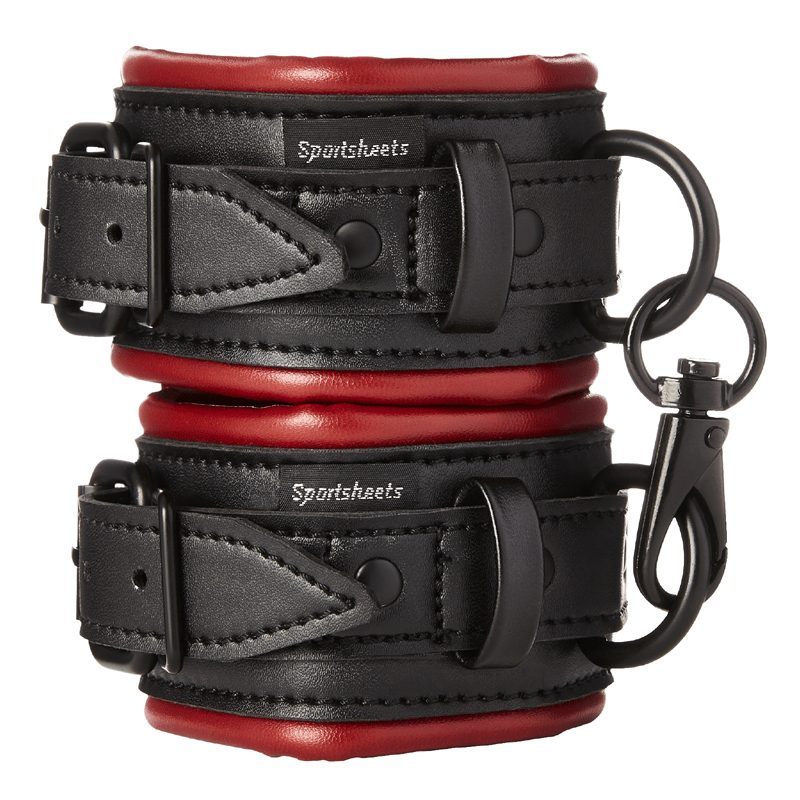
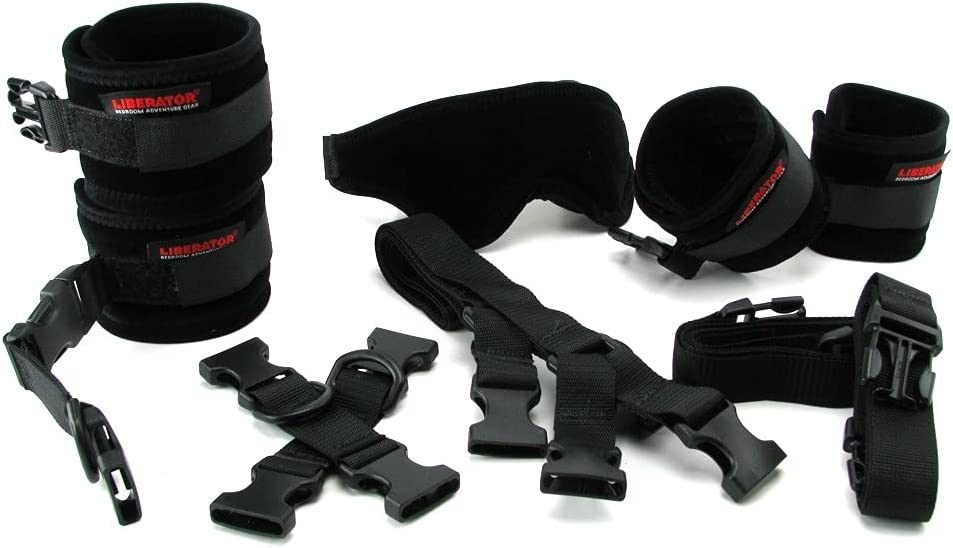
Remove one sense and the others become extraordinary. Blindfolds are among the simplest, most accessible, and most transformative tools in sensory play — here’s how to use them well.
A blindfold is technically the simplest restraint in existence. No knots. No mechanisms. No skill required beyond placing it over your partner’s eyes. And yet the experience it creates is disproportionately profound — often described by first-timers as among the most intense intimate experiences they’ve had, without any escalation in what’s physically happening.
The reason is neurological. When vision is removed, the brain doesn’t go quiet — it heightens everything else. Auditory processing sharpens. Touch becomes more vivid. The anticipatory circuits go into overdrive: what’s coming? Where? When? That sustained not-knowing, combined with sustained trust, produces a state that’s genuinely difficult to achieve through other means.
What Sensory Deprivation Does, Specifically
Sensory play is the intentional restriction or alteration of one or more senses to amplify intimate experience. Blindfolds are the most common entry point — but the category includes anything that changes the sensory environment: earplugs, specific textures against skin, temperature, scent.
In the context of restraint play, sensory deprivation and physical restraint are natural complements. Blindfolded and lightly restrained, the person receiving attention is entirely dependent on their partner’s choices. The person giving attention has the full range of sensation available to them as tools. Both positions require and create a quality of attention that ordinary intimacy rarely produces.
Starting with a Blindfold
A note on the catalogue first, in the interest of not sending you looking for something that isn’t here: an earlier version of this guide named a “Sportsheets Satin Blindfold,” which this store has never carried. The blindfold actually worth recommending is the Black Label LoveBlind Plush Blindfold, $79.99 in black microfiber (also available in fluffy red, $69.99). Its own product page lists an adjustable velcro strap for a fit that holds without pressure, plus a shaped “no-peek” nose bridge and high-quality microfiber edges against the eye area — the same comfortable, quick-to-remove qualities that make soft cuffs the right starting point for physical restraint.
A basic blindfold doesn’t have to be purpose-made. A soft, clean scarf or sleep mask can work for an initial exploration. But if the experience resonates — and it usually does — a quality blindfold designed for intimacy is worth having. The difference in comfort and light-blocking performance is noticeable.
The Four Sensory Dimensions Worth Exploring
Vision
The most accessible starting point. Remove sight and everything else intensifies. Particularly powerful when the sighted partner moves silently, uses varied touch, or introduces temperature — anything that becomes unpredictable.
Touch & Texture
Vary what touches the skin: fingertips, fabric, a feather, ice, breath at different distances. With vision removed, the skin reads each texture as if for the first time. This is the dimension that surprises people most.
Sound
Silence amplifies sensation. So does deliberate sound — whispering close to an ear, describing what’s about to happen, or using ambient music to shift mood. The blindfolded person’s auditory sensitivity is genuinely heightened.
Anticipation
Technically not a sense — but the most powerful element in the room. The pause before touch. The approach announced and then delayed. Anticipation is built on the impossibility of seeing what’s coming, and it produces sensation before contact is made.
Combining Blindfolds with Physical Restraint
Blindfolded and lightly restrained — with soft cuffs from the restraints collection ↗ shop — the receiving partner’s experience becomes significantly more focused. There’s nowhere to redirect attention. The only available option is to be present to what is happening, and to trust that the person causing it knows what they’re doing.
That trust is the real subject of sensory play. Every session where both partners feel genuinely safe and genuinely present builds more of it. Which is why this kind of play, done well, tends to deepen relationships in ways that extend well beyond the bedroom.
Make sure a safe word and check-in protocol is established before any session that combines physical restraint with sensory restriction — our companion guide to safe words and consent in restraint play covers this in full.
What to Try in Your First Sensory Play Session
Apply the blindfold first, before any physical restraint. Let your partner adjust to the darkness and trust their other senses before adding more.
Move slowly and with deliberation. Silence before touch is its own form of sensation.
Vary touch pressure, temperature, and location unpredictably. The unexpectedness is the point.
Narrate — or don’t. Both approaches work; choose intentionally based on what you know your partner responds to.
End the session by removing the blindfold slowly and making soft visual contact before speaking. The return to ordinary sensory experience is itself a transition worth marking.
For those who find that sensory play and restraint open up an interest in more structured power exchange, our guide to dominance and submission explores where this experience can lead — and how to navigate it with the same intentionality you’ve brought to this one.
The aftercare note
Sensory deprivation, like physical restraint, can produce an altered state in the receiving partner — a floating, disconnected feeling that takes time to ground. Plan for aftercare: warmth, skin contact, gentle conversation, time. The transition back to ordinary reality is part of the experience.
Explore blindfolds, sensory play accessories, and the full restraints collection.
You already know how your partner takes their coffee. You know which side of the bed they prefer, the face they make when they’re pretending not to be annoyed, and roughly how the next disagreement will go. Familiarity is a gift, but it has a quiet side effect: it can make you feel like you already know everything worth knowing.
That’s where intimacy questions come in, and not in the way you might expect. This isn’t about icebreakers or “getting to know you” exercises designed for couples on their third date. For long-term partners, the best intimacy questions work differently. They’re excavation tools, built to surface what years of routine have slowly covered over.
In this post, you’ll find a curated set of prompts organized around four specific kinds of closeness: emotional transparency, sensory preference, desire, and your shared future. You’ll also get guidance on how to actually use them, why the research behind structured conversation is more compelling than it sounds, and how to turn a single conversation into an ongoing practice. Consider this your starting point for going deeper with someone you already know well.
Why Long-Term Couples Need Different Intimacy Questions
Familiarity is not the same as closeness. In a long relationship, you learn someone’s rhythms so well that you stop noticing them as choices. You stop asking questions you think you already know the answers to. Nothing is wrong, exactly. But the texture of the relationship quietly flattens, covered over by the comfortable predictability of knowing each other well.
This is the specific problem with most intimacy questions: they were designed for strangers. They scaffold first vulnerability, the kind that requires courage precisely because the other person is unknown. For established couples, that architecture is mismatched. You don’t need to build a bridge to someone you’ve shared a life with. You need to excavate what the years have quietly buried.
What emotional intimacy actually means, and why most couples unknowingly skip it is worth understanding before reaching for any question set. The foundation shapes what the questions can do.
Research supports the case for structured prompts in long-term relationships. Psychologist Arthur Aron’s closeness-acceleration work demonstrates that intentional question protocols measurably increase psychological intimacy. Research published in the Journal of Social and Personal Relationships adds an important qualifier: intimacy effects are time-sensitive. They diminish over gaps, which means regularity is the actual mechanism, not the intensity of a single session.
You don’t reach for these questions because something is broken. You use them because closeness requires tending.
This piece is for couples who want excavation, not exploration. Not mapping someone new; uncovering someone familiar.
How to Use These Questions Without Turning Them Into a Quiz
Before picking up the first question, settle one thing: these prompts work best as conversations, not checklists.
A few principles worth holding onto:
Pick one category per session. Four categories are offered here; treat them as four separate occasions, not a single agenda. Depth requires time, and time requires constraint.
Let answers breathe. The first response to a good question is rarely the most useful one. Resist the reflex to answer symmetrically and move on. The follow-up, the “say more about that,” is where the actual conversation lives.
Plan to return. When intimacy becomes part of how you live, it stops being an event and becomes a practice. The same question asked six months later, in a different season of the relationship, will often open somewhere entirely new. That is not redundancy; that is how this works.
Watch for interview mode. Two people taking turns delivering tidy answers is not a conversation. Let one question go somewhere neither of you expected before reaching for the next one.
Context is not incidental. A question asked over an unhurried dinner lands differently than the same question squeezed between tasks. Create a small amount of intentional space before beginning: phones down, no half-finished task waiting. The question does not change; the conditions shape what you can hear.
Questions for Emotional Transparency
Emotional transparency in long-term relationships isn’t about revealing something new. It’s about surfacing what familiarity has quietly buried, the inner landscape your partner assumes they already understand because they’ve known you long enough to stop asking.
The most useful emotional questions go deeper than emotion identification, they target the meanings partners attach to what they feel, the layer beneath “I was frustrated” that contains the whole story. These prompts work at that level.
The questions:
“What’s something you’ve felt recently that you assumed I already understood without you saying it?” Familiarity creates assumption gaps. This question names one directly, without blame, and makes room for what went unspoken.
“What’s a version of yourself you’ve outgrown but haven’t told me about?” Long-term couples often stop narrating their own evolution to each other. This prompt surfaces quiet personal change before the distance it creates becomes visible.
“Is there something you’ve stopped bringing up because you assumed it wouldn’t go anywhere?” Shelved conversations aren’t always grievances. Sometimes they’re simply things that never found the right moment. This question reopens the door without framing it as a complaint.
“What feeling do you have the hardest time showing me, and do you know why?” This one moves past naming emotions into examining the patterns around them. It’s a meta-question, and often the most revealing of the four.
A note on how to sit with these: the instinct to reassure quickly is natural, but premature comfort closes the conversation before it fully opens. The intimacy lives in the pause. Let the answer settle before you respond.
These questions are useful for any partnership. If you’re also exploring what intimate wellness in queer relationships looks like in a Canadian context, that resource approaches the same territory from a different angle.
Questions for Sensory Preference and Physical Attunement
If emotional questions feel like reaching inward, sensory ones feel like reaching across. That distinction matters, because for many couples, the body is actually an easier place to start.
Sensory preference is one of the most underexplored corners of long-term intimacy. Not because couples stop being physical, but because they stop asking. Over years, touch settles into pattern. You learn what your partner liked, and that knowledge quietly becomes what you assume they still like. Research from the Kinsey Institute found that couples married longer reported less satisfaction with touch than those in newer relationships, suggesting that sensory preferences need active, ongoing conversation, not a single past understanding.
Physical attunement is worth separating from sexual frequency. It refers to the felt sense of being seen, held, and responded to in ways that shift over time. A person who once found physical closeness grounding might now need more space. Someone who rarely asked to be held might need it more than ever. Neither change announces itself.
These four prompts are designed to surface that current reality:
“What kind of physical presence from me feels most calming to you right now, and has that changed?” This asks for an updated answer, not a remembered one.
“Is there a way I touch you that you love but have never specifically named?” Naming what has only ever been felt deepens awareness for both partners.
“When do you feel most physically comfortable with me, and what makes that different from other moments?” This targets conditions, not just contact.
“What’s one sensory experience you’d want us to share that we haven’t tried?” Framed as curiosity, not a request, which keeps it genuinely open.
These conversations tend to feel concrete and low-stakes, which makes them a natural entry point before moving into the territory covered in the next section.
Questions That Open Into Desire
Desire questions live somewhere more complicated than the body alone.
Research published in the Journal of Social and Personal Relationships confirms that emotional intimacy doesn’t produce sexual desire directly. It creates conditions for desire, operating through an indirect pathway. The distinction matters: closeness doesn’t mechanically generate wanting, it makes the ground more receptive. That reframing is worth sitting with.
Worth noting, too, is that this pathway holds equally across genders. The strength of the intimacy-to-desire link shows no significant difference between men and women, which quietly dismantles the tired assumption that emotional connection is primarily a prerequisite for women. These questions are built for everyone.
In long-term relationships, desire tends to hinge less on attraction and more on attention. What is noticed, named, and returned to. The prompts below are designed to surface what conditions allow desire to emerge for your partner, and what they most want to feel seen for.
“What’s something that makes you feel genuinely wanted, not just desired, but wanted?” Physical desire and felt worthiness are not the same experience. This question reaches for the second one.
“Is there a version of our intimacy that you’ve imagined but we’ve never talked about?” A low-pressure opening for curiosity. It doesn’t require action or agreement, only honesty about what lives in imagination.
“What does it feel like in your body when you’re most present with me during intimacy, and what conditions make that possible?” This grounds the conversation in embodied awareness rather than expectation or performance. The answer is often surprising, even to the person giving it.
“What’s something about how I see you that you wish I said out loud more often?” Desire sustained over years is frequently tied to being known. This question makes that connection explicit.
Questions Oriented Toward Your Shared Future
Where desire lives in the present tense, future-orientation asks a quieter question: are we still building the same thing?
For long-term couples, that question rarely gets asked directly. Shared history can become so layered that forward imagination gets crowded out. These prompts create room for the relationship to have a future tense, not just a long past.
This isn’t about practical planning. It’s about whether each partner’s inner sense of what they’re building still points in the same direction.
The prompts:
“What’s something you want for us in the next few years that you haven’t said out loud yet?” This asks for the unspoken, which is different from the unformed. Most partners have something here.
“Is there a version of our life together you’ve quietly let go of, and do you miss it?” Mourned futures are their own category of emotional honesty. Surfacing them without blame is harder than it sounds, and more valuable than most couples expect.
“What do you want to understand about me that you feel like you still don’t?” This repositions the relationship as still in motion, still capable of surprise. That’s not a small thing after years together.
“What would it feel like to feel even closer to me than you do now, and what would need to be different?” Making the aspiration for deeper intimacy explicit and collaborative, rather than leaving it as an assumption neither partner has examined.
If you’re looking for ways to make this kind of intentionality tangible, the Intimate Wellness Gift Guide for Canadian Couples approaches that same idea from a different angle: the right gesture, chosen with care, can open a conversation before a single question is asked.
Making Intimacy Questions a Practice, Not an Event
That finding, established in the research, makes the practical implication clear: regularity is the mechanism, not intensity. Returning to these prompts, even briefly, is what compounds the benefit over time.
Closeness deepens when partners move gradually from lower to higher emotional risk, working through the four categories periodically, rather than exhaustively in a single sitting, builds that progression in a way one concentrated session cannot.
Weaving these questions into an existing rhythm, a weeknight dinner, a regular walk, normalises depth in a way a specially scheduled “intimacy night” sometimes cannot.
A practical approach: return to one question from one category each month. The same question, revisited in a different season of the relationship, will open differently. Intimacy deepens through repetition, not just variety.
For couples who want to build this kind of ongoing connection, XtasyXperience brings the same intention to its curated wellness tools as to its editorial work. You can read how we decide what belongs here to understand the curation philosophy behind everything we offer, grounded in the same values as Intimacy, elevated. Pleasure, considered.
The Questions Worth Returning To
These questions are not a discovery exercise. You already know this person. The work here is staying genuinely curious about someone you’ve chosen, repeatedly, across years that have a way of making the familiar feel fully known when it isn’t.
Each category opens different ground, which is why returning across all four, over time, matters more than exhausting any one of them.
Return to these prompts across seasons, what you answer in February is rarely what you answer in July.
Intimacy as a practice comes down to one choice, made regularly: to remain genuinely interested in the person across from you. These questions are one tool for that choice. Not the only tool, but a precise one.
This week’s starting point: pick one question from one category. Set aside 30 uninterrupted minutes. Sit somewhere without a screen between you. When the answer arrives, resist the pull toward quick reassurance. Let the conversation stay open a little longer than feels comfortable. That discomfort is usually where the conversation actually begins.
Conclusion
Long-term love does not sustain itself on familiarity alone. The couples who stay genuinely close are the ones who keep asking, keep listening, and keep resisting the comfortable assumption that they already have each other fully figured out.
Closeness is not a destination you arrive at. It is a direction you keep choosing.
Start this week with a single question. One conversation, one uninterrupted hour, one honest answer you have not given before. That is enough to begin. Over months and years, those small moments of genuine curiosity compound into something most couples spend a lifetime wishing they had built.
Frequently Asked Questions
How often should we use these intimacy questions with our partner?
Research shows that regularity is more important than intensity. Rather than exhausting all questions in one session, try returning to one question from one category each month. The same question revisited in different seasons of your relationship will open up new insights. This ongoing practice, rather than a one-time event, is what compounds intimacy benefits over time.
Do these questions work if our relationship is struggling or just for couples who are already doing well?
These questions are designed for established couples who want to deepen their connection, not as a fix for relationships in crisis. You don't use them because something is broken—you use them because closeness requires tending. They work best when both partners approach them with genuine curiosity and a willingness to stay open during conversations. If your relationship is facing serious challenges, couples therapy may be a more appropriate starting point.
What's the difference between these intimacy questions and standard icebreaker questions?
Standard icebreaker questions are designed for strangers and focus on initial vulnerability with people you don't know. These questions are 'excavation tools' specifically built for long-term partners to surface what years of routine have covered over. They target deeper layers—the meanings behind feelings, quiet personal evolution, and unspoken needs—rather than surface-level information. They assume you already know each other well and work to uncover what familiarity has buried.
Why is physical touch and sensory preference important to discuss if we're already physical with our partner?
Research from the Kinsey Institute found that couples married longer reported less satisfaction with touch than those in newer relationships. This happens because over years, touch settles into pattern and partners stop asking about current preferences. Physical attunement changes over time—what once grounded someone might now feel overwhelming, and vice versa. These changes don't announce themselves, so active, ongoing conversation is essential to maintain connection and satisfaction.
Can we do all the questions from every category in one sitting, or does it have to be spread out?
It's best to pick one category per session and treat the four categories as four separate occasions. Depth requires time, and time requires constraint. Rushing through multiple categories in one sitting prevents answers from truly breathing and limits the follow-up conversations where genuine intimacy lives. Spreading questions out also allows you to build gradually from lower to higher emotional risk, which research shows is more effective for deepening closeness over time.
A safe word isn’t a buzzkill — it’s what makes everything else possible. Here’s how to establish yours, what systems actually work, and why consent is the most intimate act in restraint play.
There’s a common misconception about safe words: that having one is a sign you don’t quite trust each other. The reality is precisely backwards. A safe word is what trust looks like in practice — a shared agreement that says: we are choosing this together, and we can unchoose it together, at any moment, without explanation or consequence.
That structure is what makes restraint play emotionally safe enough to be worth exploring. Without it, one partner is always holding a piece of themselves back — monitoring, calculating, managing, rather than fully present. With it, both people can actually inhabit the experience. This post covers how to set up a consent framework that works from your very first session.
What a Safe Word Actually Is — and Isn’t
A safe word is a pre-agreed signal that causes everything to stop immediately. That’s it. It’s not a complaint, not a failure, not a criticism of your partner. It’s a word that functions like an emergency exit: you hope not to need it, but its presence is what makes the building worth entering.
Safe words work because they are unambiguous in a way that normal language isn’t. During intimacy, “stop” or “no” can sometimes be part of the experience — said in play, used to heighten tension, or moaned rather than meant. A safe word removes all ambiguity. When it’s said, everything pauses. No interpretation required.
Choosing a Safe Word That Works
The word should be easy to remember under pressure and easy to say under any physical circumstances. Short, clear words work best. Single-syllable words are even better. Some options that hold up well:
Red— drawn from the traffic light system (red = stop, yellow = slow down, green = all good). Most widely recognised; minimal explanation needed.
Pause— specific and unambiguous. Especially useful if you want to distinguish between stopping completely and slowing to check in.
A word with no erotic association— “pineapple,” “Tuesday,” “umbrella.” The strangeness of the word is itself a feature: it’s impossible to say accidentally or ambiguously.
Avoid: words that sound like enthusiasm, words that could be misheard as another common word, and words that require explanation mid-session.
The Traffic Light System: Built for Ongoing Communication
The traffic light system goes beyond a single stop word and gives you a three-state vocabulary that works throughout a session:
🟢
Green: Everything is good
Used proactively to signal comfort, enjoyment, and willingness to continue or escalate. Asking “colour?” mid-session and receiving “green” gives the active partner confidence to proceed.
🟡
Yellow: Slow down or adjust
Not a stop — a recalibration signal. Something needs attention: a position is getting uncomfortable, intensity should decrease, a check-in is needed. The session continues, adjusted.
🔴
Red: Full stop
Everything stops immediately. No questions asked, no explanations required. The only acceptable response to “red” is to stop, release, and check in with genuine care.
Consent Before, During, and After
Consent in restraint play isn’t a single moment — it’s a practice that spans the entire arc of a session.
Before
Have the conversation before you’re in the moment. This means: what are you each interested in trying? What are you not ready for? Are there specific sensations, positions, or scenarios that feel off-limits right now? Establish the safe word. Establish a check-in frequency if you plan a longer session. This conversation is itself an intimate act — it requires honesty and vulnerability that carries over into everything that follows.
During
Check in periodically, especially in early sessions. Simple questions — “how are you feeling?” or “colour?” — don’t interrupt the experience; they deepen it. They demonstrate presence and attention. The restrained person’s signals — body language, breathing, facial expression — are data too. Reading them well is a skill worth developing.
After
Aftercare is the part that inexperienced guides often skip. It matters. After a restraint session — especially one with any intensity — both partners benefit from returning to ordinary connection: physical warmth, verbal reassurance, time together without agenda. This isn’t optional politeness. It’s the completion of the experience.
For those interested in exploring power exchange in a more structured way, our guide to dominance and submission dynamics explores how the consent framework developed in restraint play translates into longer-form power exchange.
What Happens If the Safe Word Is Used
Stop. That’s the entire protocol. Physically release the restraint or step back from whatever was happening. Bring your full attention to your partner. Ask what they need — more warmth, more space, more water, just quiet company. Do not ask for explanations, offer defences, or minimise what happened.
Using the safe word is not a failure of the session. It’s proof the system works. Many long-term restraint practitioners report that the sessions where the safe word was used taught them the most — about their own limits, their partner’s experience, and the communication that makes future sessions genuinely better.
Non-verbal safe signals
If a session involves a gag or any restraint of the mouth, a verbal safe word isn’t possible. Establish a non-verbal alternative before the session begins — a held object that can be dropped, three taps on a surface, a specific hand gesture. Treat the non-verbal signal with identical weight to the verbal one.
Ready to explore what becomes possible once the framework is in place? Our guides to restraint and sensory play cover what comes next, once consent is established.
The right restraints, used with the right communication, create something extraordinary.
Finding your fit
Three pieces that make the system above easier to run, rather than more elaborate.
Black Label Loveblind Plush Blindfold — plush, with a no-peek nose bridge. It takes sight and nothing else, so the verbal safe word stays available throughout. The one to start with.
Edge Interchangeable Ring Gag — interchangeable rings for varying openness. This is the case the non-verbal section above is written for: agree a dropped object or three taps before anything goes in.
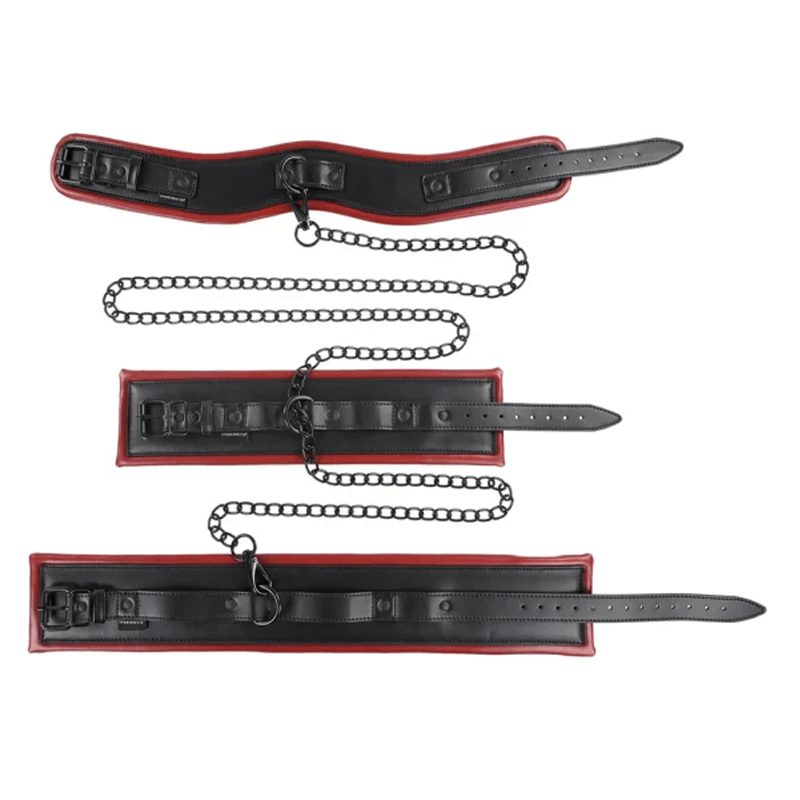
Saffron Cuffs — vegan-leather wrist restraints with soft inner linings. They link together like a standard set or separate to attach elsewhere, so you choose how much is holding at once.
The honest trade-off: every piece here adds something to undo. Know how each one comes off before you use it under pressure, because a safe word only works as fast as the release does.
App-controlled intimate devices are marketed as transformative experience gifts for couples, promising seamless connection, intuitive partner control, and features that supposedly justify a significant price premium over conventional alternatives. The reality is more complicated. After evaluating connectivity performance, interface quality, latency, and real-world usability across leading products, a clear pattern emerges: app control is a genuine advantage in specific contexts and a meaningful liability in others.
This analysis cuts through the spec-sheet noise to give couples a functional decision framework. You will learn exactly how app connectivity works under the hood, why same-room couples consistently rate app-controlled devices lower than simpler wearable alternatives, and precisely when long-distance use justifies the investment. You will also find a feature-by-feature breakdown of what actually affects your experience versus what exists only on the product page, an honest look at hybrid designs that split the difference, and a clear decision framework to match your situation to the right product category. If you are considering an upgrade or buying for the first time, this is where the guesswork ends.
The Promise Versus the Reality
App-controlled couples toys arrive packaged around three distinct promises: closeness across distance, infinite pattern customisation, and the novelty of partner-held control. Marketers bundle these together as though they function the same way in every scenario. They do not, and separating them is where useful evaluation begins.
The data reveals a meaningful tension. Research shows 37% of users actively prefer smart or app-connected devices, yet those same devices score 22 points lower than wearable couples vibrators when evaluated in same-room play across noise, fit, and tactile immediacy. Stated preference and lived satisfaction are moving in opposite directions. That gap deserves more attention than it typically receives.
The core problem is a distinction most marketing never makes: same-room use and long-distance use have almost nothing in common in terms of what the app is actually doing. In the same room, the app is a menu between you and a sensation. Across distance, it is the only mechanism that makes shared sensation possible at all. Treating these as one feature set leads to purchases built on the wrong criteria.
Whether you are weighing an app-connected design like a Bluetooth insertable vibrator or exploring partnered wellness options across curated guides, the starting point is the same: understand what connectivity genuinely adds to your specific circumstances, rather than what the spec sheet suggests it could.
What follows maps each major feature category to the scenarios where it creates real value, so the decision is grounded in clarity rather than enthusiasm.
How App Control Actually Works: A Plain-Language Breakdown
That gap between marketing and reality starts with a basic architectural question: what is the app actually doing, and when?
For same-room use, the answer is straightforward. Most connected devices communicate via Bluetooth Low Energy, a short-range, low-power protocol that maintains a stable signal within a typical home environment. In-room lag is rarely reported as a concern; BLE is designed for low-latency, low-power operation, and most users find the same-room response effectively immediate.
Long-distance functionality is a different architecture entirely. The device no longer talks directly to a partner’s phone. Instead, commands travel from one partner’s app, up to a company server, and back down to the device on the other end. This relay chain is where latency, connection drops, and data privacy questions actually live. The quality of that experience depends on internet stability at both ends and on how well the platform’s infrastructure is maintained.
The app itself functions as a translation layer. It converts touch gestures, pattern selections, and partner-access grants into motor commands the device can execute. Some platforms extend this to music sync or voice-reactive modes, though those tend to be features couples explore once and then set aside.
What the marketing rarely surfaces is setup overhead. Pairing a device, creating an account, granting partner access, and navigating menus mid-moment introduces real friction. Wearable designs with physical controls bypass this entirely.
App quality is, therefore, a primary specification. A well-engineered interface reduces that friction to nearly nothing; a poorly designed one actively works against the connection it promises to create.
Same-Room Use: Where the App Often Gets in the Way
That setup overhead matters most when you consider where most couples actually use these devices: the same room, same bed, same moment of shared attention.
As noted above, same-room evaluations consistently show that wearable couples vibrators outscore app-controlled alternatives on noise, fit, and pairing friction.
Real-world behaviour confirms this. Even owners of app-connected devices tend to default to preset patterns during active intimacy rather than opening menus, adjusting sliders, or handing off control through a permissions screen. Couples are paying for infrastructure they bypass at the moment it theoretically matters most.
Noise discretion is underweighted in purchase decisions. Many users of wearable designs report a quieter acoustic profile than app-connected insertables, while many app-connected insertables prioritise motor strength and feature range over acoustic profile. For couples in shared housing, or those who value a quieter atmosphere, this distinction is worth investigating before buying. It rarely appears as a listed specification, but surfaces frequently in long-term user reviews.
The preference for tactile immediacy is equally clear: adjusting intensity with a single press, rather than unlocking a screen mid-moment, is a preference commonly cited in same-room contexts. This holds across varied relationship structures, worth noting for readers exploring queer intimate wellness in Canada, where fit and intuitive control matter as much as connectivity.
For consistent same-room use, a well-fitted wearable with physical controls will outperform an app-connected device on nearly every practical measure. The app adds cognitive overhead; it adds no sensation.
Long-Distance Play: Where App Control Earns Its Price
The long-distance case is the opposite.
Partner control over the internet is something a physical remote cannot replicate. One person can send real sensation to another across any distance, in real time, with nothing more than a stable connection on both ends. For couples navigating travel, extended time apart, or a relationship that has never been geographically close, that capability represents a genuinely different category of intimacy tool. No other experience gift for couples delivers the same quality of shared presence.
Latency is real, but manageable. Modern app platforms route commands through server relays, and connection drops remain a fact in low-signal environments. Both partners’ internet quality matters equally. A reliable home connection cannot compensate for a hotel’s weak Wi-Fi on the other end.
The technical specs are secondary to something harder to quantify. Research consistently shows that long-distance couples invest more in conversational depth and emotional attunement than proximate ones. App-controlled play fits that pattern: it requires coordination, communication, and sustained shared attention. The sense of presence it creates is qualitatively different from same-room use and deserves weight in any honest evaluation.
One risk most buyers overlook: app deprecation. A device that depends entirely on a proprietary platform becomes functionally obsolete if that platform loses support. Before purchasing for a long-distance scenario, evaluate the app’s update history, its account privacy policies, and whether the company has a demonstrated record of sustaining software support across product generations.
Feature by Feature: What Matters and What Does Not
With the scenario context established, the spec sheet deserves a closer look. Here is what each major feature actually contributes.
Latency matters almost exclusively in long-distance modes. As covered above, in-room BLE performance is not a practical concern; the server-relay latency for internet-connected use is the figure worth examining, and it varies by platform and connection quality at both ends.
Range claims require careful reading. “Unlimited range” in product descriptions refers to internet-relay mode, not Bluetooth. Physical BLE range is limited to the same room or adjacent space, which is only relevant for same-room use when no phone is involved. For most couples, this spec is rarely the deciding factor.
Pattern customization is a genuine differentiator, but only for users who invest time building and saving custom sequences. User reviews across multiple platforms suggest most people default to presets during active use. If that describes you, deep customization menus add no practical value and should not drive your purchase decision.
Partner control UX is where apps vary most meaningfully. How intuitively a partner can take control, shift intensity, or respond in the moment differs significantly by design. This is worth researching through user reviews before buying, not inferred from a feature list.
Sync features such as music, voice, and touch response tend to be explored early and then quietly set aside. They are genuinely novel; they are rarely central to how couples settle into regular use.
Sound profile is the most telling gap between spec sheets and real-world feedback. It almost never appears as a listed specification, yet it surfaces frequently in long-term user reviews, particularly for couples in shared housing or travelling together. Quieter operation is worth prioritizing deliberately.
Hybrid Designs: The Middle Ground Worth Considering
Once you have mapped the features that matter against your actual use patterns, the question becomes whether a single device can serve both scenarios well enough to justify owning one rather than two.
Hybrid designs answer that question by building app connectivity onto a wearable foundation that functions fully without a phone. The physical fit and motor engineering come first; the app layer is additive rather than load-bearing. A dedicated physical remote, included with several well-reviewed designs, lets couples choose their interface in the moment. Same-room evening: the remote handles it. Partner travelling for work: the app takes over. Neither mode compromises the other.
There is a quieter advantage worth naming: resilience against platform change. As noted in the long-distance section, app deprecation is a real risk. When physical controls exist independently of the app, that risk is contained. The hardware does not become obsolete because a platform decision changed.
For anyone considering a couples relaxation gift that remains useful as circumstances shift, a hybrid design may represent the most honest value in the category. It will not outperform a purpose-built wearable on noise or fit, and it will not match a dedicated app-connected device on software depth. It handles both scenarios competently, which is a different and often more durable kind of value.
The trade-off is straightforward: hybrids sit at the premium end of the price range, and the added control mechanisms introduce modest mechanical complexity. The right question is whether that flexibility is worth the increment over a device optimised for only one mode.
When a Simpler Product Serves Better
Flexibility has genuine value, but not every couple needs it. For partners who share a home and have no near-term reason to use a device across distance, the hybrid’s middle-ground positioning is actually a compromise rather than a bonus. As the same-room section establishes, quieter operation, secure fit, and zero setup friction are where wearable-first designs consistently pull ahead.
For first-time buyers exploring this category, that friction carries real weight. A positive first experience depends on low barriers, not feature depth. Simplicity here is a design virtue, not an absence of ambition.
The same logic applies when considering couples activity gifts for partners who are not particularly tech-comfortable, or who find phone-mediated interaction disruptive to intimacy rather than enriching it. An unused app is not a neutral outcome; the cognitive overhead of having it present can quietly diminish an experience that should feel effortless.
Physical remote designs address this directly. One partner holds a dedicated controller; no accounts, no pairing screens, no phone management. The partner-control dynamic is fully intact. For couples new to the category, Three Places to Start can help narrow the field without overwhelming the decision.
The most clarifying question before any purchase is not “do we want these features?” but “will we actually use the app?” That gap, honestly assessed, is where most buyer regret originates.
A Decision Framework for Couples Who Want Clarity
That question, “will we actually use the app?”, is the hinge on which this whole category turns. The framework below makes the decision explicit.
Start with your scenario. If long-distance is a current or anticipated reality, an app-connected device is the right category and the premium is justified. If both partners share space consistently, wearable-first options deserve first consideration, full stop.
Treat app quality as a primary specification. Look for platforms with sustained update histories, clear privacy policies, and interface reviews from verified users rather than manufacturer feature lists. As noted in the long-distance section, a platform that loses support renders the hardware worthless; that risk is worth researching before purchase, not after.
Consider both partners’ tech comfort, not just the buyer’s. A device whose value depends on an app that one partner finds frustrating will underdeliver regardless of its hardware quality. The relevant question is whether both people will use the interface easily, not whether the interface looks impressive.
For gift buyers, the most considered choice among experience gifts for couples or couples relaxation gifts is usually a hybrid design or a well-reviewed wearable, not the device with the longest feature list. Our intimate wellness gift guide for Canadian couples organizes options by occasion and relationship stage, which is a more useful frame than spec comparisons.
Budget for the right category. Overspending on app features that will not be used is less valuable than investing in build quality, body-safe materials, and a solid warranty.
Revisit the decision as life changes. A considered second purchase, matched to a new life stage, is far better than an underused first one.
Intention Over Features
The framework above helps with the decision. What makes that decision sustainable is the intention behind it.
App-connected devices are genuinely valuable tools, just not universally so. The technology is sound; the problem is the framing that presents every feature as an upgrade. The scenario-first framework above is the shortest path to a purchase that earns its place.
The most useful purchase conversation a couple can have isn’t about features. It’s about actual patterns: how they live, how often they’re apart, how comfortable both partners are with technology as part of intimacy. That conversation, explored honestly, is itself the overlooked ingredient in better intimacy.
At XtasyXperience, every device in the catalogue earns its place on that basis. Hybrid, wearable, and app-connected options are all available, each selected for body-safe materials, build integrity, and honest performance. If you’d like to understand exactly how those decisions are made, our curation process is an open account. Spec sheets don’t guide it. Intention does.
Conclusion
App-controlled couples toys are not universally better; they are situationally better. The scenario-first framework above is the shortest path to a purchase that earns its place.
The clearest takeaway is this: intention drives satisfaction, not feature count. A simpler product used consistently outperforms a sophisticated one that collects dust.
If you are ready to shop with that clarity, browse the XtasyXperience catalogue, where every product earns its place through build integrity and honest performance, not marketing language. Still deciding? Start with the decision framework in this post, talk it through with your partner, and let your real patterns guide you. The right choice already fits your life. You just have to recognize it.
Frequently Asked Questions
Why do same-room couples consistently rate app-controlled devices lower than wearable alternatives?
Same-room use shows that app-controlled devices score 22 points lower than wearable couples vibrators on practical measures like noise, fit, and tactile immediacy. In the same room, the app functions as a menu between partners and sensation, adding cognitive overhead without adding sensation. Most couples bypass the app entirely during active use, defaulting to preset patterns instead of opening menus or granting permissions. Wearable-first designs with physical controls eliminate this friction, making them more practical for consistent same-room use.
When does app-controlled couples technology actually justify its premium price?
App control is genuinely justified for long-distance couples or those anticipating periods apart. Partner-controlled sensation over the internet is something a physical remote cannot replicate—one person can send real sensation to another across any distance in real time with a stable connection on both ends. For couples navigating travel, extended separation, or relationships that have never been geographically close, this represents a genuinely different category of intimacy tool that justifies the investment.
What is the most important factor to consider before purchasing an app-connected intimate device?
The most clarifying question is: 'Will we actually use the app?' Buyer regret most often originates from this gap being honestly assessed only after purchase. You should also evaluate whether both partners are genuinely comfortable with technology as part of intimacy, as an unused app is not neutral—the cognitive overhead of having it present can diminish an experience that should feel effortless. Finally, research the app's update history and platform stability, since a device dependent on a proprietary platform becomes functionally obsolete if that platform loses support.
What are hybrid couples devices and why might they offer better long-term value?
Hybrid designs build app connectivity onto a wearable foundation that functions fully without a phone. Physical fit and motor engineering come first, with the app layer being additive rather than load-bearing. They typically include a dedicated physical remote, allowing couples to choose their interface in the moment: use the remote for same-room play or the app when apart. They also provide resilience against app deprecation—if the platform changes, physical controls remain functional. While they sit at the premium end of the price range and won't outperform purpose-built wearables on noise or fit, they competently handle both scenarios, offering more durable value for couples whose circumstances may shift.
What features matter most on app-controlled device spec sheets, and which ones rarely affect real-world experience?
Latency matters almost exclusively for long-distance modes—in-room Bluetooth performance is not a practical concern. 'Unlimited range' claims refer to internet-relay mode, not Bluetooth range. Pattern customization is a genuine differentiator only for users who invest time building custom sequences; most people default to presets during active use. The most critical feature is partner control UX—how intuitively a partner can take control and respond—which varies significantly by design. Sync features like music and voice response are genuinely novel but rarely central to regular use. The most telling gap is sound profile, which almost never appears as a specification yet frequently surfaces in long-term user reviews, especially for couples in shared housing.
Curious about restraint play but not sure where to begin? This guide walks you through materials, safety, communication, and what to buy first — without the overwhelm.
The conversation usually starts the same way. One partner mentions it — lightly, maybe as a question more than a statement — and the other either feels a flicker of curiosity or a flash of uncertainty. Restraints have a way of arriving in relationships like that: tentatively, hopefully, often without a roadmap.
This guide is the roadmap. It’s written for people who are curious and careful — who want to explore restraint play in a way that feels intentional rather than improvised. We’re going to cover materials, safety, how to communicate before you begin, and what to buy if this is your very first time. By the end, you’ll know exactly where to start.
What Restraint Play Actually Does
Before we get to products, it’s worth understanding the mechanism. Restraints work on two levels simultaneously. The person being restrained loses voluntary movement — and that loss, counterintuitively, produces a form of psychological release. When you cannot reach, cannot adjust, cannot redirect what’s happening, your nervous system stops its usual anticipatory work. What remains is heightened presence. Sensation feels amplified. Time slows down.
For the person doing the restraining, there’s a complementary shift: a greater sense of care and attentiveness. Good restraint play — at any level, even a soft tie looped loosely around a wrist — requires one partner to read the other closely. That sustained attention is itself intimate, in ways that ordinary touch doesn’t always produce.
This is why so many couples who try restraint play describe it as “unexpectedly connecting.” It’s not primarily about restriction. It’s about the quality of presence the restriction creates.
What This Catalogue Actually Stocks — and What It Doesn’t
A note before we go further: some beginner guides to restraints talk about three material families — soft fabric, rope, and rigid locking metal. We carry two of those, not three. There is no traditional rope in this catalogue, and nothing sold here is a hard-locking metal cuff. What we do carry is soft satin, structured vegan leather, and nylon or webbing tether kits — which, between them, cover most of what a beginner actually needs, just not under those three textbook labels. If rope work specifically is what you’re after, this isn’t the store for it yet; everything below is honestly one of the other two families.
Soft & Satin — the Easiest Place to Start
Ribbon-style satin ties are gentle on skin, put up no real resistance, and come off in seconds if either partner wants to stop. The Silky Tie-Ups ($89.99, in red or black satin) are the clearest example in the catalogue: no buckles, no hardware, nothing that can pinch. Best for: first-timers, light sessions, anyone who wants the psychological experience of restraint without the sensation of being properly locked down.
Structured Vegan Leather — More Presence, Still Easy to Remove
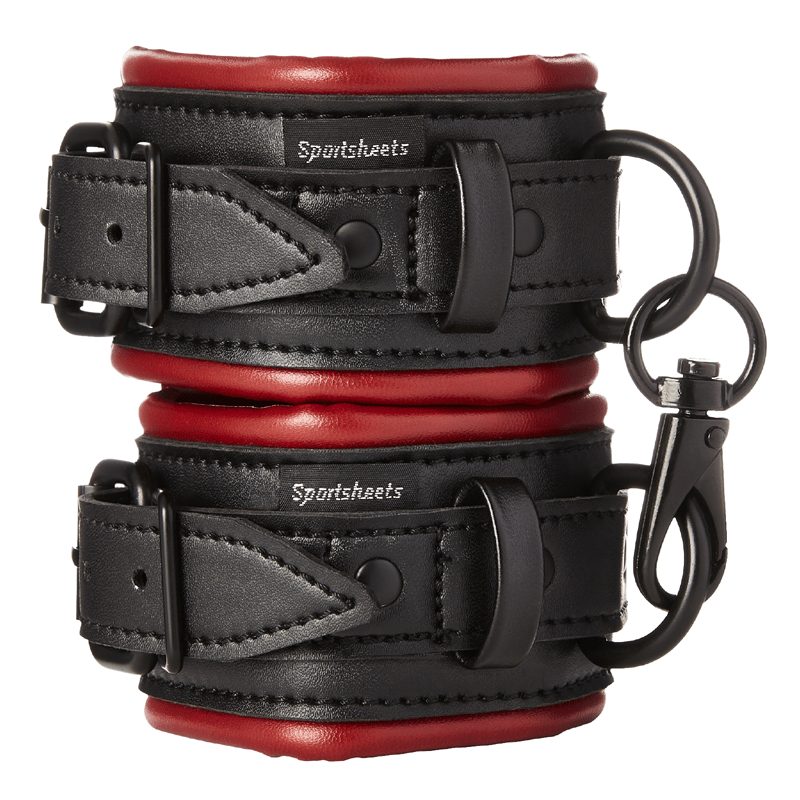
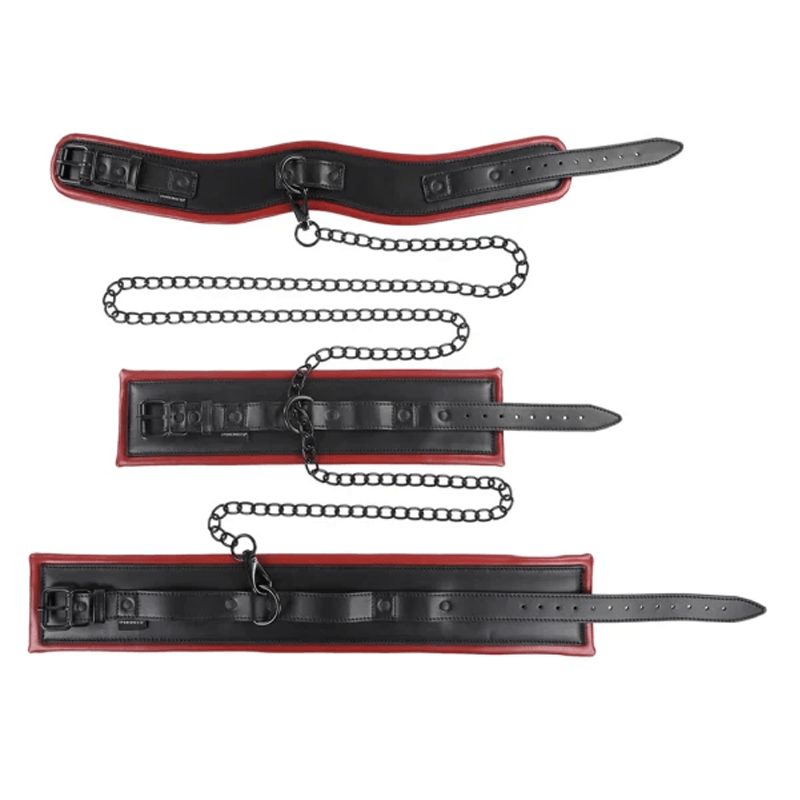
One step up in structure: cuffs built from vegan (faux) leather, which hold shape and look the part while still releasing with a simple buckle or clip rather than a key or a lock. The Saffron Cuffs ($64.99) are the catalogue’s entry point here — genuinely vegan leather, not the real hide the name might suggest, which is worth knowing since it changes how you clean and store them. For a slightly firmer hold with a fixed connecting chain rather than a loose tether, the Saffron Chained & Tamed ($94.99) is a natural second purchase once soft ties feel too gentle. Best for: couples who’ve tried soft ties and want more visual and physical presence, without moving to anything that locks.
Nylon & Tether Kits — the Closest Thing to Rope’s Versatility
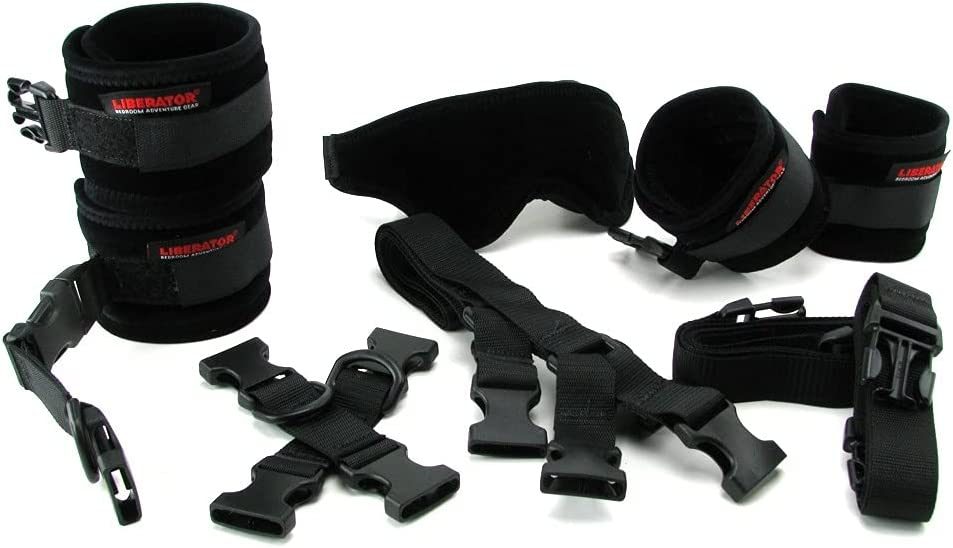
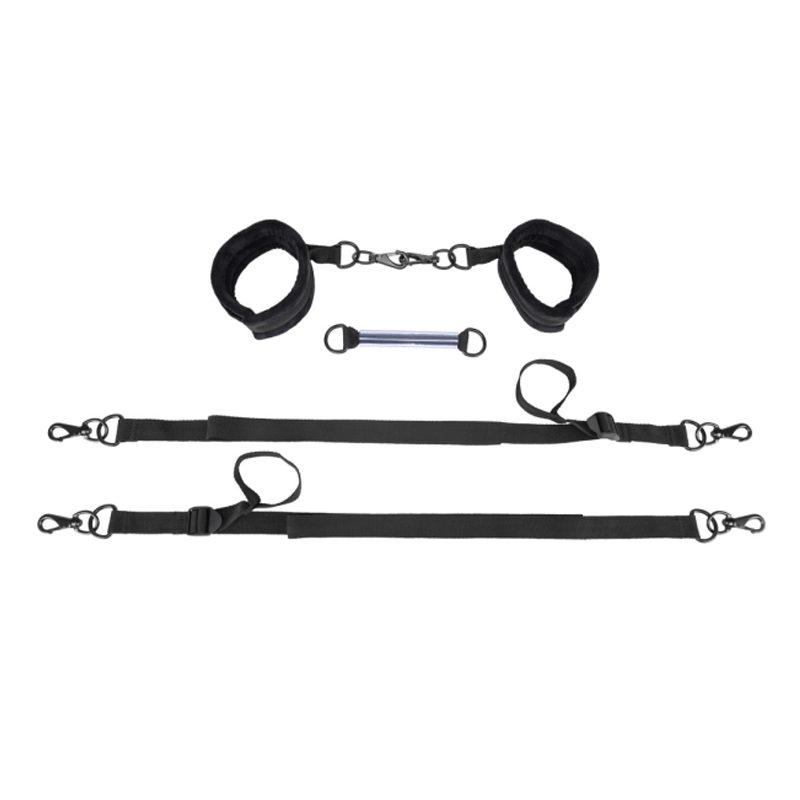
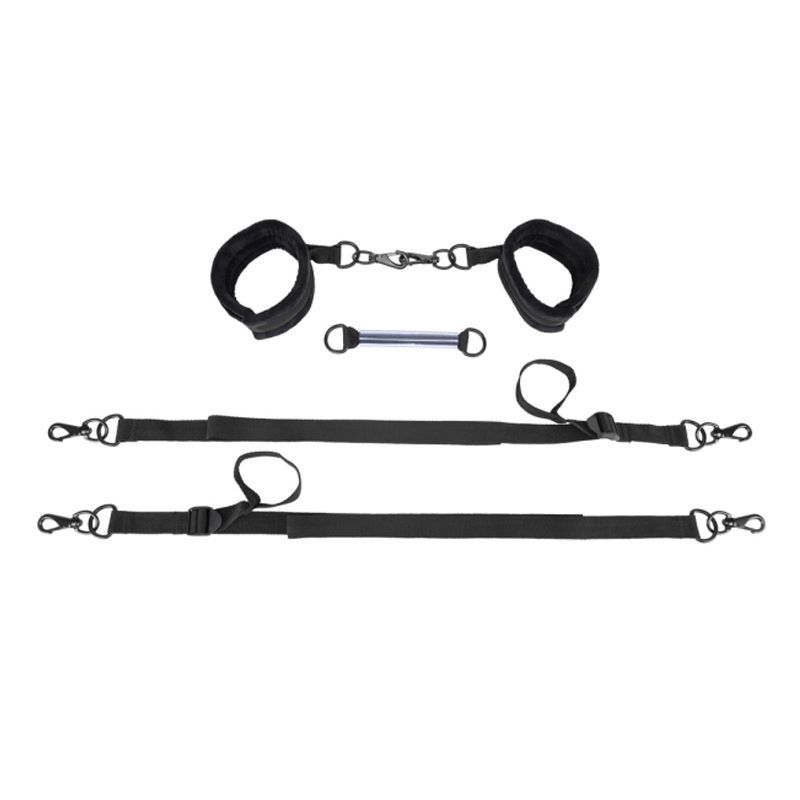
If what appeals to you about rope is the adjustability — being able to change the length, angle, or anchor point of a restraint — the catalogue’s tether kits do that job with webbing and buckles instead of knots. The Bed Buckler Tether and Cuff Restraint Kit ($124.99, genuinely nylon) slips discreetly under a mattress and turns any bed into an anchor point. The Pivot Connection Kit ($84.99, polyester webbing with metal hardware) includes two adjustable tethers that extend from 10 to 47 inches, so you can set up anything from a snug hold to an arms-overhead stretch with the same piece. Best for: couples who want to change the restraint’s shape session to session, the way rope users would, without learning knotwork.
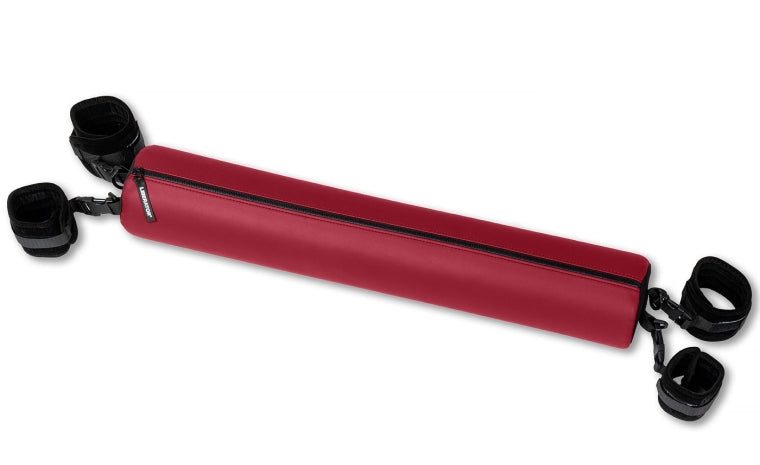
Explore the full restraints collection for the complete range, including spreader bars and coordinated cuff sets for when you’re ready to go further.
Before You Begin: The Safety Framework That Makes Everything Better
Restraint play has one prerequisite that isn’t optional: a shared safety framework. This isn’t a formality or a buzzkill — it’s the structure that allows both people to be fully present, because neither is holding anxiety in reserve.
01
Establish a safe word before you start — every time
A safe word is a word both partners agree will immediately pause or stop everything. “Red” is common. “Pineapple” works. The word doesn’t matter; the agreement does. Have this conversation before clothing comes off, not during.
02
Never restrain in a position that strains circulation
Hands above the head, wrists pinned at an awkward angle, or arms pulled too far behind the back can restrict blood flow quickly. Check in every few minutes. If fingers start to tingle or feel numb, stop and reposition immediately.
03
Keep a quick-release option within reach
Every restraint recommended above releases with a simple buckle or clip rather than a lock and key — but “quick to release” only helps if the person doing the restraining knows exactly where that release point is before starting, not mid-scene.
04
Start shorter than you think you need to
Ten minutes of restraint that both partners genuinely enjoyed is better than forty minutes where one person was quietly enduring. Short, successful sessions build the trust and vocabulary for longer, more adventurous ones.
We go deeper on consent frameworks and safe-word structures in a companion guide once it’s live — for now, the four steps above cover the essentials for a first session.
What to Buy First
Our recommendation for most first-time buyers is the Silky Tie-Ups or the Saffron Cuffs — something that looks like what it is, feels good on the skin, and releases in one motion. If you want more adjustability without more complexity, the Pivot Connection Kit’s tethers give you that range in a single purchase.
Your First Restraint Session: What to Expect
First sessions are almost always lighter than people imagine — and that’s exactly right. The point isn’t to go as far as possible. It’s to discover how restraint feels for both of you: how it changes the dynamic, what sensations it amplifies, what it opens up in the conversation afterward.
Spend time after the session talking. What felt good? What would you adjust? That debrief — sometimes called aftercare in more structured power-play contexts — is where the real intimacy happens. It’s also where you build the shared language that makes every future session better.
A note on the BDSM label
Restraint play is technically part of the BDSM spectrum — but you don’t need to claim or identify with any label to explore it. Many couples who enjoy the occasional satin tie would never describe themselves as “into BDSM.” The experience belongs to you, not to a category.
Ready to explore? Start with something soft, something beautiful, and something that feels like you.
Bringing up power exchange with a partner who hasn’t expressed interest requires honesty, patience, and a willingness to meet them where they actually are. Here’s how to do it without pressure or awkwardness.
The most common D/s problem isn’t consent, or safety, or even compatibility. It’s the conversation before any of that — the one where one partner reveals an interest they’ve been carrying alone, often for a long time, to a partner who may have no frame of reference for what they’re describing.
That conversation is nerve-wracking for almost everyone. Not because the desire is unusual — D/s interest is far more common than the silence around it suggests — but because vulnerability is, by definition, uncomfortable. This guide is about how to have that conversation in a way that gives it the best possible chance of going well.
Before You Say Anything: Know What You’re Actually Asking For
The most important preparation for this conversation is clarity about what you actually want — not as an abstract interest, but as a specific, concrete experience. “I’m interested in dominance and submission” is less useful than “I’d like to try an evening where you take the lead on everything that happens, and I follow your direction.” The more specific and bounded your request, the less your partner has to interpret, and the lower the stakes feel.
Think about: what role you’d like to explore first (dominant, submissive, or open to either), what specific practices interest you, what’s off-limits, and how long or bounded you’d like the first experience to be. Come to the conversation knowing these things. It will make you more confident and your partner more comfortable.
When and Where to Have the Conversation
Not during sex, and not immediately before it. The conversation about exploring something new should happen in an ordinary, relaxed moment — over dinner, on a walk, when both of you are comfortable and neither is in a heightened or vulnerable state. Starting the conversation from a neutral place makes it easier for both people to think clearly and respond honestly.
The Conversation Itself: A Framework That Works
01
Start with your own experience, not a definition
Rather than opening with terminology (“I’m interested in D/s dynamics”), open with something you’ve felt or wanted: “Sometimes I’d love it if you just took charge completely and I didn’t have to think about anything.” The feeling is more accessible than the label, and it invites your partner into understanding rather than categorisation.
02
Give your partner time and space to respond
Resist the impulse to fill silence with more explanation, justification, or reassurance. Ask your question, share your interest, and then actually wait. Their first response — whatever it is — is valuable information. Don’t pre-empt it by talking over it.
03
Separate “not yet” from “no”
Many partners who respond with hesitation are not saying no permanently — they’re saying they need more information, more time, or more reassurance before they can respond. Treat hesitation as the beginning of a conversation, not its end. Ask what would help them feel more comfortable engaging with the idea.
04
Make it about shared exploration, not your unfulfilled need
Frame the conversation as something you’d like to discover together, not something you’ve been missing and need them to provide. The former is an invitation. The latter creates pressure — which is the enemy of genuine consent.
05
Accept the possibility that this isn’t for them
Some partners genuinely aren’t interested in power exchange dynamics, and no amount of patient conversation will change that. If that’s the case, the conversation has still been valuable — you know something important about each other. Accept that honestly, and decide together how you navigate it.
A Low-Stakes Starting Point for Curious Partners
If your partner is interested but uncertain, propose a very bounded first experiment: “Would you be willing to take charge completely for one evening — decide what we do and when, and I’ll follow your lead?” That’s D/s in its lightest, most accessible form. It doesn’t require any terminology, any equipment, or any commitment beyond one experience.
If that goes well and both partners want to develop it further, the restraints collection is the natural next conversation — physical restraint is the most common first addition to a developing D/s dynamic. Read our companion guide on dominance and submission dynamics for the broader landscape once it’s live, and take your time with the pacing — there is no schedule to keep to but your own.
And before any first session together, talk through what a safe word means for both of you and agree on what “stop” looks like before anything begins. The conversation that happens before a scene is the thing that makes the scene itself trustworthy.
When the conversation goes well, the next step is choosing the right tools together.
Finding your fit
If the conversation goes well and you both want a first piece, start softer than you think you need to. These are in the order most couples actually move through them, and none of them is a prerequisite for anything in this guide.
Silky Tie-ups Black Satin — a pair of synthetic-silk sashes that loop around wrists or ankles, or work as a blindfold instead. Fabric rather than hardware, which is the least intimidating way to make one evening feel different. If you only want one thing, start here.
Saffron Cuffs — vegan-leather wrist restraints with soft inner linings. They link together like a standard set, or separate to attach to a spreader bar later, so they stay useful if the dynamic develops.
Bed Buckler Tether and Cuff Restraint Kit — four 20-inch adjustable nylon tethers with Velcro wrist and ankle cuffs, which slip under any mattress and come away again in a minute. Worth knowing about if discretion is part of what is making your partner hesitate.
The wider restraints and bondage & kink collections, if you would rather browse before deciding anything.
The honest trade-off: buying the kit first is the most common way this goes wrong. Equipment is easy to acquire and easy to mistake for progress, and a partner who has agreed to a conversation has not yet agreed to a drawer full of gear. Let the first evening happen, then buy for the part you both actually enjoyed.
You have probably opened a buying guide, skimmed the top ten recommendations, and closed the tab feeling no closer to a decision. Not because the products were bad, but because the entire guide was written for a body and a practice that simply are not yours. Most intimate wellness content is built around a default anatomy and a default use case, and if you fall outside that assumed configuration, you are left translating someone else’s advice into your own reality with zero actual support.
This guide does something different. Instead of handing you a product list organized by popularity or brand prestige, it gives you a framework for evaluating any product against your specific body and how you actually use it. We will walk through how to take an honest inventory of your anatomy, how to define your practice before you define your product, and where mainstream sizing and design assumptions quietly fall apart for queer and trans buyers. You will also find a four-question evaluation process you can apply to every future purchase decision, plus some practical notes on buying within the Canadian market. Think of this less as a shopping guide and more as a decision-making tool you keep.
Why Most Buying Guides Are Not Written for You
Most intimate wellness buying guides open with a sizing chart. Chest measurement, waist measurement, hip measurement, mapped to a presumed gender. If your body or identity sits outside that assumption, you are excluded from the decision-making framework before the first product is mentioned. The guide was not written for you. It was written around someone else, and you were expected to translate.
“What is popular” is the question most guides answer. But popularity reflects a majority body configuration. A bestseller list tells you what works for the most statistically common combination of anatomy and use case. For queer, trans, and gender-nonconforming buyers, that signal carries almost no useful information about fit, function, or comfort for your specific body and practice.
The gap became impossible to ignore after 2018, when a wave of gender-inclusive intimate apparel and wellness brands entered the market in direct response to how completely mainstream sizing had failed non-binary and trans buyers. Some brands in adjacent categories moved to 100% made-to-order custom measurements, abandoning standard sizing altogether, because no standard size could reliably serve their customers. That is not a niche accommodation. That is a structural admission about how deeply the conventional model was broken.
This piece does not offer a ranked product list. A list would recreate the same problem: products chosen for someone else’s body, presented as though they are universally relevant. Instead, this guide offers the questions you should ask before any product enters the picture, and a method for answering them honestly against your own anatomy, your own practice, and your own relationship to your body.
Conscious intimacy begins with self-knowledge. That premise sounds simple, but it runs counter to how most purchase decisions get made, which is by scanning a list and picking whatever has the most reviews. If you want guidance built around queer bodies and queer self-knowledge specifically, this overview of queer intimate wellness in Canada is a useful companion to what follows.
The framework here is transferable to any product, any body, any practice. That is the point.
Fit Is Not a Size, It Is a Practice
So if most guides fail before they even define “fit,” it is worth pausing on what that word actually means here.
In mainstream retail, fit is a measurement problem. A number, a letter, a standardized range. In intimate wellness, that definition stops being useful almost immediately, especially for queer and trans buyers. Here, fit means something closer to integration: how a product works with your actual anatomy, responds to your actual sensation preferences, and supports your actual use context. Those three things rarely appear in a product description, which is why the evaluation work has to happen before you shop.
Fit begins with relationship, not measurement.
Self love intimacy, taken seriously, asks more than “will this work with my body?” It asks how you currently relate to your body. Which areas feel like yours to engage with right now. Which feel neutral, tender, or outside the conversation entirely. And crucially, how that relationship may be shifting, because for many queer and trans people, it is not static.
That honest inventory is the real starting point. Not dimensions. Not a category on a website.
Where you begin is valid.
Body dysphoria, body neutrality, and body affirmation are all legitimate places to be, sometimes on the same day. A product chosen with awareness of where you are can support any of them. One chosen without that awareness can quietly work against all three. This is not a small distinction. It is the difference between a purchase that serves you and one that subtly doesn’t.
Reframe the first question.
Most buyers open with “what does this product do?” The more useful opening is: what do I want my body to feel? That question, placed at the start rather than treated as an afterthought, changes which products even stay in consideration.
It also makes space for something mainstream framing rarely acknowledges: the non-performative, non-goal-oriented dimension of being present with your own body. Platonic intimacy with yourself is a legitimate reason to make a considered wellness choice. You do not need a performance goal to justify the intention.
Starting With Your Body: An Honest Anatomy Inventory
So where does that honest inventory actually begin?
Not with a list of body parts checked off in order. An anatomy inventory is a private, unhurried accounting: which regions of your body do you engage with during self-pleasure, how do you engage with them, and which sensations, pressure, vibration, fullness, texture, temperature, reliably land for you. The goal is specificity, not comprehensiveness. You are mapping what is true for you right now, not constructing a theoretical ideal.
For trans buyers, that “right now” carries particular weight. Hormone therapy reshapes tissue sensitivity over time; surgical history changes both sensation and structure. A body at one stage of HRT responds differently than it did before, and differently still as that process continues. Mainstream product descriptions almost never account for this. They are written for a static body. Yours may be in motion, and the inventory you do today is the correct starting point, not the one you did two years ago or the one you imagine for the future.
Your most responsive areas may not be the ones the product was designed around. This is worth sitting with. Erogenous geography varies enormously across queer and trans bodies, and many buyers discover that their most reliable pleasure pathways are ones mainstream product categories simply do not serve or even name. That is not a problem with your body. It is a design gap worth knowing about before you spend money.
As you map your anatomy, it helps to think in zones rather than categories: external anatomy, internal anatomy, chest, pelvic floor. Each carries different product implications. Knowing which zones are active in your practice lets you filter by functional relevance rather than by the marketing category a product happens to sit in.
Finally, note your physical context honestly. Grip strength, mobility range, fatigue tolerance, chronic pain, and sensory sensitivity all affect which product shapes, weights, and controls will actually work for you in practice, not just in theory. Accessibility is not a secondary concern; it belongs in the first pass.
Define Your Practice Before You Define Your Product
Once you have a clearer picture of your body, the next question is equally concrete: what does your practice actually look like?
Mainstream guides skip this almost entirely. They describe what a product is, rarely what it supports. For queer buyers whose use case may not match the assumed one, that gap is consequential.
Solo versus partnered use is the first distinction worth making honestly. Conscious intimacy explored alone calls for different design priorities than a product brought into relational intimacy with a partner. Solo practice often rewards ergonomic independence: controls you can operate one-handed, a shape that works without assistance, weight your grip can sustain comfortably. Partnered use may shift those priorities toward shared accessibility, quieter operation, or compatibility with another person’s body in the same space.
Duration shapes requirements more than people expect. A product suited to a short, exploratory session may be poorly matched to an extended wellness practice. Handle geometry, motor endurance, and recharge design are all practical concerns when a session runs longer. A product that recharges via a proprietary cable, for instance, becomes more limiting if recharge time interrupts an unhurried practice rather than a quick one.
Layered function is increasingly valued for good reason. The multi-use design principle visible in inclusive apparel, like integrated harness functionality built into everyday underwear, applies directly here. Asking whether a product can adapt as your practice evolves is a legitimate purchase criterion, not an indulgence. If you’re in a period of self-discovery, a product with one rigid use case may not serve you long. This kind of considered, future-aware thinking is what distinguishes intentional buying from reactive buying, including when a product is chosen as a shared investment, as explored in this guide to intimate wellness gifts for Canadian couples.
Position and mobility are the final practical filter. A product that functions well in one position may be ergonomically awkward in another. Your reference point should be your actual practice, not an idealized or aspirational version of it.
What Product Design Features Actually Mean for Queer Bodies
Once your practice is defined, the next layer is learning to read product descriptions on your own terms rather than the manufacturer’s.
Firmness and flexibility are the first variables worth understanding. A firmer material delivers pressure that is concentrated and precise; a softer one spreads sensation across a broader surface area. Neither is inherently superior. The right choice depends on what your body responds to and which areas you are engaging. This is a sensation preference question, and it belongs to you, not to a product rating.
Insertable dimensions are routinely listed in centimetres with no anatomical context. “Average” in a product description refers to a statistical midpoint derived from a particular population, which may have little relevance to your body. Evaluate length, width, and shape against your own internal anatomy and your own sense of what feels comfortable versus uncomfortable. Ignore the framing; use your own reference point.
Vibration range matters more than peak intensity. For buyers with heightened sensitivity, including those whose sensitivity has shifted through hormone therapy, a product with a wide range of incremental settings is far more useful than one that reaches a high maximum. You need room to find your threshold, not just a ceiling to hit.
External stimulation features are frequently described in gendered language that assumes a specific anatomy. Terms like “clitoral” or “perineal” are marketing shorthand. What actually matters is the curvature, the surface area in contact, and where the pressure concentrates. Cross-reference those physical characteristics against the external structures you want engaged, independent of whatever category the product is marketed into.
Material safety is non-negotiable. Body-safe, non-porous materials are the baseline, look for products explicitly described as such by the manufacturer, and verify those claims against the retailer’s sourcing standards rather than accepting them at face value. Porous materials harbour bacteria and cannot be fully sanitized. For any product purchased in Canada, look for verifiable material certification aligned with Health Canada safety standards, not just a manufacturer’s claim on a product page.
Harness compatibility introduces a separate design layer that generic descriptions rarely address clearly. A flared base is the functional requirement for harness use, but the shape and diameter of that base also need to be compatible with the specific O-ring size in the harness you use. These are two distinct questions. For a practical breakdown of what harness compatibility actually means in terms of base design and harness style, the curated guides section covers the specifics worth knowing before you buy.
Where Mainstream Sizing Assumptions Break Down
All of those design considerations rest on a prior problem: the measurements used to design most intimate wellness products were never drawn from a representative range of bodies.
Standard sizing in this category is built on statistical averages derived from majority body configurations. Trans bodies, non-binary bodies, intersex bodies, and bodies that have undergone gender-affirming medical intervention sit structurally outside that design reference. The product was not made with your measurements in mind. That is not a complaint; it is a design fact worth building your evaluation around.
Harnesses illustrate this clearly. One-size-fits-most harness sizing is typically calibrated to a narrow hip range and a specific pelvic geometry. For many trans and non-binary buyers, that geometry does not match, and the result is a fit failure that affects both comfort and function in use, not just aesthetics on arrival.
The gendered labelling problem compounds this. Products marketed “for men” or “for women” sort buyers by marketing assumption, not anatomy. Those categories carry no regulatory weight in Canada; no Canadian law requires manufacturers to use gender-based product labelling, and no standard mandates that it reflect actual anatomical design differences. For a queer buyer, ignoring category labels entirely and reading product specifications directly is not contrarian. It is the more accurate method.
The made-to-order logic explored earlier applies here too: start with your own measurements, then find the product that meets them.
For Canadian buyers, this sequencing has a practical cost attached. Returns on intimate wellness items are frequently restricted for hygiene reasons, and Canadian consumer law does not guarantee a right to refund for change of mind; return policies are set by individual retailers. A poor-fit purchase is often a final one. Investing time in evaluation before purchase is not perfectionism; it is straightforward consumer sense.
You can read more about how curation decisions at XtasyXperience are made, including the sourcing criteria that shape what reaches the catalog, in How We Decide What Belongs Here.
The Evaluation Framework: Four Questions Before Every Purchase
That investment in honest self-assessment leads directly to the four questions worth asking before any purchase.
Question 1: Body. Which areas of your body are you engaging with, and what physical sensations do you want to experience? This replaces “what category does this product belong to” as your first filter. Category labels are marketing architecture; your body is the actual reference point. Start here, every time.
Question 2: Practice. What does your real use context look like, solo or partnered, how long, in what position, how often? A product that works beautifully in one context can be ergonomically awkward or functionally limited in another. The question is not whether a product is well-designed in general; it is whether its specific design supports your specific practice.
Question 3: Features. Which design characteristics, such as firmness, dimensions, vibration range, material, base design, or harness compatibility, are genuinely relevant to your anatomy and practice? Which are irrelevant, or potentially counterproductive? Every feature a product has is a choice someone made for a particular body and use case. Your job is to assess whether those choices align with yours, not to assume they do because the product is popular or well-reviewed.
Question 4: Evolution. Is your practice, or your relationship to your body, currently in transition? This includes changes from gender-affirming care, shifting sensory sensitivity, new self-knowledge, or simply evolving preference. A product chosen for who you are right now should have enough flexibility to remain useful as that changes. Rigid, single-function design is a risk when your relationship with your body is still unfolding.
These four questions do not require expertise. They require honesty, and a willingness to treat self love intimacy as something worth being intentional about. That willingness is what conscious intimacy as a wellness practice actually requires.
Intimacy, elevated. Pleasure, considered. is the organizing principle behind XtasyXperience’s curated Canadian selection. The catalog is built with these functional considerations in mind, which means browsing it with these four questions already answered makes the curation genuinely useful rather than overwhelming. You arrive knowing what you are looking for; the selection is there to meet you.
Buying in Canada: What the Local Context Changes
Once you have a clear framework, where you buy becomes just as practical a question as what you buy. For Canadian queer and trans buyers, the local context introduces five considerations that most international guides overlook entirely.
Pricing in CAD is not a small detail. Many queer-focused intimate wellness products are sold in USD through international retailers. After currency conversion and customs duties, the landed cost of a USD-priced item is reliably higher than the sticker price suggests, often meaningfully so, before any brokerage fees. A Canadian retailer priced in CAD shows you the real cost upfront, without arithmetic or surprises at the door.
Shipping discretion matters, and domestic fulfillment delivers it more reliably. For buyers in shared housing, multigenerational households, or communities where privacy around intimate wellness is not guaranteed, a package that arrives quickly and predictably is a genuine practical concern. Cross-border shipments carry more variables: longer transit windows, customs delays, and handling by multiple carriers. Domestic Canadian shipping reduces all of that friction.
Health Canada’s consumer product safety framework sets a distinct regulatory baseline. Products sold in Canada are subject to the Canada Consumer Product Safety Act, and what meets standards in another country does not automatically meet Canadian requirements. When a retailer sources to Canadian safety standards, material safety claims carry local accountability rather than resting solely on a manufacturer’s self-certification from elsewhere.
Made-to-order items often carry lead times of several weeks and fall outside standard return policies, review fulfillment terms before committing.
Access is not uniform across Canada. Physical retail, community education infrastructure, and peer knowledge networks vary considerably between urban centres and rural or remote communities. A queer buyer in a smaller city or town does not have the same walk-in options as one in Toronto or Vancouver. That gap makes trustworthy online editorial guidance and curated Canadian e-commerce more useful, not a compromise.
Conscious Intimacy With Yourself as a Wellness Practice
All the practical groundwork matters. But practical groundwork is not the whole picture.
Within LGBTQIA+ communities, the conversation around intimate wellness has shifted meaningfully. Self-pleasure is increasingly understood as a dimension of embodiment: a way of developing self-knowledge, maintaining a relationship with your own body, and supporting overall wellbeing. That framing changes what you are actually doing when you make a product decision.
There is a layer beneath product use that often goes unnamed: the non-performative, non-goal-oriented attention you bring to your own body before any product enters the picture. Platonic intimacy, in this sense, means being present with yourself without agenda. A product can support that quality of attention; it cannot create it. Intention is not a feature that ships in the box.
For queer and trans buyers specifically, self-pleasure can carry psychological weight that mainstream wellness content rarely acknowledges. It can be an act of reclamation. It can be how you learn what a body undergoing transition actually responds to now, not how it responded before. It can be body affirmation made quiet and private. When you treat that practice as something worth being intentional about, the criteria for every product decision shifts. You are no longer asking what is popular. You are asking what serves this practice, for this body, at this point in time.
Conscious intimacy as a framework rests on one honest question: is this choice coming from self-knowledge, or from habit and marketing? That question applies to which product you select, to how you create conditions around its use, and to what you believe pleasure is actually for.
The most useful intimate wellness product is never automatically the most advanced one. It is the one chosen by someone who understood their own practice clearly enough to know it would fit.
Taking the Framework Forward
That self-knowledge you’ve been building throughout this framework isn’t a one-time exercise. It’s a practice in the same way that conscious intimacy itself is a practice: something you return to, refine, and allow to evolve.
Your body will change. Your relationship to it will change. Hormone therapy, shifting sensory sensitivity, new self-understanding, or simply time will alter what serves you. The four questions are a reference point you return to, not a one-time checklist.
If you find yourself uncertain in front of a product page, that uncertainty is usually informative. It tends to mean one of the four questions hasn’t been answered honestly yet. Pause there. The discomfort is the work, not an obstacle to it.
XtasyXperience’s curated catalog and editorial resources are built for this kind of considered approach. Browsing with the framework in hand changes what you’re looking for, you’re not scanning for popularity, you’re filtering for fit against answers you’ve already thought through. The curation becomes more useful when you bring that clarity to it.
One thing worth naming plainly: the goal here was never the perfect product. There isn’t one. The goal is a clearer, more honest relationship with your own body and your own practice. That relationship is what makes any product choice more useful than a guess.
That clarity takes time to develop, and it’s worth the time. Give it the same intention you’d give anything else in your wellness life.
Conclusion
Mainstream buying guides were never written for you. This framework was. It treats fit as something earned through self-knowledge, not something solved by a size chart.
Ready to put the framework to work? Browse the XtasyXperience catalog with your answers already in hand. You are not looking for what is popular; you are filtering for what fits. That shift in approach changes everything. Start there, stay honest, and trust that the clarity you build now compounds over time.
Finding your fit
Three places to apply the four questions, chosen because each one makes a different variable easy to control rather than guess.
Fin Quartz 2.0 — a finger vibrator worn on your own hand. Start here if Practice is the question you cannot answer yet, because it adds sensation without committing you to a shape, an insertion or a position.
Sliding Skin Realistic Dildo — dual-density silicone, sold in L, XL and XXL. Relevant to the Body question specifically: firmness and dimensions stay separate choices here rather than one bundled decision.
Harness Lingerie Halo — a cyclist-cut harness in tulle and microfiber, built as lingerie rather than hardware. If harness compatibility is part of your Features answer, check its ring against the base of whatever you plan to wear in it before buying either.
The honest trade-off: as this guide notes above, Canadian consumer law restricts returns on intimate wellness items for hygiene reasons. That makes the first purchase the expensive one to get wrong, which is an argument for starting at the lowest-commitment end of this list rather than the most complete.
Frequently Asked Questions
Why don't standard sizing charts work for queer and trans buyers?
Standard sizing charts in most buying guides are built on statistical averages derived from majority body configurations and often include gendered labeling that sorts buyers by marketing assumption rather than anatomy. Trans bodies, non-binary bodies, and bodies that have undergone gender-affirming medical intervention sit structurally outside these design references. Additionally, Canadian law does not require gender-based product labeling, making category labels unreliable for finding products that actually fit your body. The most accurate approach is to read product specifications directly against your own measurements rather than relying on category labels.
What is the difference between defining your practice and defining your product?
Defining your practice means honestly assessing your real use context—whether you use products solo or with partners, how long your sessions typically last, what positions you use, and how often you engage in the practice. Defining a product means choosing what to buy. Mainstream guides skip this step entirely, which creates a gap for queer buyers whose actual use case may not match the assumed one. Your practice should determine which product features matter; a product suited to a short exploratory session may be poorly matched to an extended wellness practice, for example. Intentional buying means starting with practice first.
How does hormone therapy affect which products might work for my body?
Hormone therapy reshapes tissue sensitivity over time, and surgical history changes both sensation and structure. A body at one stage of HRT responds differently than it did before, and differently still as that process continues. This means the anatomy inventory you create today is the correct starting point for your current body, not one based on your pre-transition body or an imagined future state. Additionally, vibration range matters more than peak intensity for buyers whose sensitivity has shifted through hormone therapy, as you need room to find your threshold rather than just reaching a high maximum. Your practice and preferences may evolve, so products with flexibility are valuable during transitions.
What are the four key questions I should ask before purchasing any intimate wellness product?
The four essential questions are: (1) Body—Which areas of your body are you engaging with, and what physical sensations do you want to experience? (2) Practice—What does your real use context look like (solo or partnered, duration, position, frequency)? (3) Features—Which design characteristics like firmness, dimensions, vibration range, material, base design, or harness compatibility are genuinely relevant to your anatomy and practice? (4) Evolution—Is your practice or relationship to your body currently in transition? These questions replace marketing categories and popularity as your filtering system, ensuring you choose products based on self-knowledge rather than assumptions.
Why should I consider buying from Canadian retailers rather than international ones?
Canadian retailers offer several practical advantages: (1) Pricing is shown in CAD upfront, avoiding hidden costs from currency conversion and customs duties; (2) Domestic shipping is faster and more discreet, which matters for buyers in shared housing or communities where privacy is a concern; (3) Products sold in Canada must meet Health Canada's consumer product safety standards, providing local regulatory accountability rather than relying solely on manufacturer self-certification; (4) For queer and trans buyers in smaller cities or towns without physical retail options, trustworthy Canadian e-commerce with curated selections and editorial guidance fills an access gap. Additionally, Canadian consumer law restricts returns on intimate wellness items for hygiene reasons, so investing in evaluation before purchase is crucial.
The first time you try restraints, comfort decides everything. If a cuff pinches, scrapes, or feels intimidating before the scene even begins, the mood disappears before it starts. Finding the best bondage cuffs for beginners is less about looking edgy and more about choosing gear that feels secure, soft, and easy to trust from the first minute you put it on.
This guide covers real cuffs from the current Restraints collection at XtasyXperience, what actually makes a beginner cuff comfortable, and — just as importantly — which styles are honestly better left for later.
What makes a cuff “beginner-friendly” rather than just cheap
Comfort comes from construction, not price. A beginner-friendly cuff needs a soft interior, enough width to spread pressure instead of concentrating it in one band, and a closure that feels secure without forcing a tight fit. Narrow cuffs can look sleek in photos but tend to dig in; wider, padded cuffs distribute contact and feel more stable around a wrist or ankle. Buckle closures generally read as more secure and premium; hook-and-loop closures are faster to get on and off and slightly less intimidating for a genuinely first try.
Why cuff material matters more than it looks like it should
It also depends, and that’s worth saying plainly: the softest-looking material isn’t automatically the most comfortable one. Plush or faux-fur styles feel inviting but can shift during use, and fluffy padding can hide pressure points if the structure underneath is thin. Structured vegan or faux leather with a smooth lining tends to hold its shape and stay put, which for most beginners translates into feeling supported rather than flimsy — though poorly finished synthetic can feel stiff at the edges, so lining quality matters more than the material label by itself.
What to look for in bondage cuffs
Curious what actually separates a comfortable first pair from one that ends up in a drawer? Three things: width and padding, the closure hardware, and how much adjustability the design allows.
Width, padding, and where pressure goes
Saffron Cuffs — vegan leather, $64.99
The Saffron Cuffs ($64.99) are a solid entry point: vegan leather with a soft inner lining, designed to link together like a standard handcuff set or separate to combine with a spreader bar down the line. The listing doesn’t publish an exact circumference range, so fit is a feel judgment rather than a measured one — reasonable for a $64.99 first pair, worth knowing if you have unusually narrow or wide wrists.
Soft ties for the gentlest possible entry
Silky Tie-Ups, red satin — $89.99
If rigid hardware feels like too much for a first try, Silky Tie-Ups ($89.99, also in black) are smooth satin ribbon restraints with no buckles or clasps at all — you tie them yourself, which means the pressure is entirely in your own hands. They trade the “locked in” feeling some beginners want for something gentler and easier to undo mid-scene, which is exactly the point for a genuinely cautious first attempt.
A coordinated kit, for a beginner who wants the setup decided for them
Bed Buckler Tether and Cuff Restraint Kit, black microfiber — $124.99
The Bed Buckler Tether and Cuff Restraint Kit ($124.99) is genuinely Nylon-tagged on its own listing and pairs soft cuffs with tethers that slip under any mattress, box spring, or futon — no fixed bed frame required, which rules out a common beginner-kit dealbreaker. It’s a tether-plus-cuffs system rather than a single pair, so it suits someone ready to try a full restrained position rather than just wrists alone.
Adjustability: the feature beginners underrate
Pivot Connection Kit — $84.99
The Pivot Connection Kit ($84.99) publishes a real spec worth pointing at directly: its tethers extend from 10 to 47 inches (26 to 119cm), with push-clip connectors for quick changes between wrist and ankle use. Its material is polyester and hardware, not nylon — an earlier internal note on this catalogue grouped it with the nylon products by mistake, and it’s worth correcting rather than repeating. As a beginner pick it’s less about the cuffs themselves and more about the adjustable range, which is genuinely rare to see published at all in this category.
What beginners should honestly skip
Chain-linked leather — not wrong, just not first
Saffron Chained & Tamed — $94.99
The Saffron Chained & Tamed ($94.99) is faux leather with a metal chain link between the cuffs, built for a partner who’s designed to stay put rather than shift position easily. It’s a fine second or third purchase. As a first pair, the fixed metal chain removes the flexibility a beginner usually wants while still learning what positions and durations actually feel good, which is exactly the kind of “looks intense, wears differently” gap worth flagging before checkout rather than after.
Kits labeled “advanced” by their own maker — believe them
Black Label Seduction Cuff Kit — $144.99
The Black Label Seduction Cuff Kit ($144.99) is a genuinely well-made set — faux-fur-lined wrist and ankle cuffs, six connectors, and six 20-inch tie-downs for a full four-point layout. Liberator’s own product description calls it “great for advanced restraint bondage play,” and that’s not marketing caution to ignore. A four-point layout is a bigger commitment than most first sessions call for, both in setup time and in how much movement it actually removes. Worth knowing about for later, and worth skipping on a first order.
How fit changes the experience
A beginner cuff should sit snugly enough to stay in place but never so tight it compresses circulation. Multiple buckle holes or a generous hook-and-loop surface make a real difference while you’re still learning your own preferences — a one-size design can work, but adjustable is the safer investment for a first purchase. Wrists and ankles also want different things: ankles tolerate more structure, while wrists are more sensitive to pressure and rotation, so a cuff marketed as interchangeable for both is worth a closer look at width and flexibility before assuming it suits either equally well.
The trade-offs: when a padded cuff is right, and when it isn’t
A padded, adjustable cuff like the Saffron Cuffs or a satin tie-up is the right call for a first session, for short scenes, and for anyone still learning what intensity they actually enjoy. It’s the wrong call if you already know you want a fixed, secure four-point setup for a longer scene — buying a soft beginner pair for that purpose just means an unnecessary second purchase later. Buy for the session you’re actually planning, not the one you might eventually want.
Care and longevity
Wipe vegan and faux leather cuffs down with a damp cloth after use and let them air dry away from direct heat, which is what cracks the finish over time, not normal wear. Nylon and microfiber pieces like the Bed Buckler kit can typically go through a gentle hand wash; check the listing before machine washing anything with metal hardware attached. Satin ties should be hand-washed and hung to dry to keep the ribbon from fraying at the edges.
Finding your fit
Gentlest possible entry:Silky Tie-Ups — $89.99, satin ribbon, no hardware to manage.
Want a published fit spec:Pivot Connection Kit — $84.99, 10–47″ adjustable tethers.
Ready for your second pair:Saffron Chained & Tamed — $94.99, faux leather with a fixed metal chain.
Not for a first order:Black Label Seduction Cuff Kit — $144.99, a genuine four-point advanced set, by its own maker’s description.
The best beginner cuffs don’t pull focus — they support the mood and let both people stay present instead of managing the equipment. Start with soft, adjustable, and honestly sized for a first try; the more committed gear will still be there once you know what you actually want from it.
The first time someone hands over control, the surprise is never the restraint. It’s the relief — the moment the pressure to perform or decide anything simply stops, and the body settles into being led. That single shift, given and received on purpose, is what power exchange actually offers a couple, long before any specific tool enters the room.
This isn’t a guide to extreme bondage & kink play. It’s a guide to the slower, more common version most couples are actually curious about — the one that starts with a conversation, one tool, and a clear signal for when to stop.
What makes a power exchange dynamic different from “just trying bondage”
The mechanism isn’t the equipment. It’s the agreement underneath it — that one person leads and one follows, that both know it, and that both chose it out loud. A cuff or a blindfold gives that agreement a physical shape, but the shape isn’t the point. Couples who skip the agreement and go straight to the gear tend to describe the experience as flat; couples who have the conversation first describe it as some of the most connected sex they’ve had, restraint or no restraint.
The two roles feel almost opposite. The person surrendering control most often reports relief, not vulnerability — the pressure to initiate or decide disappears, and sensation gets sharper because there’s nothing left to manage. The person holding control reports something closer to total presence: reading a partner’s breathing, pacing, and stillness closely enough that drifting isn’t an option. Neither role is more advanced than the other. What makes it work is the contrast, held up by trust.
Why this is worth its own category, and who it’s genuinely not for
Power exchange sits in its own category because it asks for something most sex advice skips: a conversation before anything physical happens. That’s also the honest disqualifier. If either partner isn’t ready to say plainly what’s welcome, what’s off the table, and what stops the scene, this isn’t the place to start — not because the desire is wrong, but because the format depends on that conversation actually happening. It’s worth saying plainly: this is not for a couple hoping equipment will do the communicating for them.
What to look for in your first session
The instinct when this is new is to prepare everything at once — restraints, a blindfold, a whole scripted plan. That instinct usually works against you. Too many elements at once make it hard to tell what’s actually creating the experience and what’s just noise.
The conversation that makes everything else possible
The most important part of a first session happens before either of you touches anything, in ordinary light, with ordinary words. It can be as simple as “I’ve been thinking about taking the lead for a night, if you’re open to it” or “I’ve been curious what it would feel like to just let go for a while.” What you’re building in that conversation is a container: what kind of touch is welcome, what’s off the table entirely, and what either person can say or do to slow things down or stop. A spoken safe word is reliable; it’s worth also agreeing on a nonverbal signal — a hand squeeze, tapping twice, dropping something — for moments when speaking feels disruptive.
A quiet guide · free
Before you choose a first tool
Where to Start names the one piece we’d begin with, the three agreements that come before it, and how your order arrives: a plain box and a discreet statement. Free, by email.
You’ll also receive the Wednesday letter, one email a week. Unsubscribe any time. See our Privacy Policy.
Choosing one tool, not five
Pick one thing for the first session. Restraint is usually the most revealing starting point, because it creates the dynamic cleanly: one person's movement narrows, the other person's responsibility for pacing expands.
Saffron Cuffs — vegan leather with a soft inner lining, $64.99
The Saffron Cuffs ($64.99) are a reasonable first pair: vegan leather with a padded inner lining, adjustable, and designed to link together like a standard cuff set or separate and pair with a spreader bar later. The brand doesn't publish an exact wrist circumference range for them — worth knowing up front if precise fit matters to you, since you'll be judging fit by feel rather than a number on the listing.
If you'd rather start without limiting movement at all, a blindfold does something equally effective by removing one sense instead. When sight goes, touch gets louder and anticipation gets tangible — often described by first-timers as one of the most intense experiences they've had, with nothing physically restrained at all.
Black Label Loveblind Plush Blindfold, black microfiber — $79.99
The Black Label Loveblind Plush Blindfold ($79.99) uses a padded no-peek nose bridge and an adjustable velcro strap rather than a fixed elastic band, which matters more than it sounds — a blindfold that lets in light at the edges undercuts the entire point of it. It comes in a red fluffy version as well, if the aesthetic matters more to you than the microfiber finish.
What the first session actually feels like
Here's the honest version: it will probably feel a little awkward at some point, and that's fine. You're learning a shared language. The most common mistake is trying to hold the dynamic continuously from start to finish with no breaks in character — which is exhausting and unnecessary. Pausing to check in doesn't break the scene. It deepens the trust that makes the scene possible in the first place.
If you're leading, your job is attention: watch for tension or a change in breathing, move slowly, and narrate what you're about to do. "I'm going to hold you here for a moment" does something different than silence followed by the same action — your words are part of how your partner feels held. If you're receiving, your job is to keep communicating even when it feels like it interrupts the moment. Silence tends to read as contentment, so say something if you're uncertain.
The trade-offs: when this is exactly right, and when it isn't
This approach is right for a couple who already trusts each other in ordinary life and wants a structured way to explore control without a script written by someone else. It is not right for a couple using restraint to paper over a communication problem that exists outside the bedroom too — that gap tends to show up mid-scene, not before it. It's also not the place to start if either partner is looking for intensity for its own sake; the slow version described here is deliberately the less dramatic on-ramp, not the ceiling.
Aftercare: the part most guides underemphasize
After any session involving power exchange, take a few minutes to come back to each other as equals. It doesn't need to be elaborate — water, physical closeness, and a few honest words about how things felt is usually enough. For many couples, this brief reconnection becomes one of the most intimate parts of the whole experience, not an afterthought tacked onto the end of it.
Care and longevity
Vegan leather cuffs like the Saffron Cuffs hold up best wiped down with a damp cloth after use and kept away from direct heat, which can crack the finish over time. A microfiber blindfold should air out between uses rather than being folded away damp — trapped moisture is what shortens the padding's life, not normal wear.
Building from here
If wrist restraint felt right, ankle cuffs extend the dynamic without adding much complexity. If a blindfold was the starting point, layering in light restraint on a later occasion adds sensation without overwhelming the first good experience you had. For a coordinated next step, the Bed Buckler Tether and Cuff Restraint Kit ($124.99) pairs a set of soft, nylon-lined cuffs with a tether system that slips discreetly under a mattress — it's a tether-and-cuffs pairing, not a blindfold-included set, so know that going in rather than assuming more is boxed than actually is.
If you outgrow a fixed-length tether, look for a connection system that publishes an actual adjustable range rather than a vague "flexible fit" — the Pivot Connection Kit's tethers extend from 10 to 47 inches (26–119cm) with quick push-clip connectors, a number most tether accessories in this category simply don't publish. Browse the full Restraints collection once you have a clearer sense of the intensity and aesthetic you actually prefer — you'll shop very differently after one real session than you would have before it.
Finding your fit
First restraint, no prior experience:Saffron Cuffs — $64.99, padded vegan leather, links together or separates for later use.
Power exchange, at this scale, was never about the hardware. It's a structured way for two people to practice trusting each other on purpose, with words, before anything else happens. Whichever tool you start with, the conversation is the part worth taking slowly — the rest tends to follow.
Both materials will hold a wrist. The difference that shows up three or four uses in is what each one asks of you afterwards, and what it asks of the room. In this catalogue a faux-leather restraint is an object you fasten to a body. A nylon restraint is almost always a system you build around a piece of furniture. That distinction decides more than texture does.
If the question underneath this one is what the store actually stocks, and whether “leather” here means hide, that is settled in Silicone Cuffs vs Leather Restraints. The short answer is that every leather piece here is vegan or faux, and this page takes that as read.
The choice is not texture, it is what it attaches to
Faux leather here fastens to the body and to itself. The Saffron Cuffs ($64.99) are vegan leather with soft inners, adjustable across a range of sizes, and they link together like a standard pair or separate to join a spreader bar or chain. The Saffron Chained & Tamed set ($94.99) extends the same idea to a posture collar, a double wrist cuff and a double ankle cuff that doubles as a thigh cuff. The Edge Collar & Leash ($99.99) is a padded faux-leather collar with a centre ring and two side connection points, described by its maker as built for extended wear. Not one of these needs anything in the room to function.
Nylon and soft fabric mostly fasten to furniture. The Bed Buckler Tether and Cuff Kit ($124.99) slides four 20-inch adjustable nylon tethers beneath a mattress, box spring or futon, with Velcro wrist and ankle cuffs at the corners and bonus D-rings that accept scarves, rope or cuffs you already own. The Original Sportsheet ($199.99 king, $219.99 queen) is a soft bedsheet with four hook-and-loop anchor pads that stick anywhere on its surface. The No Matter Where system ($104.99) carries nearly ten feet of adjustable strap and will mount to a door for standing positions as readily as to a bed.
So the useful question is not which material feels better on skin. It is whether you want a restraint that works in any room and lives in a drawer, or a system that converts one particular piece of furniture into the setup and stays there.
Adjustment: stepped or continuous
This is the difference most buyers do not think about until it matters. A buckled faux-leather cuff adjusts in steps, from one hole to the next. A nylon tether adjusts continuously, anywhere along its length. The Pivot Connection Kit ($84.99) publishes the most specific figure in the collection: two tethers extending from 10 to 47 inches, 26 to 119 cm, with push clips at both the cuff and the tether end.
Two consequences follow. First, partners with noticeably different wrist or ankle sizes get on better with continuous adjustment, because a buckle step that fits one person can sit a little loose or a little tight on the other. Second, a continuous tether can be lengthened or shortened during a scene without unfastening anything, which a buckle cannot do. If either of those describes you, that is a stronger argument than any difference in how the two materials feel.
Comfort over a long scene is about lining, not material
Faux leather has a reputation for being the less comfortable option, and it is not really deserved. What causes complaints is a narrow, unlined strap, in any material. A wide cuff with a soft inner surface is comfortable whether that surface is vegan leather or microfiber.
The products bear this out. The Saffron Cuffs specify soft inners. The Edge Collar is padded and thicker precisely so it can be worn for longer. The Black Label Seduction Cuff Kit ($144.99) lines its cuffs in soft microfiber. In each case the lining is the feature doing the work, and it is worth reading a listing for that detail rather than for the material name on the label.
Cleaning decides how long you keep it
Faux leather is a coated surface. It wipes clean easily, which is a genuine advantage between partners, but it does not want to be soaked, submerged or left damp, and oil-based products break down polyurethane coatings over time. Dry it before it goes away, and store it flat rather than folded.
Nylon and microfiber tolerate far more. The trade-off sits in the closures: hook-and-loop collects lint, hair and fibres, and loses grip as it fills up. Both the Bed Buckler cuffs and the Sportsheet anchor pads depend on hook-and-loop, so picking the fuzzy side clean now and then is the actual maintenance task for the soft end of this collection. It takes a minute and it is the difference between a cuff that still holds in a year and one that does not.
What fails first
Faux leather fails at the fold and at the buckle holes, in that order. A cuff stored creased develops a line that never fully relaxes, and the coating thins where a buckle pin has worked through the same hole for a year. Hook-and-loop fails by losing grip. Plastic clips and D-rings fail as hardware does, suddenly rather than gradually, which is worth knowing if a piece is bearing weight rather than just marking a limit.
The Saffron Spreader Bar & Cuff Set ($114.99) is the outlier here, and the only stainless steel item in the collection. Its rings are welded rather than clipped, and its own listing is blunt about what that means: there is no escape, only release. Steel does not crease, thin or lose grip, so it will outlast everything else on this page. It also removes the option of getting out of it quickly, which makes it a different conversation about trust rather than a straightforward upgrade.
When the cuff is not the limiting factor
Sometimes the thing you want is not a tighter cuff but a held position, and then the material question moves from the wrist to the structure. The Talea Spreader Bar ($239.99) is a padded faux-leather-covered bar with cuff connector points at each end and included snap clips, and it doubles as a positioning bolster rather than only a restraint anchor. The steel Saffron bar above answers the same need with less give and less exit.
At the other end of the same idea, the Under the Bed Restraint Set, Special Edition ($134.99) runs six straps under a mattress with six double-sided clasps and includes a blindfold, and the Bondi Portable Playscape ($489.99) is a trifold platform with sixteen reinforced attachment points, each with a D-ring and a clip, that folds into a bench and travels in a nylon case. Those are furniture decisions more than material ones, and they are the right place to look if the answer to leather-or-nylon keeps coming out as neither.
Choosing between them
You want it to work in any room and store small — faux leather. Saffron Cuffs ($64.99) to start, Saffron Chained & Tamed ($94.99) when one pair of wrists is not enough.
Two people with different wrist sizes, or adjustment mid-scene — nylon. Pivot Connection Kit ($84.99) for its published 10 to 47 inch range, Bed Buckler ($124.99) if there is a mattress to work with.
Long sessions — read for the lining, not the material. Wide and lined beats narrow and bare in either family.
Least upkeep — nylon, as long as the hook-and-loop gets picked clean occasionally.
Longest life — the stainless steel Saffron Spreader Bar & Cuff Set ($114.99), with the caveat that welded rings change what you are agreeing to.
A held position rather than a held wrist — Talea Spreader Bar ($239.99), or the Bondi Playscape ($489.99) if the furniture is the project.
Leather and nylon are not competing to do the same job better. One gives you an object that goes anywhere; the other gives you a room that is already set up. Decide which of those you actually want and the material stops being the question.
Before you enter
This shop is for adults.
Products here are intended for customers aged 18 and over. Confirm your age to continue. Orders ship in unbranded packaging.