
Both materials will hold a wrist. The difference that shows up three or four uses in is what each one asks of you afterwards, and what it asks of the room. In this catalogue a faux-leather restraint is an object you fasten to a body. A nylon restraint is almost always a system you build around a piece of furniture. That distinction decides more than texture does.
If the question underneath this one is what the store actually stocks, and whether “leather” here means hide, that is settled in Silicone Cuffs vs Leather Restraints. The short answer is that every leather piece here is vegan or faux, and this page takes that as read.
The choice is not texture, it is what it attaches to
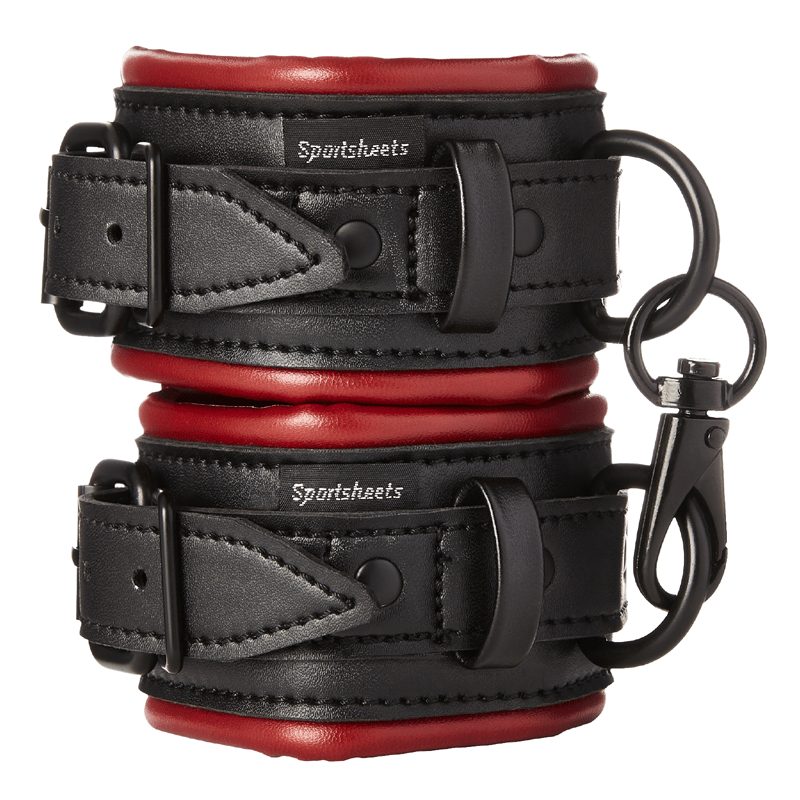
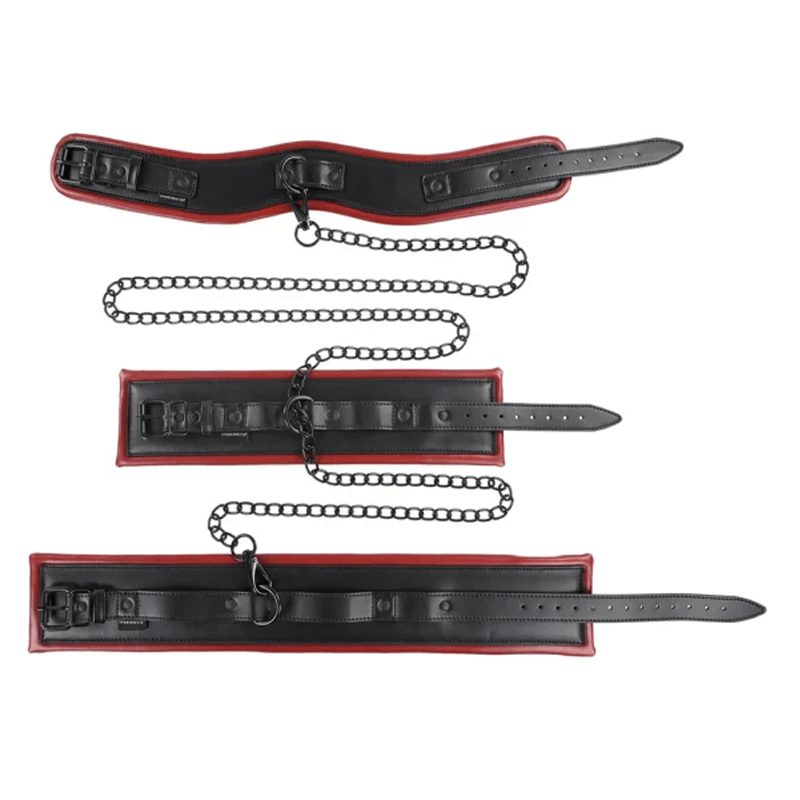
Faux leather here fastens to the body and to itself. The Saffron Cuffs ($64.99) are vegan leather with soft inners, adjustable across a range of sizes, and they link together like a standard pair or separate to join a spreader bar or chain. The Saffron Chained & Tamed set ($94.99) extends the same idea to a posture collar, a double wrist cuff and a double ankle cuff that doubles as a thigh cuff. The Edge Collar & Leash ($99.99) is a padded faux-leather collar with a centre ring and two side connection points, described by its maker as built for extended wear. Not one of these needs anything in the room to function.
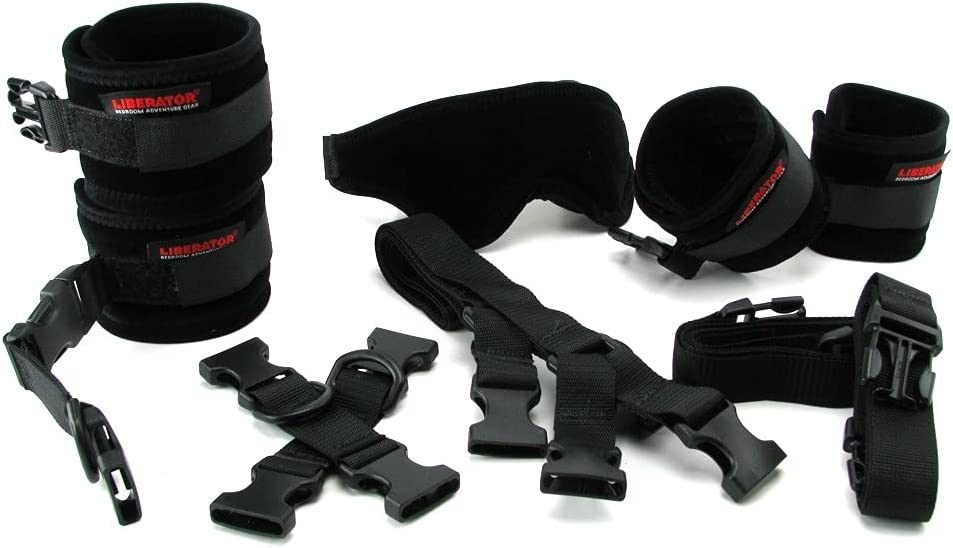
Nylon and soft fabric mostly fasten to furniture. The Bed Buckler Tether and Cuff Kit ($124.99) slides four 20-inch adjustable nylon tethers beneath a mattress, box spring or futon, with Velcro wrist and ankle cuffs at the corners and bonus D-rings that accept scarves, rope or cuffs you already own. The Original Sportsheet ($199.99 king, $219.99 queen) is a soft bedsheet with four hook-and-loop anchor pads that stick anywhere on its surface. The No Matter Where system ($104.99) carries nearly ten feet of adjustable strap and will mount to a door for standing positions as readily as to a bed.
So the useful question is not which material feels better on skin. It is whether you want a restraint that works in any room and lives in a drawer, or a system that converts one particular piece of furniture into the setup and stays there.
Adjustment: stepped or continuous
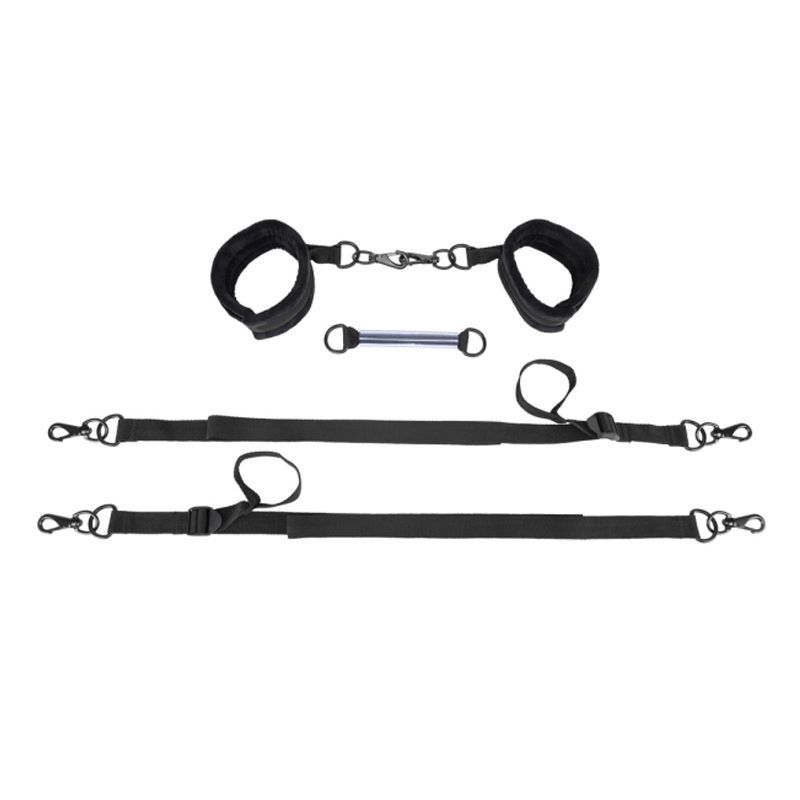
This is the difference most buyers do not think about until it matters. A buckled faux-leather cuff adjusts in steps, from one hole to the next. A nylon tether adjusts continuously, anywhere along its length. The Pivot Connection Kit ($84.99) publishes the most specific figure in the collection: two tethers extending from 10 to 47 inches, 26 to 119 cm, with push clips at both the cuff and the tether end.
Two consequences follow. First, partners with noticeably different wrist or ankle sizes get on better with continuous adjustment, because a buckle step that fits one person can sit a little loose or a little tight on the other. Second, a continuous tether can be lengthened or shortened during a scene without unfastening anything, which a buckle cannot do. If either of those describes you, that is a stronger argument than any difference in how the two materials feel.
Comfort over a long scene is about lining, not material
Faux leather has a reputation for being the less comfortable option, and it is not really deserved. What causes complaints is a narrow, unlined strap, in any material. A wide cuff with a soft inner surface is comfortable whether that surface is vegan leather or microfiber.
The products bear this out. The Saffron Cuffs specify soft inners. The Edge Collar is padded and thicker precisely so it can be worn for longer. The Black Label Seduction Cuff Kit ($144.99) lines its cuffs in soft microfiber. In each case the lining is the feature doing the work, and it is worth reading a listing for that detail rather than for the material name on the label.
Cleaning decides how long you keep it
Faux leather is a coated surface. It wipes clean easily, which is a genuine advantage between partners, but it does not want to be soaked, submerged or left damp, and oil-based products break down polyurethane coatings over time. Dry it before it goes away, and store it flat rather than folded.
Nylon and microfiber tolerate far more. The trade-off sits in the closures: hook-and-loop collects lint, hair and fibres, and loses grip as it fills up. Both the Bed Buckler cuffs and the Sportsheet anchor pads depend on hook-and-loop, so picking the fuzzy side clean now and then is the actual maintenance task for the soft end of this collection. It takes a minute and it is the difference between a cuff that still holds in a year and one that does not.
What fails first
Faux leather fails at the fold and at the buckle holes, in that order. A cuff stored creased develops a line that never fully relaxes, and the coating thins where a buckle pin has worked through the same hole for a year. Hook-and-loop fails by losing grip. Plastic clips and D-rings fail as hardware does, suddenly rather than gradually, which is worth knowing if a piece is bearing weight rather than just marking a limit.
The Saffron Spreader Bar & Cuff Set ($114.99) is the outlier here, and the only stainless steel item in the collection. Its rings are welded rather than clipped, and its own listing is blunt about what that means: there is no escape, only release. Steel does not crease, thin or lose grip, so it will outlast everything else on this page. It also removes the option of getting out of it quickly, which makes it a different conversation about trust rather than a straightforward upgrade.
When the cuff is not the limiting factor
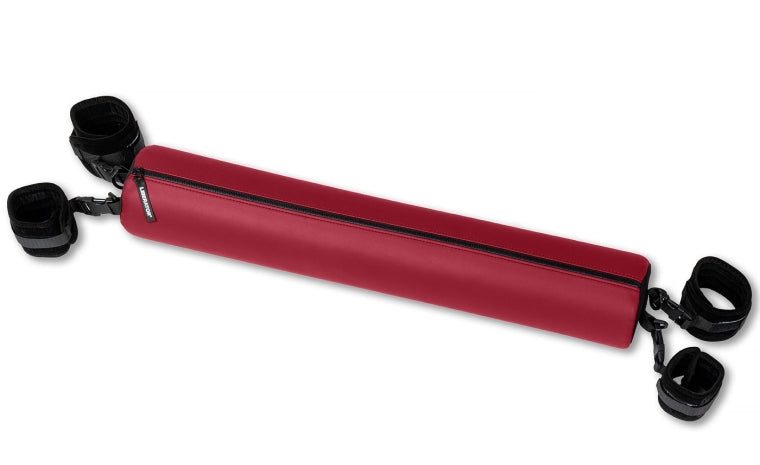
Sometimes the thing you want is not a tighter cuff but a held position, and then the material question moves from the wrist to the structure. The Talea Spreader Bar ($239.99) is a padded faux-leather-covered bar with cuff connector points at each end and included snap clips, and it doubles as a positioning bolster rather than only a restraint anchor. The steel Saffron bar above answers the same need with less give and less exit.
At the other end of the same idea, the Under the Bed Restraint Set, Special Edition ($134.99) runs six straps under a mattress with six double-sided clasps and includes a blindfold, and the Bondi Portable Playscape ($489.99) is a trifold platform with sixteen reinforced attachment points, each with a D-ring and a clip, that folds into a bench and travels in a nylon case. Those are furniture decisions more than material ones, and they are the right place to look if the answer to leather-or-nylon keeps coming out as neither.
Choosing between them
- You want it to work in any room and store small — faux leather. Saffron Cuffs ($64.99) to start, Saffron Chained & Tamed ($94.99) when one pair of wrists is not enough.
- Two people with different wrist sizes, or adjustment mid-scene — nylon. Pivot Connection Kit ($84.99) for its published 10 to 47 inch range, Bed Buckler ($124.99) if there is a mattress to work with.
- Long sessions — read for the lining, not the material. Wide and lined beats narrow and bare in either family.
- Least upkeep — nylon, as long as the hook-and-loop gets picked clean occasionally.
- Longest life — the stainless steel Saffron Spreader Bar & Cuff Set ($114.99), with the caveat that welded rings change what you are agreeing to.
- A held position rather than a held wrist — Talea Spreader Bar ($239.99), or the Bondi Playscape ($489.99) if the furniture is the project.
Browse the full restraints collection to compare the two families side by side.
Leather and nylon are not competing to do the same job better. One gives you an object that goes anywhere; the other gives you a room that is already set up. Decide which of those you actually want and the material stops being the question.
The Wednesday letter
The 7-Day Spark, free, then one letter every Wednesday
Seven small evenings to start, plus a short guide to your first piece. After that, one considered letter each Wednesday, never more than one a week.
By subscribing you agree to receive emails from XtasyXperience. Unsubscribe any time. See our Privacy Policy.
