
Curious about restraint play but not sure where to begin? This guide walks you through materials, safety, communication, and what to buy first — without the overwhelm.
The conversation usually starts the same way. One partner mentions it — lightly, maybe as a question more than a statement — and the other either feels a flicker of curiosity or a flash of uncertainty. Restraints have a way of arriving in relationships like that: tentatively, hopefully, often without a roadmap.
This guide is the roadmap. It’s written for people who are curious and careful — who want to explore restraint play in a way that feels intentional rather than improvised. We’re going to cover materials, safety, how to communicate before you begin, and what to buy if this is your very first time. By the end, you’ll know exactly where to start.
What Restraint Play Actually Does
Before we get to products, it’s worth understanding the mechanism. Restraints work on two levels simultaneously. The person being restrained loses voluntary movement — and that loss, counterintuitively, produces a form of psychological release. When you cannot reach, cannot adjust, cannot redirect what’s happening, your nervous system stops its usual anticipatory work. What remains is heightened presence. Sensation feels amplified. Time slows down.
For the person doing the restraining, there’s a complementary shift: a greater sense of care and attentiveness. Good restraint play — at any level, even a soft tie looped loosely around a wrist — requires one partner to read the other closely. That sustained attention is itself intimate, in ways that ordinary touch doesn’t always produce.
This is why so many couples who try restraint play describe it as “unexpectedly connecting.” It’s not primarily about restriction. It’s about the quality of presence the restriction creates.
What This Catalogue Actually Stocks — and What It Doesn’t
A note before we go further: some beginner guides to restraints talk about three material families — soft fabric, rope, and rigid locking metal. We carry two of those, not three. There is no traditional rope in this catalogue, and nothing sold here is a hard-locking metal cuff. What we do carry is soft satin, structured vegan leather, and nylon or webbing tether kits — which, between them, cover most of what a beginner actually needs, just not under those three textbook labels. If rope work specifically is what you’re after, this isn’t the store for it yet; everything below is honestly one of the other two families.
Soft & Satin — the Easiest Place to Start

Ribbon-style satin ties are gentle on skin, put up no real resistance, and come off in seconds if either partner wants to stop. The Silky Tie-Ups ($89.99, in red or black satin) are the clearest example in the catalogue: no buckles, no hardware, nothing that can pinch. Best for: first-timers, light sessions, anyone who wants the psychological experience of restraint without the sensation of being properly locked down.
Structured Vegan Leather — More Presence, Still Easy to Remove
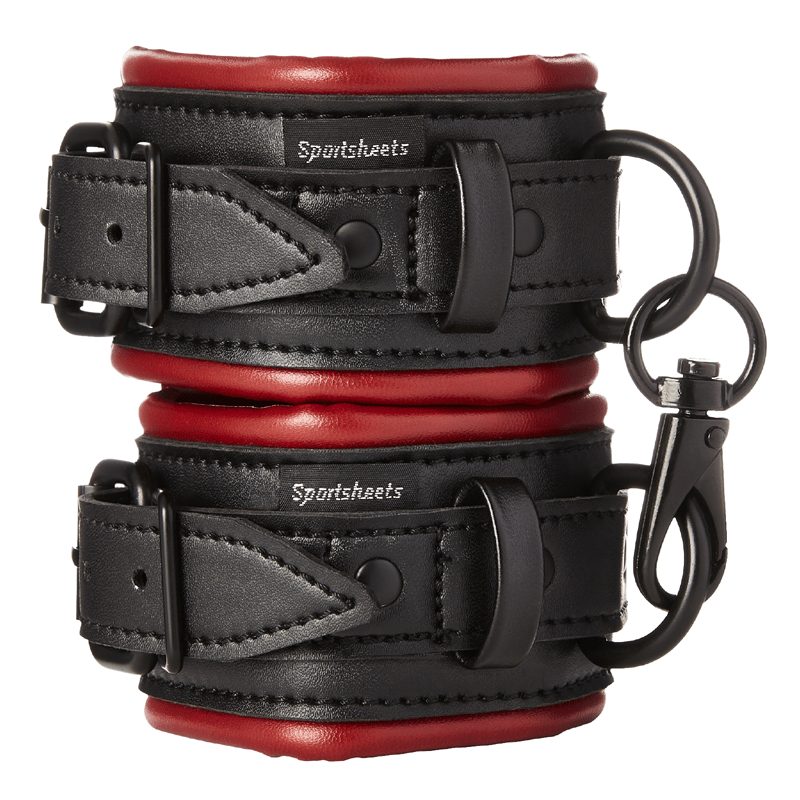
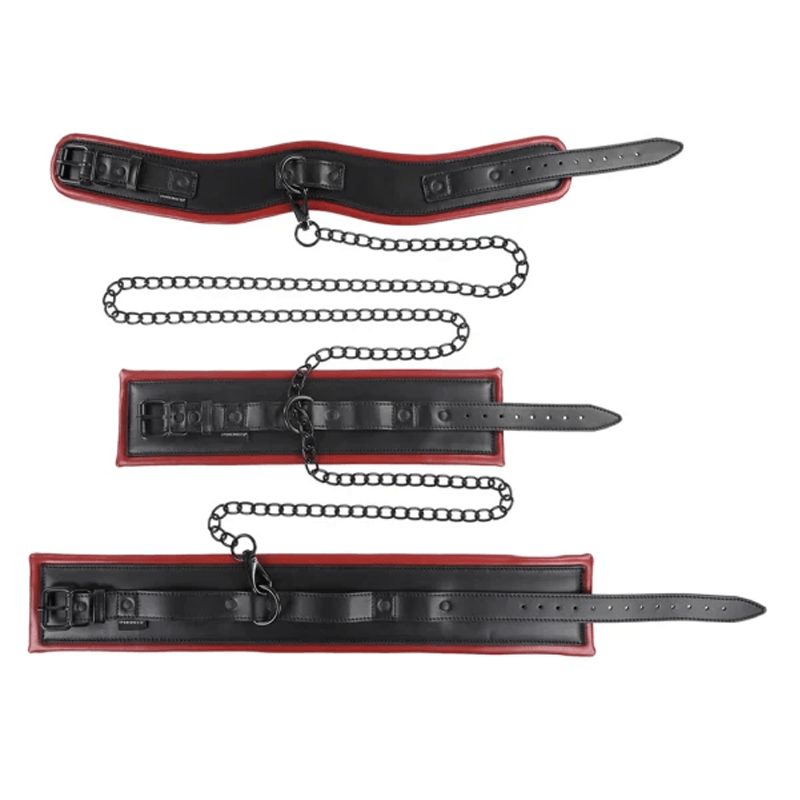
One step up in structure: cuffs built from vegan (faux) leather, which hold shape and look the part while still releasing with a simple buckle or clip rather than a key or a lock. The Saffron Cuffs ($64.99) are the catalogue’s entry point here — genuinely vegan leather, not the real hide the name might suggest, which is worth knowing since it changes how you clean and store them. For a slightly firmer hold with a fixed connecting chain rather than a loose tether, the Saffron Chained & Tamed ($94.99) is a natural second purchase once soft ties feel too gentle. Best for: couples who’ve tried soft ties and want more visual and physical presence, without moving to anything that locks.
Nylon & Tether Kits — the Closest Thing to Rope’s Versatility
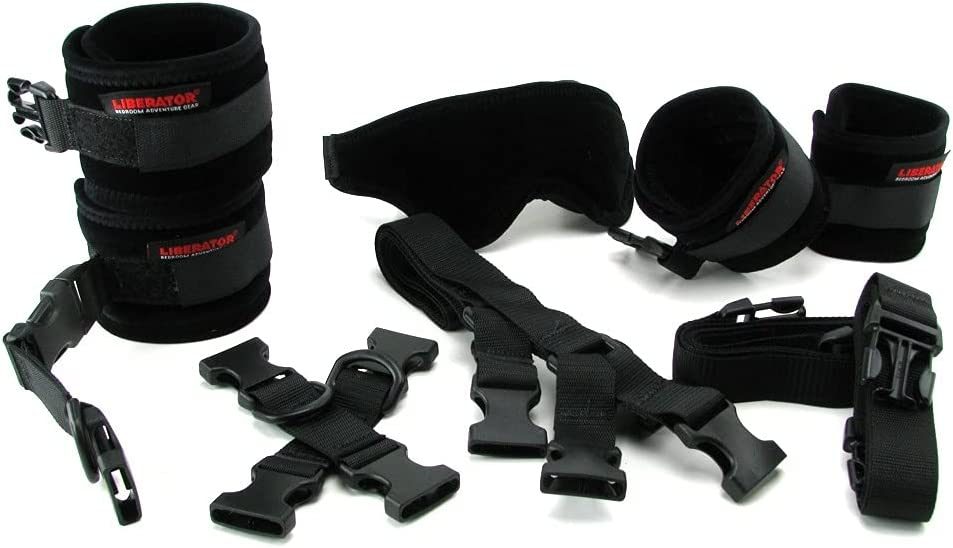
If what appeals to you about rope is the adjustability — being able to change the length, angle, or anchor point of a restraint — the catalogue’s tether kits do that job with webbing and buckles instead of knots. The Bed Buckler Tether and Cuff Restraint Kit ($124.99, genuinely nylon) slips discreetly under a mattress and turns any bed into an anchor point. The Pivot Connection Kit ($84.99, polyester webbing with metal hardware) includes two adjustable tethers that extend from 10 to 47 inches, so you can set up anything from a snug hold to an arms-overhead stretch with the same piece. Best for: couples who want to change the restraint’s shape session to session, the way rope users would, without learning knotwork.
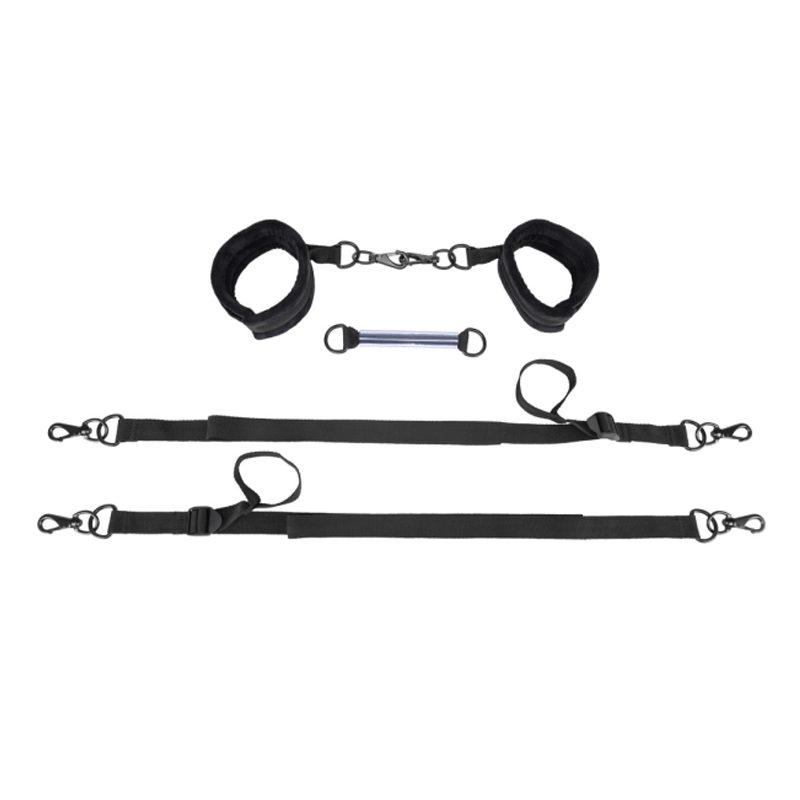
Explore the full restraints collection for the complete range, including spreader bars and coordinated cuff sets for when you’re ready to go further.
Before You Begin: The Safety Framework That Makes Everything Better
Restraint play has one prerequisite that isn’t optional: a shared safety framework. This isn’t a formality or a buzzkill — it’s the structure that allows both people to be fully present, because neither is holding anxiety in reserve.
01
Establish a safe word before you start — every time
A safe word is a word both partners agree will immediately pause or stop everything. “Red” is common. “Pineapple” works. The word doesn’t matter; the agreement does. Have this conversation before clothing comes off, not during.
02
Never restrain in a position that strains circulation
Hands above the head, wrists pinned at an awkward angle, or arms pulled too far behind the back can restrict blood flow quickly. Check in every few minutes. If fingers start to tingle or feel numb, stop and reposition immediately.
03
Keep a quick-release option within reach
Every restraint recommended above releases with a simple buckle or clip rather than a lock and key — but “quick to release” only helps if the person doing the restraining knows exactly where that release point is before starting, not mid-scene.
04
Start shorter than you think you need to
Ten minutes of restraint that both partners genuinely enjoyed is better than forty minutes where one person was quietly enduring. Short, successful sessions build the trust and vocabulary for longer, more adventurous ones.
We go deeper on consent frameworks and safe-word structures in a companion guide once it’s live — for now, the four steps above cover the essentials for a first session.
What to Buy First
Our recommendation for most first-time buyers is the Silky Tie-Ups or the Saffron Cuffs — something that looks like what it is, feels good on the skin, and releases in one motion. If you want more adjustability without more complexity, the Pivot Connection Kit’s tethers give you that range in a single purchase.
Your First Restraint Session: What to Expect
First sessions are almost always lighter than people imagine — and that’s exactly right. The point isn’t to go as far as possible. It’s to discover how restraint feels for both of you: how it changes the dynamic, what sensations it amplifies, what it opens up in the conversation afterward.
Spend time after the session talking. What felt good? What would you adjust? That debrief — sometimes called aftercare in more structured power-play contexts — is where the real intimacy happens. It’s also where you build the shared language that makes every future session better.
A note on the BDSM label
Restraint play is technically part of the BDSM spectrum — but you don’t need to claim or identify with any label to explore it. Many couples who enjoy the occasional satin tie would never describe themselves as “into BDSM.” The experience belongs to you, not to a category.
Ready to explore? Start with something soft, something beautiful, and something that feels like you.
The Wednesday letter
The 7-Day Spark, free, then one letter every Wednesday
Seven small evenings to start, plus a short guide to your first piece. After that, one considered letter each Wednesday, never more than one a week.
By subscribing you agree to receive emails from XtasyXperience. Unsubscribe any time. See our Privacy Policy.
