
Posted on — Leave a comment

Choosing Pleasure Toys That Actually Fit Your Body and Practice

Professional header image for educational tutorial: Choosing Pleasure Toys That Actually Fit Your Body and Pr...

You have probably opened a buying guide, skimmed the top ten recommendations, and closed the tab feeling no closer to a decision. Not because the products were bad, but because the entire guide was written for a body and a practice that simply are not yours. Most intimate wellness content is built around a default anatomy and a default use case, and if you fall outside that assumed configuration, you are left translating someone else’s advice into your own reality with zero actual support.

This guide does something different. Instead of handing you a product list organized by popularity or brand prestige, it gives you a framework for evaluating any product against your specific body and how you actually use it. We will walk through how to take an honest inventory of your anatomy, how to define your practice before you define your product, and where mainstream sizing and design assumptions quietly fall apart for queer and trans buyers. You will also find a four-question evaluation process you can apply to every future purchase decision, plus some practical notes on buying within the Canadian market. Think of this less as a shopping guide and more as a decision-making tool you keep.

A person seated at a desk measuring their waist with a tape measure.

Why Most Buying Guides Are Not Written for You

Most intimate wellness buying guides open with a sizing chart. Chest measurement, waist measurement, hip measurement, mapped to a presumed gender. If your body or identity sits outside that assumption, you are excluded from the decision-making framework before the first product is mentioned. The guide was not written for you. It was written around someone else, and you were expected to translate.

“What is popular” is the question most guides answer. But popularity reflects a majority body configuration. A bestseller list tells you what works for the most statistically common combination of anatomy and use case. For queer, trans, and gender-nonconforming buyers, that signal carries almost no useful information about fit, function, or comfort for your specific body and practice.

The gap became impossible to ignore after 2018, when a wave of gender-inclusive intimate apparel and wellness brands entered the market in direct response to how completely mainstream sizing had failed non-binary and trans buyers. Some brands in adjacent categories moved to 100% made-to-order custom measurements, abandoning standard sizing altogether, because no standard size could reliably serve their customers. That is not a niche accommodation. That is a structural admission about how deeply the conventional model was broken.

This piece does not offer a ranked product list. A list would recreate the same problem: products chosen for someone else’s body, presented as though they are universally relevant. Instead, this guide offers the questions you should ask before any product enters the picture, and a method for answering them honestly against your own anatomy, your own practice, and your own relationship to your body.

Conscious intimacy begins with self-knowledge. That premise sounds simple, but it runs counter to how most purchase decisions get made, which is by scanning a list and picking whatever has the most reviews. If you want guidance built around queer bodies and queer self-knowledge specifically, this overview of queer intimate wellness in Canada is a useful companion to what follows.

The framework here is transferable to any product, any body, any practice. That is the point.

Fit Is Not a Size, It Is a Practice

So if most guides fail before they even define “fit,” it is worth pausing on what that word actually means here.

In mainstream retail, fit is a measurement problem. A number, a letter, a standardized range. In intimate wellness, that definition stops being useful almost immediately, especially for queer and trans buyers. Here, fit means something closer to integration: how a product works with your actual anatomy, responds to your actual sensation preferences, and supports your actual use context. Those three things rarely appear in a product description, which is why the evaluation work has to happen before you shop.

Fit begins with relationship, not measurement.

Self love intimacy, taken seriously, asks more than “will this work with my body?” It asks how you currently relate to your body. Which areas feel like yours to engage with right now. Which feel neutral, tender, or outside the conversation entirely. And crucially, how that relationship may be shifting, because for many queer and trans people, it is not static.

That honest inventory is the real starting point. Not dimensions. Not a category on a website.

Where you begin is valid.

Body dysphoria, body neutrality, and body affirmation are all legitimate places to be, sometimes on the same day. A product chosen with awareness of where you are can support any of them. One chosen without that awareness can quietly work against all three. This is not a small distinction. It is the difference between a purchase that serves you and one that subtly doesn’t.

Reframe the first question.

Most buyers open with “what does this product do?” The more useful opening is: what do I want my body to feel? That question, placed at the start rather than treated as an afterthought, changes which products even stay in consideration.

It also makes space for something mainstream framing rarely acknowledges: the non-performative, non-goal-oriented dimension of being present with your own body. Platonic intimacy with yourself is a legitimate reason to make a considered wellness choice. You do not need a performance goal to justify the intention.

Starting With Your Body: An Honest Anatomy Inventory

So where does that honest inventory actually begin?

Not with a list of body parts checked off in order. An anatomy inventory is a private, unhurried accounting: which regions of your body do you engage with during self-pleasure, how do you engage with them, and which sensations, pressure, vibration, fullness, texture, temperature, reliably land for you. The goal is specificity, not comprehensiveness. You are mapping what is true for you right now, not constructing a theoretical ideal.

For trans buyers, that “right now” carries particular weight. Hormone therapy reshapes tissue sensitivity over time; surgical history changes both sensation and structure. A body at one stage of HRT responds differently than it did before, and differently still as that process continues. Mainstream product descriptions almost never account for this. They are written for a static body. Yours may be in motion, and the inventory you do today is the correct starting point, not the one you did two years ago or the one you imagine for the future.

Your most responsive areas may not be the ones the product was designed around. This is worth sitting with. Erogenous geography varies enormously across queer and trans bodies, and many buyers discover that their most reliable pleasure pathways are ones mainstream product categories simply do not serve or even name. That is not a problem with your body. It is a design gap worth knowing about before you spend money.

As you map your anatomy, it helps to think in zones rather than categories: external anatomy, internal anatomy, chest, pelvic floor. Each carries different product implications. Knowing which zones are active in your practice lets you filter by functional relevance rather than by the marketing category a product happens to sit in.

Finally, note your physical context honestly. Grip strength, mobility range, fatigue tolerance, chronic pain, and sensory sensitivity all affect which product shapes, weights, and controls will actually work for you in practice, not just in theory. Accessibility is not a secondary concern; it belongs in the first pass.

Define Your Practice Before You Define Your Product

Hands at a wooden worktable with tools, spools of thread and an open sketchbook of pattern drawings.

Once you have a clearer picture of your body, the next question is equally concrete: what does your practice actually look like?

Mainstream guides skip this almost entirely. They describe what a product is, rarely what it supports. For queer buyers whose use case may not match the assumed one, that gap is consequential.

Solo versus partnered use is the first distinction worth making honestly. Conscious intimacy explored alone calls for different design priorities than a product brought into relational intimacy with a partner. Solo practice often rewards ergonomic independence: controls you can operate one-handed, a shape that works without assistance, weight your grip can sustain comfortably. Partnered use may shift those priorities toward shared accessibility, quieter operation, or compatibility with another person’s body in the same space.

Duration shapes requirements more than people expect. A product suited to a short, exploratory session may be poorly matched to an extended wellness practice. Handle geometry, motor endurance, and recharge design are all practical concerns when a session runs longer. A product that recharges via a proprietary cable, for instance, becomes more limiting if recharge time interrupts an unhurried practice rather than a quick one.

Layered function is increasingly valued for good reason. The multi-use design principle visible in inclusive apparel, like integrated harness functionality built into everyday underwear, applies directly here. Asking whether a product can adapt as your practice evolves is a legitimate purchase criterion, not an indulgence. If you’re in a period of self-discovery, a product with one rigid use case may not serve you long. This kind of considered, future-aware thinking is what distinguishes intentional buying from reactive buying, including when a product is chosen as a shared investment, as explored in this guide to intimate wellness gifts for Canadian couples.

Position and mobility are the final practical filter. A product that functions well in one position may be ergonomically awkward in another. Your reference point should be your actual practice, not an idealized or aspirational version of it.

What Product Design Features Actually Mean for Queer Bodies

Once your practice is defined, the next layer is learning to read product descriptions on your own terms rather than the manufacturer’s.

Firmness and flexibility are the first variables worth understanding. A firmer material delivers pressure that is concentrated and precise; a softer one spreads sensation across a broader surface area. Neither is inherently superior. The right choice depends on what your body responds to and which areas you are engaging. This is a sensation preference question, and it belongs to you, not to a product rating.

Insertable dimensions are routinely listed in centimetres with no anatomical context. “Average” in a product description refers to a statistical midpoint derived from a particular population, which may have little relevance to your body. Evaluate length, width, and shape against your own internal anatomy and your own sense of what feels comfortable versus uncomfortable. Ignore the framing; use your own reference point.

Vibration range matters more than peak intensity. For buyers with heightened sensitivity, including those whose sensitivity has shifted through hormone therapy, a product with a wide range of incremental settings is far more useful than one that reaches a high maximum. You need room to find your threshold, not just a ceiling to hit.

External stimulation features are frequently described in gendered language that assumes a specific anatomy. Terms like “clitoral” or “perineal” are marketing shorthand. What actually matters is the curvature, the surface area in contact, and where the pressure concentrates. Cross-reference those physical characteristics against the external structures you want engaged, independent of whatever category the product is marketed into.

Material safety is non-negotiable. Body-safe, non-porous materials are the baseline, look for products explicitly described as such by the manufacturer, and verify those claims against the retailer’s sourcing standards rather than accepting them at face value. Porous materials harbour bacteria and cannot be fully sanitized. For any product purchased in Canada, look for verifiable material certification aligned with Health Canada safety standards, not just a manufacturer’s claim on a product page.

Harness compatibility introduces a separate design layer that generic descriptions rarely address clearly. A flared base is the functional requirement for harness use, but the shape and diameter of that base also need to be compatible with the specific O-ring size in the harness you use. These are two distinct questions. For a practical breakdown of what harness compatibility actually means in terms of base design and harness style, the curated guides section covers the specifics worth knowing before you buy.

Where Mainstream Sizing Assumptions Break Down

All of those design considerations rest on a prior problem: the measurements used to design most intimate wellness products were never drawn from a representative range of bodies.

Standard sizing in this category is built on statistical averages derived from majority body configurations. Trans bodies, non-binary bodies, intersex bodies, and bodies that have undergone gender-affirming medical intervention sit structurally outside that design reference. The product was not made with your measurements in mind. That is not a complaint; it is a design fact worth building your evaluation around.

Harnesses illustrate this clearly. One-size-fits-most harness sizing is typically calibrated to a narrow hip range and a specific pelvic geometry. For many trans and non-binary buyers, that geometry does not match, and the result is a fit failure that affects both comfort and function in use, not just aesthetics on arrival.

The gendered labelling problem compounds this. Products marketed “for men” or “for women” sort buyers by marketing assumption, not anatomy. Those categories carry no regulatory weight in Canada; no Canadian law requires manufacturers to use gender-based product labelling, and no standard mandates that it reflect actual anatomical design differences. For a queer buyer, ignoring category labels entirely and reading product specifications directly is not contrarian. It is the more accurate method.

The made-to-order logic explored earlier applies here too: start with your own measurements, then find the product that meets them.

For Canadian buyers, this sequencing has a practical cost attached. Returns on intimate wellness items are frequently restricted for hygiene reasons, and Canadian consumer law does not guarantee a right to refund for change of mind; return policies are set by individual retailers. A poor-fit purchase is often a final one. Investing time in evaluation before purchase is not perfectionism; it is straightforward consumer sense.

You can read more about how curation decisions at XtasyXperience are made, including the sourcing criteria that shape what reaches the catalog, in How We Decide What Belongs Here.

The Evaluation Framework: Four Questions Before Every Purchase

That investment in honest self-assessment leads directly to the four questions worth asking before any purchase.

Question 1: Body. Which areas of your body are you engaging with, and what physical sensations do you want to experience? This replaces “what category does this product belong to” as your first filter. Category labels are marketing architecture; your body is the actual reference point. Start here, every time.

Question 2: Practice. What does your real use context look like, solo or partnered, how long, in what position, how often? A product that works beautifully in one context can be ergonomically awkward or functionally limited in another. The question is not whether a product is well-designed in general; it is whether its specific design supports your specific practice.

Question 3: Features. Which design characteristics, such as firmness, dimensions, vibration range, material, base design, or harness compatibility, are genuinely relevant to your anatomy and practice? Which are irrelevant, or potentially counterproductive? Every feature a product has is a choice someone made for a particular body and use case. Your job is to assess whether those choices align with yours, not to assume they do because the product is popular or well-reviewed.

Question 4: Evolution. Is your practice, or your relationship to your body, currently in transition? This includes changes from gender-affirming care, shifting sensory sensitivity, new self-knowledge, or simply evolving preference. A product chosen for who you are right now should have enough flexibility to remain useful as that changes. Rigid, single-function design is a risk when your relationship with your body is still unfolding.

These four questions do not require expertise. They require honesty, and a willingness to treat self love intimacy as something worth being intentional about. That willingness is what conscious intimacy as a wellness practice actually requires.

Intimacy, elevated. Pleasure, considered. is the organizing principle behind XtasyXperience’s curated Canadian selection. The catalog is built with these functional considerations in mind, which means browsing it with these four questions already answered makes the curation genuinely useful rather than overwhelming. You arrive knowing what you are looking for; the selection is there to meet you.

Buying in Canada: What the Local Context Changes

Once you have a clear framework, where you buy becomes just as practical a question as what you buy. For Canadian queer and trans buyers, the local context introduces five considerations that most international guides overlook entirely.

Pricing in CAD is not a small detail. Many queer-focused intimate wellness products are sold in USD through international retailers. After currency conversion and customs duties, the landed cost of a USD-priced item is reliably higher than the sticker price suggests, often meaningfully so, before any brokerage fees. A Canadian retailer priced in CAD shows you the real cost upfront, without arithmetic or surprises at the door.

Shipping discretion matters, and domestic fulfillment delivers it more reliably. For buyers in shared housing, multigenerational households, or communities where privacy around intimate wellness is not guaranteed, a package that arrives quickly and predictably is a genuine practical concern. Cross-border shipments carry more variables: longer transit windows, customs delays, and handling by multiple carriers. Domestic Canadian shipping reduces all of that friction.

Health Canada’s consumer product safety framework sets a distinct regulatory baseline. Products sold in Canada are subject to the Canada Consumer Product Safety Act, and what meets standards in another country does not automatically meet Canadian requirements. When a retailer sources to Canadian safety standards, material safety claims carry local accountability rather than resting solely on a manufacturer’s self-certification from elsewhere.

Made-to-order items often carry lead times of several weeks and fall outside standard return policies, review fulfillment terms before committing.

Access is not uniform across Canada. Physical retail, community education infrastructure, and peer knowledge networks vary considerably between urban centres and rural or remote communities. A queer buyer in a smaller city or town does not have the same walk-in options as one in Toronto or Vancouver. That gap makes trustworthy online editorial guidance and curated Canadian e-commerce more useful, not a compromise.

Conscious Intimacy With Yourself as a Wellness Practice

All the practical groundwork matters. But practical groundwork is not the whole picture.

Within LGBTQIA+ communities, the conversation around intimate wellness has shifted meaningfully. Self-pleasure is increasingly understood as a dimension of embodiment: a way of developing self-knowledge, maintaining a relationship with your own body, and supporting overall wellbeing. That framing changes what you are actually doing when you make a product decision.

There is a layer beneath product use that often goes unnamed: the non-performative, non-goal-oriented attention you bring to your own body before any product enters the picture. Platonic intimacy, in this sense, means being present with yourself without agenda. A product can support that quality of attention; it cannot create it. Intention is not a feature that ships in the box.

For queer and trans buyers specifically, self-pleasure can carry psychological weight that mainstream wellness content rarely acknowledges. It can be an act of reclamation. It can be how you learn what a body undergoing transition actually responds to now, not how it responded before. It can be body affirmation made quiet and private. When you treat that practice as something worth being intentional about, the criteria for every product decision shifts. You are no longer asking what is popular. You are asking what serves this practice, for this body, at this point in time.

Conscious intimacy as a framework rests on one honest question: is this choice coming from self-knowledge, or from habit and marketing? That question applies to which product you select, to how you create conditions around its use, and to what you believe pleasure is actually for.

The most useful intimate wellness product is never automatically the most advanced one. It is the one chosen by someone who understood their own practice clearly enough to know it would fit.

Taking the Framework Forward

That self-knowledge you’ve been building throughout this framework isn’t a one-time exercise. It’s a practice in the same way that conscious intimacy itself is a practice: something you return to, refine, and allow to evolve.

Your body will change. Your relationship to it will change. Hormone therapy, shifting sensory sensitivity, new self-understanding, or simply time will alter what serves you. The four questions are a reference point you return to, not a one-time checklist.

If you find yourself uncertain in front of a product page, that uncertainty is usually informative. It tends to mean one of the four questions hasn’t been answered honestly yet. Pause there. The discomfort is the work, not an obstacle to it.

XtasyXperience’s curated catalog and editorial resources are built for this kind of considered approach. Browsing with the framework in hand changes what you’re looking for, you’re not scanning for popularity, you’re filtering for fit against answers you’ve already thought through. The curation becomes more useful when you bring that clarity to it.

One thing worth naming plainly: the goal here was never the perfect product. There isn’t one. The goal is a clearer, more honest relationship with your own body and your own practice. That relationship is what makes any product choice more useful than a guess.

That clarity takes time to develop, and it’s worth the time. Give it the same intention you’d give anything else in your wellness life.

Conclusion

Mainstream buying guides were never written for you. This framework was. It treats fit as something earned through self-knowledge, not something solved by a size chart.

Ready to put the framework to work? Browse the XtasyXperience catalog with your answers already in hand. You are not looking for what is popular; you are filtering for what fits. That shift in approach changes everything. Start there, stay honest, and trust that the clarity you build now compounds over time.

Finding your fit

Three places to apply the four questions, chosen because each one makes a different variable easy to control rather than guess.

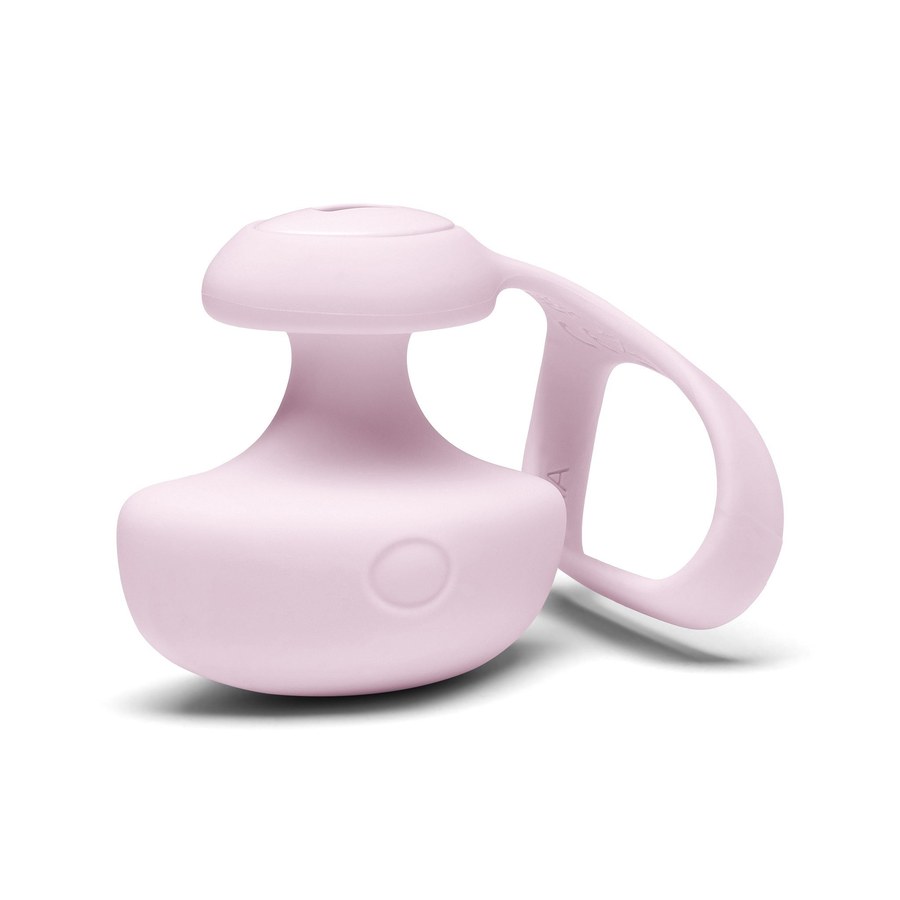
  • Fin Quartz 2.0 — a finger vibrator worn on your own hand. Start here if Practice is the question you cannot answer yet, because it adds sensation without committing you to a shape, an insertion or a position.
  • Sliding Skin Realistic Dildo — dual-density silicone, sold in L, XL and XXL. Relevant to the Body question specifically: firmness and dimensions stay separate choices here rather than one bundled decision.
  • Harness Lingerie Halo — a cyclist-cut harness in tulle and microfiber, built as lingerie rather than hardware. If harness compatibility is part of your Features answer, check its ring against the base of whatever you plan to wear in it before buying either.

Or browse by the variable you are actually filtering on: dildos, vibrators, or strap-ons and harnesses.

The honest trade-off: as this guide notes above, Canadian consumer law restricts returns on intimate wellness items for hygiene reasons. That makes the first purchase the expensive one to get wrong, which is an argument for starting at the lowest-commitment end of this list rather than the most complete.

Frequently Asked Questions

Why don't standard sizing charts work for queer and trans buyers?

Standard sizing charts in most buying guides are built on statistical averages derived from majority body configurations and often include gendered labeling that sorts buyers by marketing assumption rather than anatomy. Trans bodies, non-binary bodies, and bodies that have undergone gender-affirming medical intervention sit structurally outside these design references. Additionally, Canadian law does not require gender-based product labeling, making category labels unreliable for finding products that actually fit your body. The most accurate approach is to read product specifications directly against your own measurements rather than relying on category labels.

What is the difference between defining your practice and defining your product?

Defining your practice means honestly assessing your real use context—whether you use products solo or with partners, how long your sessions typically last, what positions you use, and how often you engage in the practice. Defining a product means choosing what to buy. Mainstream guides skip this step entirely, which creates a gap for queer buyers whose actual use case may not match the assumed one. Your practice should determine which product features matter; a product suited to a short exploratory session may be poorly matched to an extended wellness practice, for example. Intentional buying means starting with practice first.

How does hormone therapy affect which products might work for my body?

Hormone therapy reshapes tissue sensitivity over time, and surgical history changes both sensation and structure. A body at one stage of HRT responds differently than it did before, and differently still as that process continues. This means the anatomy inventory you create today is the correct starting point for your current body, not one based on your pre-transition body or an imagined future state. Additionally, vibration range matters more than peak intensity for buyers whose sensitivity has shifted through hormone therapy, as you need room to find your threshold rather than just reaching a high maximum. Your practice and preferences may evolve, so products with flexibility are valuable during transitions.

What are the four key questions I should ask before purchasing any intimate wellness product?

The four essential questions are: (1) Body—Which areas of your body are you engaging with, and what physical sensations do you want to experience? (2) Practice—What does your real use context look like (solo or partnered, duration, position, frequency)? (3) Features—Which design characteristics like firmness, dimensions, vibration range, material, base design, or harness compatibility are genuinely relevant to your anatomy and practice? (4) Evolution—Is your practice or relationship to your body currently in transition? These questions replace marketing categories and popularity as your filtering system, ensuring you choose products based on self-knowledge rather than assumptions.

Why should I consider buying from Canadian retailers rather than international ones?

Canadian retailers offer several practical advantages: (1) Pricing is shown in CAD upfront, avoiding hidden costs from currency conversion and customs duties; (2) Domestic shipping is faster and more discreet, which matters for buyers in shared housing or communities where privacy is a concern; (3) Products sold in Canada must meet Health Canada's consumer product safety standards, providing local regulatory accountability rather than relying solely on manufacturer self-certification; (4) For queer and trans buyers in smaller cities or towns without physical retail options, trustworthy Canadian e-commerce with curated selections and editorial guidance fills an access gap. Additionally, Canadian consumer law restricts returns on intimate wellness items for hygiene reasons, so investing in evaluation before purchase is crucial.

Posted on

Best Bondage Cuffs for Beginners

Best Bondage Cuffs for Beginners

The first time you try restraints, comfort decides everything. If a cuff pinches, scrapes, or feels intimidating before the scene even begins, the mood disappears before it starts. Finding the best bondage cuffs for beginners is less about looking edgy and more about choosing gear that feels secure, soft, and easy to trust from the first minute you put it on.

This guide covers real cuffs from the current Restraints collection at XtasyXperience, what actually makes a beginner cuff comfortable, and — just as importantly — which styles are honestly better left for later.

What makes a cuff “beginner-friendly” rather than just cheap

Comfort comes from construction, not price. A beginner-friendly cuff needs a soft interior, enough width to spread pressure instead of concentrating it in one band, and a closure that feels secure without forcing a tight fit. Narrow cuffs can look sleek in photos but tend to dig in; wider, padded cuffs distribute contact and feel more stable around a wrist or ankle. Buckle closures generally read as more secure and premium; hook-and-loop closures are faster to get on and off and slightly less intimidating for a genuinely first try.

Why cuff material matters more than it looks like it should

It also depends, and that’s worth saying plainly: the softest-looking material isn’t automatically the most comfortable one. Plush or faux-fur styles feel inviting but can shift during use, and fluffy padding can hide pressure points if the structure underneath is thin. Structured vegan or faux leather with a smooth lining tends to hold its shape and stay put, which for most beginners translates into feeling supported rather than flimsy — though poorly finished synthetic can feel stiff at the edges, so lining quality matters more than the material label by itself.

What to look for in bondage cuffs

Curious what actually separates a comfortable first pair from one that ends up in a drawer? Three things: width and padding, the closure hardware, and how much adjustability the design allows.

Width, padding, and where pressure goes

Scarlet and black vegan leather wrist cuffs, linked together like handcuffs
Saffron Cuffs — vegan leather, $64.99

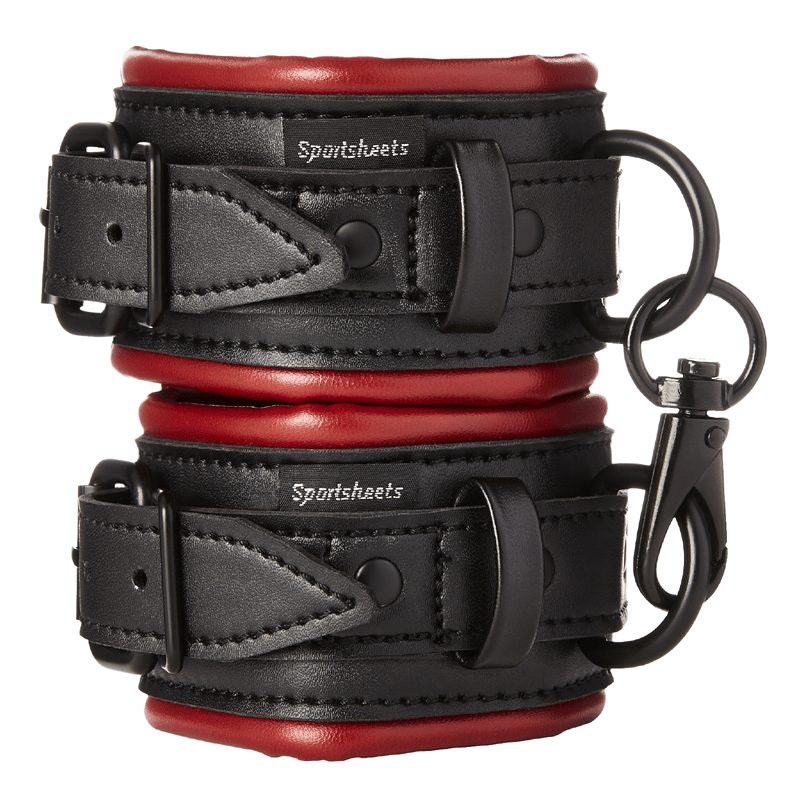
The Saffron Cuffs ($64.99) are a solid entry point: vegan leather with a soft inner lining, designed to link together like a standard handcuff set or separate to combine with a spreader bar down the line. The listing doesn’t publish an exact circumference range, so fit is a feel judgment rather than a measured one — reasonable for a $64.99 first pair, worth knowing if you have unusually narrow or wide wrists.

Soft ties for the gentlest possible entry

Red satin ribbon-style tie-up restraints laid flat
Silky Tie-Ups, red satin — $89.99

If rigid hardware feels like too much for a first try, Silky Tie-Ups ($89.99, also in black) are smooth satin ribbon restraints with no buckles or clasps at all — you tie them yourself, which means the pressure is entirely in your own hands. They trade the “locked in” feeling some beginners want for something gentler and easier to undo mid-scene, which is exactly the point for a genuinely cautious first attempt.

A coordinated kit, for a beginner who wants the setup decided for them

Black microfiber under-mattress restraint kit with soft cuffs and tether straps
Bed Buckler Tether and Cuff Restraint Kit, black microfiber — $124.99

The Bed Buckler Tether and Cuff Restraint Kit ($124.99) is genuinely Nylon-tagged on its own listing and pairs soft cuffs with tethers that slip under any mattress, box spring, or futon — no fixed bed frame required, which rules out a common beginner-kit dealbreaker. It’s a tether-plus-cuffs system rather than a single pair, so it suits someone ready to try a full restrained position rather than just wrists alone.

Adjustability: the feature beginners underrate

Black adjustable tether and cuff connection kit with push-clip hardware
Pivot Connection Kit — $84.99

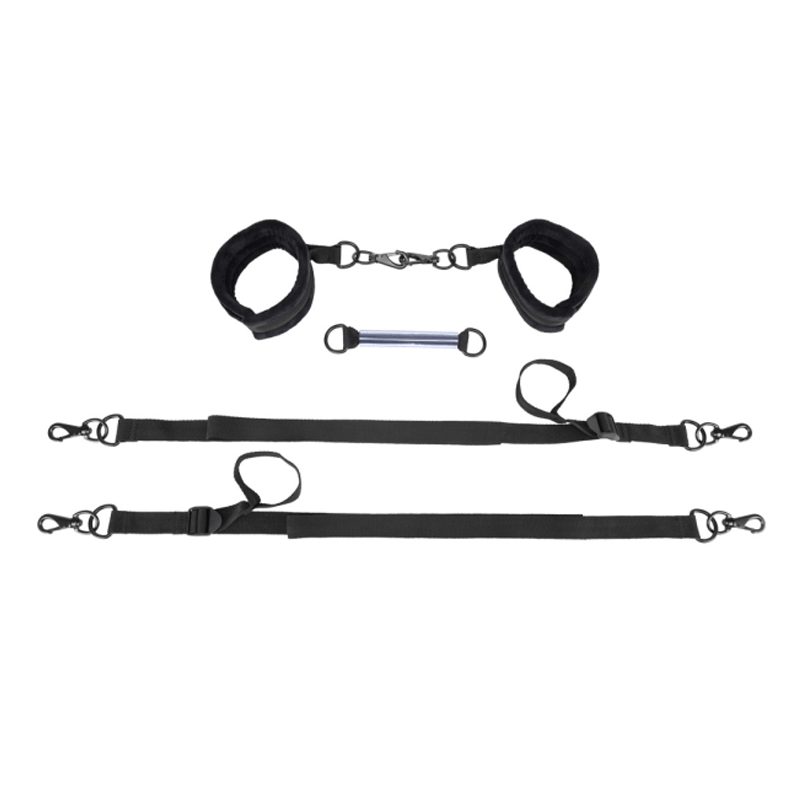
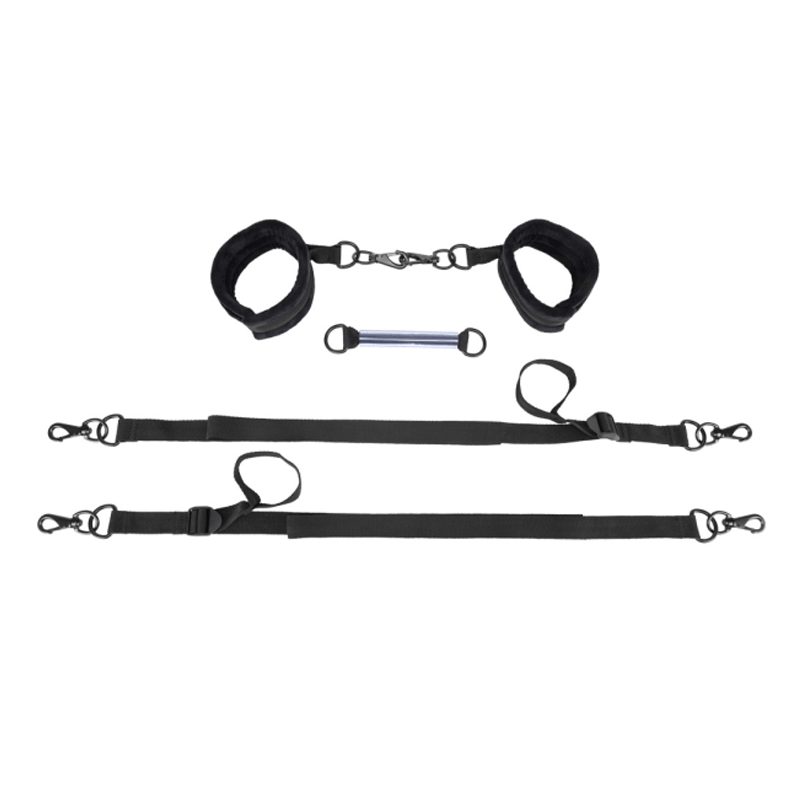
The Pivot Connection Kit ($84.99) publishes a real spec worth pointing at directly: its tethers extend from 10 to 47 inches (26 to 119cm), with push-clip connectors for quick changes between wrist and ankle use. Its material is polyester and hardware, not nylon — an earlier internal note on this catalogue grouped it with the nylon products by mistake, and it’s worth correcting rather than repeating. As a beginner pick it’s less about the cuffs themselves and more about the adjustable range, which is genuinely rare to see published at all in this category.

What beginners should honestly skip

Chain-linked leather — not wrong, just not first

Black and red faux leather cuffs connected by a metal chain
Saffron Chained & Tamed — $94.99

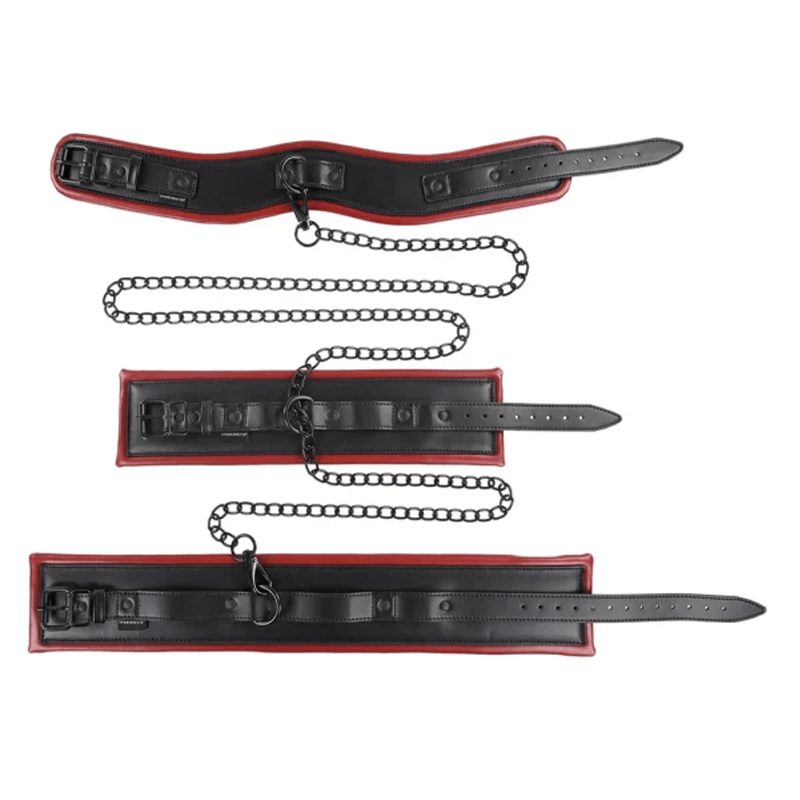
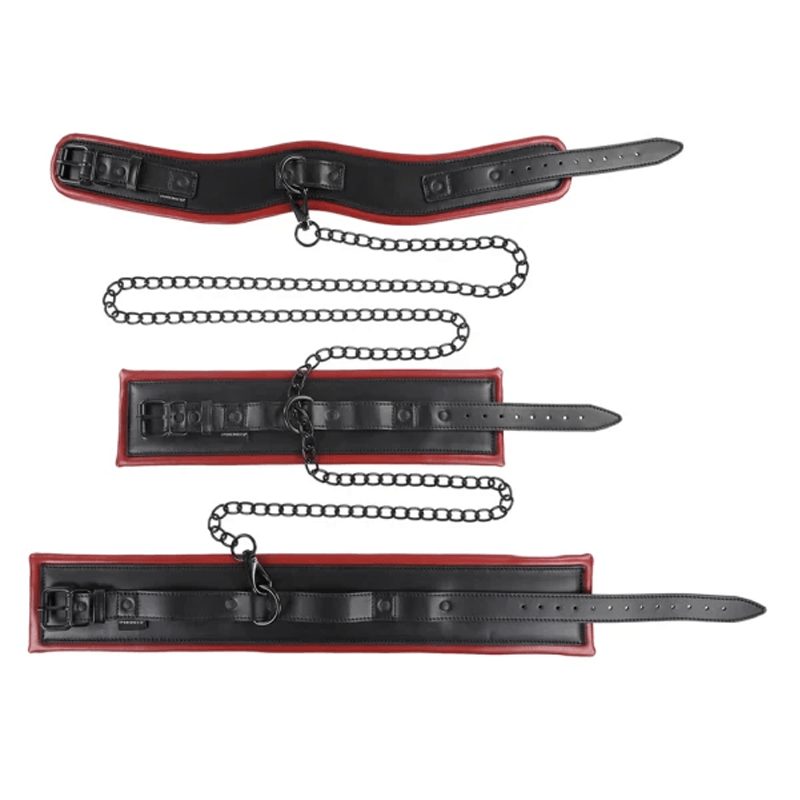
The Saffron Chained & Tamed ($94.99) is faux leather with a metal chain link between the cuffs, built for a partner who’s designed to stay put rather than shift position easily. It’s a fine second or third purchase. As a first pair, the fixed metal chain removes the flexibility a beginner usually wants while still learning what positions and durations actually feel good, which is exactly the kind of “looks intense, wears differently” gap worth flagging before checkout rather than after.

Kits labeled “advanced” by their own maker — believe them

Black microfiber multi-piece restraint kit with wrist and ankle cuffs and connector straps
Black Label Seduction Cuff Kit — $144.99

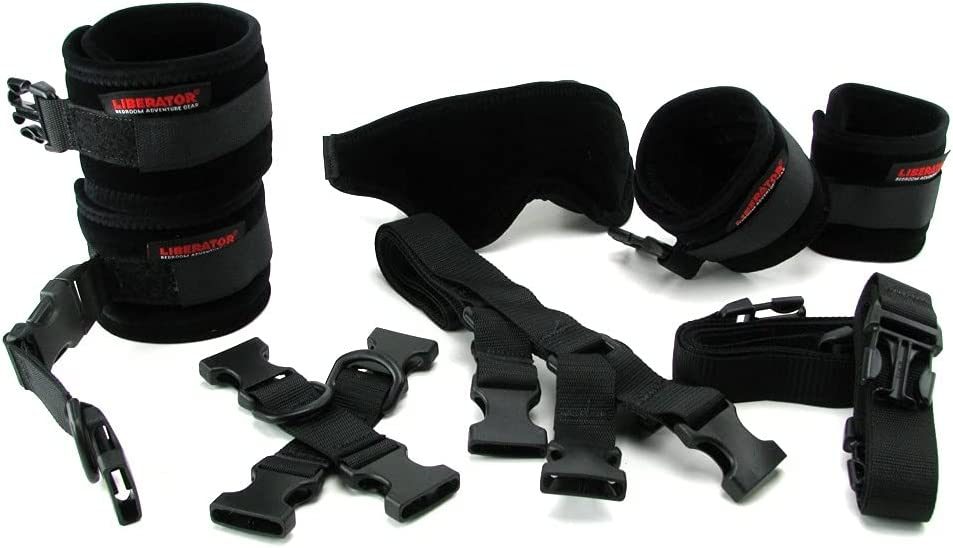
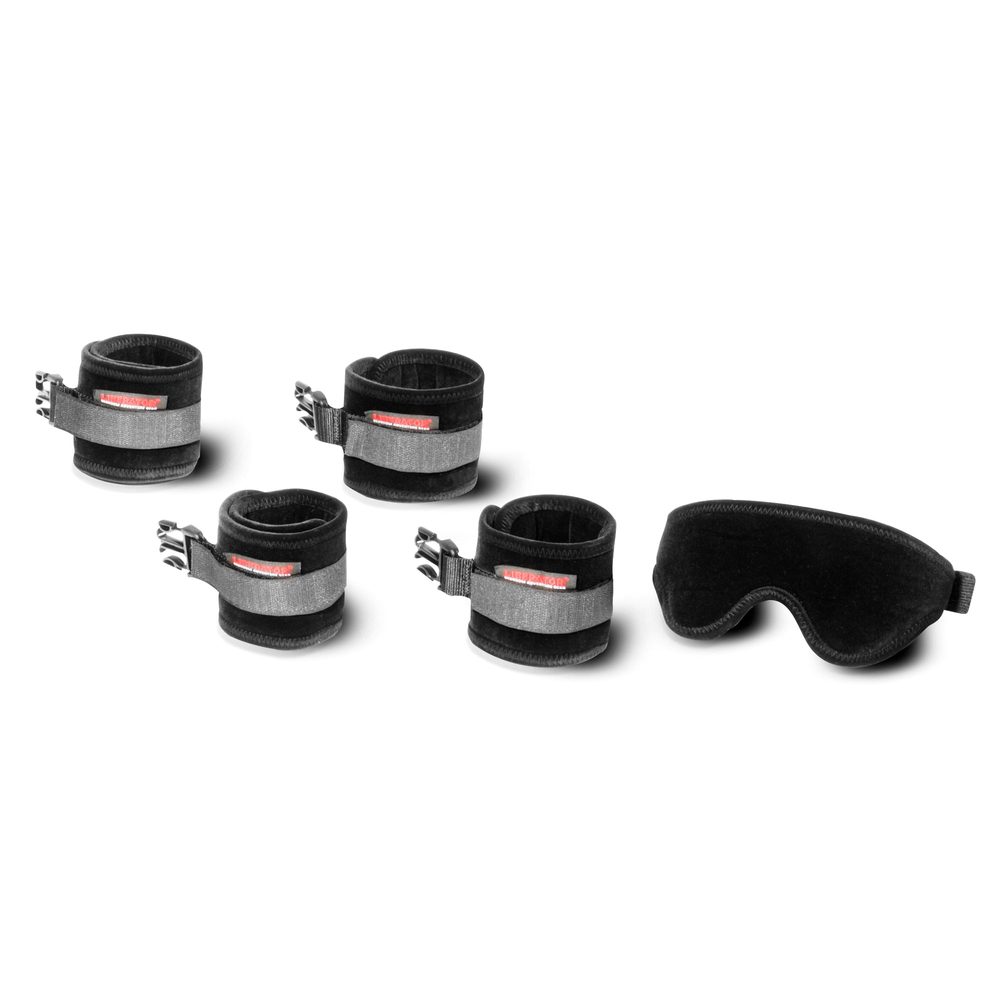
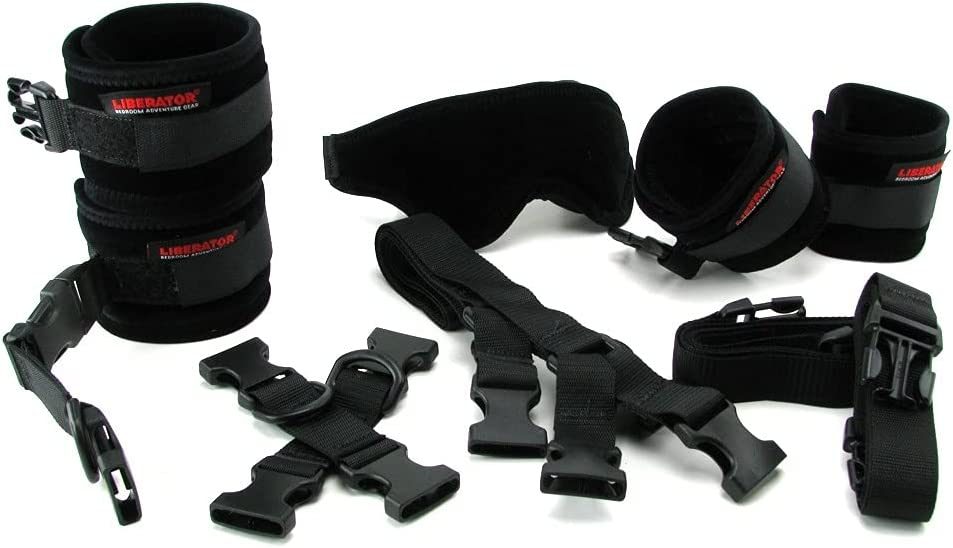
The Black Label Seduction Cuff Kit ($144.99) is a genuinely well-made set — faux-fur-lined wrist and ankle cuffs, six connectors, and six 20-inch tie-downs for a full four-point layout. Liberator’s own product description calls it “great for advanced restraint bondage play,” and that’s not marketing caution to ignore. A four-point layout is a bigger commitment than most first sessions call for, both in setup time and in how much movement it actually removes. Worth knowing about for later, and worth skipping on a first order.

How fit changes the experience

A beginner cuff should sit snugly enough to stay in place but never so tight it compresses circulation. Multiple buckle holes or a generous hook-and-loop surface make a real difference while you’re still learning your own preferences — a one-size design can work, but adjustable is the safer investment for a first purchase. Wrists and ankles also want different things: ankles tolerate more structure, while wrists are more sensitive to pressure and rotation, so a cuff marketed as interchangeable for both is worth a closer look at width and flexibility before assuming it suits either equally well.

The trade-offs: when a padded cuff is right, and when it isn’t

A padded, adjustable cuff like the Saffron Cuffs or a satin tie-up is the right call for a first session, for short scenes, and for anyone still learning what intensity they actually enjoy. It’s the wrong call if you already know you want a fixed, secure four-point setup for a longer scene — buying a soft beginner pair for that purpose just means an unnecessary second purchase later. Buy for the session you’re actually planning, not the one you might eventually want.

Care and longevity

Wipe vegan and faux leather cuffs down with a damp cloth after use and let them air dry away from direct heat, which is what cracks the finish over time, not normal wear. Nylon and microfiber pieces like the Bed Buckler kit can typically go through a gentle hand wash; check the listing before machine washing anything with metal hardware attached. Satin ties should be hand-washed and hung to dry to keep the ribbon from fraying at the edges.

Finding your fit

The best beginner cuffs don’t pull focus — they support the mood and let both people stay present instead of managing the equipment. Start with soft, adjustable, and honestly sized for a first try; the more committed gear will still be there once you know what you actually want from it.

Posted on

Playful Control, Built on Trust

Playful Control, Built on Trust

The first time someone hands over control, the surprise is never the restraint. It’s the relief — the moment the pressure to perform or decide anything simply stops, and the body settles into being led. That single shift, given and received on purpose, is what power exchange actually offers a couple, long before any specific tool enters the room.

This isn’t a guide to extreme bondage & kink play. It’s a guide to the slower, more common version most couples are actually curious about — the one that starts with a conversation, one tool, and a clear signal for when to stop.

What makes a power exchange dynamic different from “just trying bondage”

The mechanism isn’t the equipment. It’s the agreement underneath it — that one person leads and one follows, that both know it, and that both chose it out loud. A cuff or a blindfold gives that agreement a physical shape, but the shape isn’t the point. Couples who skip the agreement and go straight to the gear tend to describe the experience as flat; couples who have the conversation first describe it as some of the most connected sex they’ve had, restraint or no restraint.

The two roles feel almost opposite. The person surrendering control most often reports relief, not vulnerability — the pressure to initiate or decide disappears, and sensation gets sharper because there’s nothing left to manage. The person holding control reports something closer to total presence: reading a partner’s breathing, pacing, and stillness closely enough that drifting isn’t an option. Neither role is more advanced than the other. What makes it work is the contrast, held up by trust.

Why this is worth its own category, and who it’s genuinely not for

Power exchange sits in its own category because it asks for something most sex advice skips: a conversation before anything physical happens. That’s also the honest disqualifier. If either partner isn’t ready to say plainly what’s welcome, what’s off the table, and what stops the scene, this isn’t the place to start — not because the desire is wrong, but because the format depends on that conversation actually happening. It’s worth saying plainly: this is not for a couple hoping equipment will do the communicating for them.

What to look for in your first session

The instinct when this is new is to prepare everything at once — restraints, a blindfold, a whole scripted plan. That instinct usually works against you. Too many elements at once make it hard to tell what’s actually creating the experience and what’s just noise.

The conversation that makes everything else possible

The most important part of a first session happens before either of you touches anything, in ordinary light, with ordinary words. It can be as simple as “I’ve been thinking about taking the lead for a night, if you’re open to it” or “I’ve been curious what it would feel like to just let go for a while.” What you’re building in that conversation is a container: what kind of touch is welcome, what’s off the table entirely, and what either person can say or do to slow things down or stop. A spoken safe word is reliable; it’s worth also agreeing on a nonverbal signal — a hand squeeze, tapping twice, dropping something — for moments when speaking feels disruptive.

A quiet guide · free

Before you choose a first tool

Where to Start names the one piece we’d begin with, the three agreements that come before it, and how your order arrives: a plain box and a discreet statement. Free, by email.

You’ll also receive the Wednesday letter, one email a week. Unsubscribe any time. See our Privacy Policy.

Choosing one tool, not five

Pick one thing for the first session. Restraint is usually the most revealing starting point, because it creates the dynamic cleanly: one person's movement narrows, the other person's responsibility for pacing expands.

A pair of scarlet and black vegan leather wrist cuffs with soft lining, linked together
Saffron Cuffs — vegan leather with a soft inner lining, $64.99

The Saffron Cuffs ($64.99) are a reasonable first pair: vegan leather with a padded inner lining, adjustable, and designed to link together like a standard cuff set or separate and pair with a spreader bar later. The brand doesn't publish an exact wrist circumference range for them — worth knowing up front if precise fit matters to you, since you'll be judging fit by feel rather than a number on the listing.

If you'd rather start without limiting movement at all, a blindfold does something equally effective by removing one sense instead. When sight goes, touch gets louder and anticipation gets tangible — often described by first-timers as one of the most intense experiences they've had, with nothing physically restrained at all.

A black microfiber sleep mask style blindfold with a padded no-peek nose bridge
Black Label Loveblind Plush Blindfold, black microfiber — $79.99

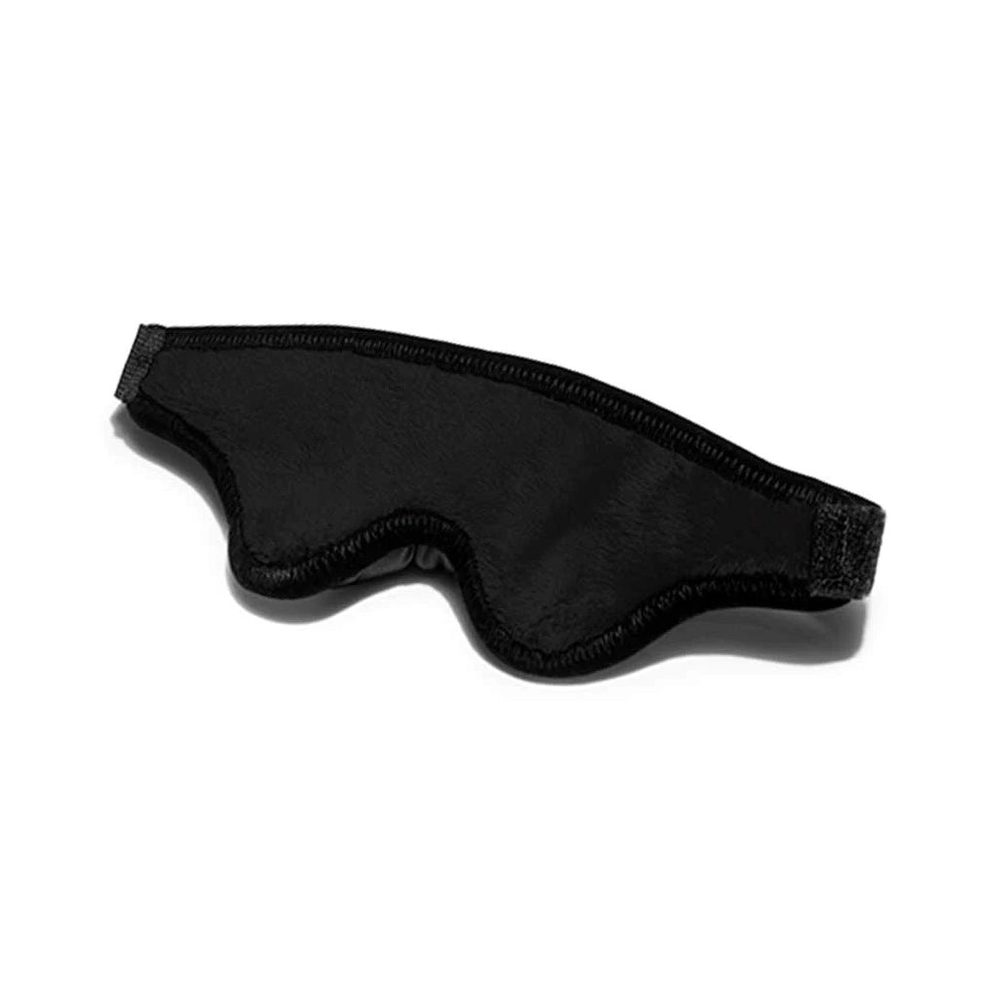
The Black Label Loveblind Plush Blindfold ($79.99) uses a padded no-peek nose bridge and an adjustable velcro strap rather than a fixed elastic band, which matters more than it sounds — a blindfold that lets in light at the edges undercuts the entire point of it. It comes in a red fluffy version as well, if the aesthetic matters more to you than the microfiber finish.

What the first session actually feels like

Here's the honest version: it will probably feel a little awkward at some point, and that's fine. You're learning a shared language. The most common mistake is trying to hold the dynamic continuously from start to finish with no breaks in character — which is exhausting and unnecessary. Pausing to check in doesn't break the scene. It deepens the trust that makes the scene possible in the first place.

If you're leading, your job is attention: watch for tension or a change in breathing, move slowly, and narrate what you're about to do. "I'm going to hold you here for a moment" does something different than silence followed by the same action — your words are part of how your partner feels held. If you're receiving, your job is to keep communicating even when it feels like it interrupts the moment. Silence tends to read as contentment, so say something if you're uncertain.

The trade-offs: when this is exactly right, and when it isn't

This approach is right for a couple who already trusts each other in ordinary life and wants a structured way to explore control without a script written by someone else. It is not right for a couple using restraint to paper over a communication problem that exists outside the bedroom too — that gap tends to show up mid-scene, not before it. It's also not the place to start if either partner is looking for intensity for its own sake; the slow version described here is deliberately the less dramatic on-ramp, not the ceiling.

Aftercare: the part most guides underemphasize

After any session involving power exchange, take a few minutes to come back to each other as equals. It doesn't need to be elaborate — water, physical closeness, and a few honest words about how things felt is usually enough. For many couples, this brief reconnection becomes one of the most intimate parts of the whole experience, not an afterthought tacked onto the end of it.

Care and longevity

Vegan leather cuffs like the Saffron Cuffs hold up best wiped down with a damp cloth after use and kept away from direct heat, which can crack the finish over time. A microfiber blindfold should air out between uses rather than being folded away damp — trapped moisture is what shortens the padding's life, not normal wear.

Building from here

If wrist restraint felt right, ankle cuffs extend the dynamic without adding much complexity. If a blindfold was the starting point, layering in light restraint on a later occasion adds sensation without overwhelming the first good experience you had. For a coordinated next step, the Bed Buckler Tether and Cuff Restraint Kit ($124.99) pairs a set of soft, nylon-lined cuffs with a tether system that slips discreetly under a mattress — it's a tether-and-cuffs pairing, not a blindfold-included set, so know that going in rather than assuming more is boxed than actually is.

If you outgrow a fixed-length tether, look for a connection system that publishes an actual adjustable range rather than a vague "flexible fit" — the Pivot Connection Kit's tethers extend from 10 to 47 inches (26–119cm) with quick push-clip connectors, a number most tether accessories in this category simply don't publish. Browse the full Restraints collection once you have a clearer sense of the intensity and aesthetic you actually prefer — you'll shop very differently after one real session than you would have before it.

Finding your fit

Power exchange, at this scale, was never about the hardware. It's a structured way for two people to practice trusting each other on purpose, with words, before anything else happens. Whichever tool you start with, the conversation is the part worth taking slowly — the rest tends to follow.

Posted on

Leather Cuffs vs Nylon Restraints

Leather Cuffs vs Nylon Restraints

Both materials will hold a wrist. The difference that shows up three or four uses in is what each one asks of you afterwards, and what it asks of the room. In this catalogue a faux-leather restraint is an object you fasten to a body. A nylon restraint is almost always a system you build around a piece of furniture. That distinction decides more than texture does.

If the question underneath this one is what the store actually stocks, and whether “leather” here means hide, that is settled in Silicone Cuffs vs Leather Restraints. The short answer is that every leather piece here is vegan or faux, and this page takes that as read.

The choice is not texture, it is what it attaches to

Red and black vegan-leather wrist cuffs linked with a metal clasp, shown against a white background

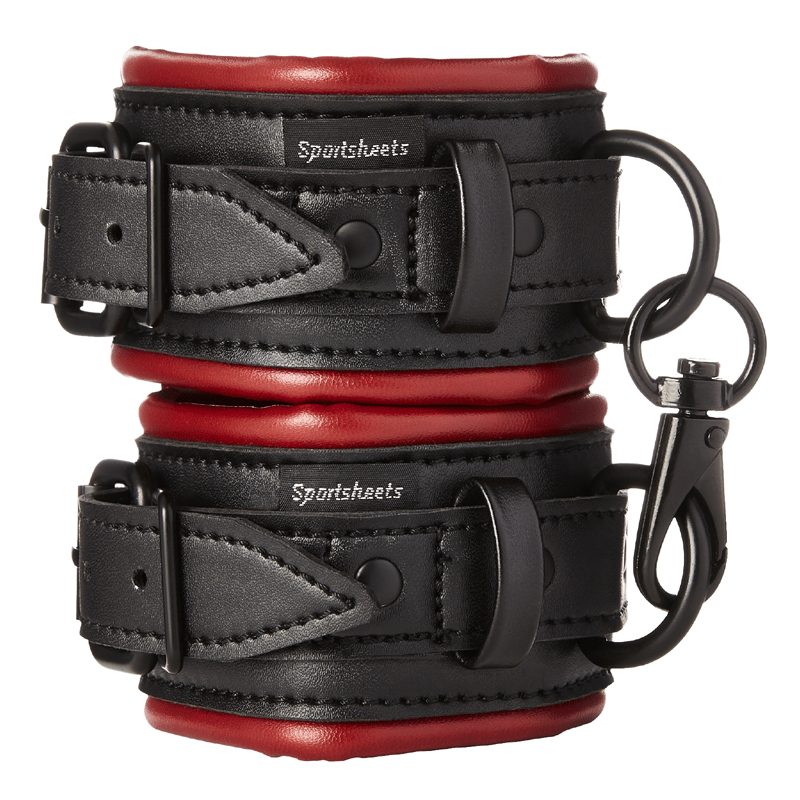
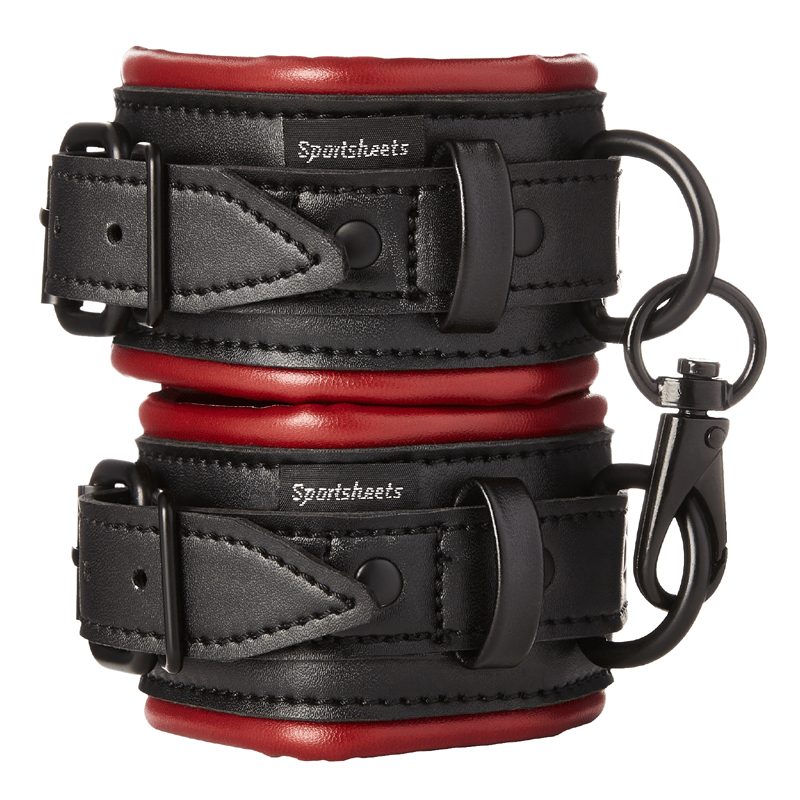
Faux leather here fastens to the body and to itself. The Saffron Cuffs ($64.99) are vegan leather with soft inners, adjustable across a range of sizes, and they link together like a standard pair or separate to join a spreader bar or chain. The Saffron Chained & Tamed set ($94.99) extends the same idea to a posture collar, a double wrist cuff and a double ankle cuff that doubles as a thigh cuff. The Edge Collar & Leash ($99.99) is a padded faux-leather collar with a centre ring and two side connection points, described by its maker as built for extended wear. Not one of these needs anything in the room to function.

Black nylon tether and cuff restraint kit with adjustable straps and Velcro cuffs, shown laid out flat

Nylon and soft fabric mostly fasten to furniture. The Bed Buckler Tether and Cuff Kit ($124.99) slides four 20-inch adjustable nylon tethers beneath a mattress, box spring or futon, with Velcro wrist and ankle cuffs at the corners and bonus D-rings that accept scarves, rope or cuffs you already own. The Original Sportsheet ($199.99 king, $219.99 queen) is a soft bedsheet with four hook-and-loop anchor pads that stick anywhere on its surface. The No Matter Where system ($104.99) carries nearly ten feet of adjustable strap and will mount to a door for standing positions as readily as to a bed.

So the useful question is not which material feels better on skin. It is whether you want a restraint that works in any room and lives in a drawer, or a system that converts one particular piece of furniture into the setup and stays there.

Adjustment: stepped or continuous

Two black adjustable tether cuffs with push-clip connectors and a padded handle grip, shown against a white background

This is the difference most buyers do not think about until it matters. A buckled faux-leather cuff adjusts in steps, from one hole to the next. A nylon tether adjusts continuously, anywhere along its length. The Pivot Connection Kit ($84.99) publishes the most specific figure in the collection: two tethers extending from 10 to 47 inches, 26 to 119 cm, with push clips at both the cuff and the tether end.

Two consequences follow. First, partners with noticeably different wrist or ankle sizes get on better with continuous adjustment, because a buckle step that fits one person can sit a little loose or a little tight on the other. Second, a continuous tether can be lengthened or shortened during a scene without unfastening anything, which a buckle cannot do. If either of those describes you, that is a stronger argument than any difference in how the two materials feel.

Comfort over a long scene is about lining, not material

Faux leather has a reputation for being the less comfortable option, and it is not really deserved. What causes complaints is a narrow, unlined strap, in any material. A wide cuff with a soft inner surface is comfortable whether that surface is vegan leather or microfiber.

The products bear this out. The Saffron Cuffs specify soft inners. The Edge Collar is padded and thicker precisely so it can be worn for longer. The Black Label Seduction Cuff Kit ($144.99) lines its cuffs in soft microfiber. In each case the lining is the feature doing the work, and it is worth reading a listing for that detail rather than for the material name on the label.

Cleaning decides how long you keep it

Faux leather is a coated surface. It wipes clean easily, which is a genuine advantage between partners, but it does not want to be soaked, submerged or left damp, and oil-based products break down polyurethane coatings over time. Dry it before it goes away, and store it flat rather than folded.

Nylon and microfiber tolerate far more. The trade-off sits in the closures: hook-and-loop collects lint, hair and fibres, and loses grip as it fills up. Both the Bed Buckler cuffs and the Sportsheet anchor pads depend on hook-and-loop, so picking the fuzzy side clean now and then is the actual maintenance task for the soft end of this collection. It takes a minute and it is the difference between a cuff that still holds in a year and one that does not.

What fails first

Faux leather fails at the fold and at the buckle holes, in that order. A cuff stored creased develops a line that never fully relaxes, and the coating thins where a buckle pin has worked through the same hole for a year. Hook-and-loop fails by losing grip. Plastic clips and D-rings fail as hardware does, suddenly rather than gradually, which is worth knowing if a piece is bearing weight rather than just marking a limit.

The Saffron Spreader Bar & Cuff Set ($114.99) is the outlier here, and the only stainless steel item in the collection. Its rings are welded rather than clipped, and its own listing is blunt about what that means: there is no escape, only release. Steel does not crease, thin or lose grip, so it will outlast everything else on this page. It also removes the option of getting out of it quickly, which makes it a different conversation about trust rather than a straightforward upgrade.

When the cuff is not the limiting factor

Padded claret faux-leather spreader bar with cuff connector points at each end and two attached wrist cuffs

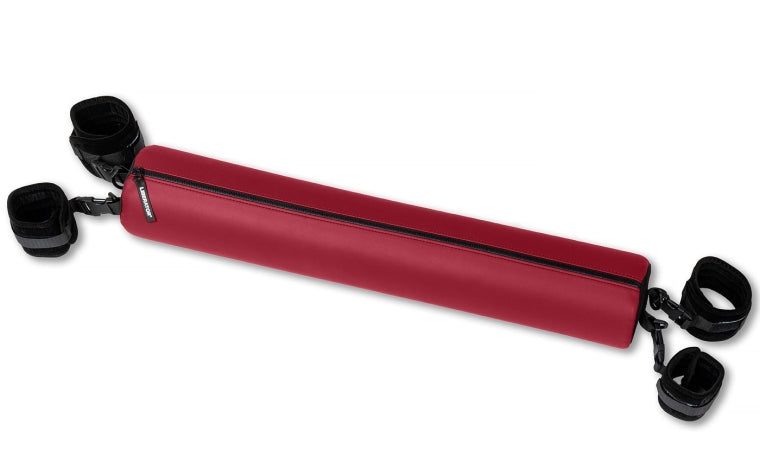
Sometimes the thing you want is not a tighter cuff but a held position, and then the material question moves from the wrist to the structure. The Talea Spreader Bar ($239.99) is a padded faux-leather-covered bar with cuff connector points at each end and included snap clips, and it doubles as a positioning bolster rather than only a restraint anchor. The steel Saffron bar above answers the same need with less give and less exit.

Matching red-trimmed faux-leather collar, wrist cuffs and ankle cuffs connected by a chain, laid flat

At the other end of the same idea, the Under the Bed Restraint Set, Special Edition ($134.99) runs six straps under a mattress with six double-sided clasps and includes a blindfold, and the Bondi Portable Playscape ($489.99) is a trifold platform with sixteen reinforced attachment points, each with a D-ring and a clip, that folds into a bench and travels in a nylon case. Those are furniture decisions more than material ones, and they are the right place to look if the answer to leather-or-nylon keeps coming out as neither.

Choosing between them

  • You want it to work in any room and store small — faux leather. Saffron Cuffs ($64.99) to start, Saffron Chained & Tamed ($94.99) when one pair of wrists is not enough.
  • Two people with different wrist sizes, or adjustment mid-scene — nylon. Pivot Connection Kit ($84.99) for its published 10 to 47 inch range, Bed Buckler ($124.99) if there is a mattress to work with.
  • Long sessions — read for the lining, not the material. Wide and lined beats narrow and bare in either family.

  • Least upkeep — nylon, as long as the hook-and-loop gets picked clean occasionally.
  • Longest life — the stainless steel Saffron Spreader Bar & Cuff Set ($114.99), with the caveat that welded rings change what you are agreeing to.
  • A held position rather than a held wrist — Talea Spreader Bar ($239.99), or the Bondi Playscape ($489.99) if the furniture is the project.

Browse the full restraints collection to compare the two families side by side.

Leather and nylon are not competing to do the same job better. One gives you an object that goes anywhere; the other gives you a room that is already set up. Decide which of those you actually want and the material stops being the question.

Posted on

Aftercare for Kink Scenes: The Work

Aftercare for Kink Scenes: The Work

The scene may end when the restraints come off or the impact play stops, but the experience is not actually over. For many people, the most intimate part begins afterward – when adrenaline drops, bodies recalibrate, and both partners need a clear path back to center.

That is what aftercare is for. In any thoughtful guide to bondage and kink aftercare, the goal is not to prescribe one perfect ritual. It is to understand what helps each person feel safe, seen, and settled once intensity gives way to vulnerability.

What aftercare really does

Aftercare is the transition from scene space back into everyday connection. Depending on the kind of play involved, that transition might be physical, emotional, or both. A high-intensity spanking scene can leave someone shaky, thirsty, and sensitive to touch. A control dynamic or humiliation scene can create a different kind of drop later, where the body seems fine but emotions feel unexpectedly raw.

That is why aftercare is less about a scripted checklist and more about regulation. It helps the nervous system come down gradually. It also reinforces trust. When one person has surrendered control, pushed limits, or delivered intense stimulation, attentive care afterward confirms that the connection was mutual, intentional, and well held.

For some couples, aftercare is soft blankets, water, and quiet praise. For others, it is space, minimal touch, and a simple check-in an hour later. Good aftercare feels specific, not generic.

A guide to aftercare for kink scenes starts before the scene

The strongest aftercare usually begins in negotiation, not after the fact. If you only start asking what someone needs once the scene is over, you are already late.

Before play, talk through what tends to happen for each of you afterward. Does one partner get cold? Does the other need verbal reassurance? Is anyone likely to cry, go quiet, or want to be left alone for a short stretch? None of these responses are inherently good or bad. They are simply useful information.

This is also the right time to discuss practical details. If you are using cuffs, rope, paddles, or any gags or blindfolds that create marks or physical fatigue, have recovery items nearby. Water, a snack, a soft robe, lotion, a blanket, and any agreed-upon soothing products should be easy to reach. Thoughtful scenes feel more refined when recovery is curated with the same care as the play itself.

If you are shopping for impact tools, restraints, or sensory play essentials, the same design-minded approach applies. Products that feel intentional, body-aware, and well made often support a smoother arc from anticipation to play to aftercare, which is very much in line with the intimacy-elevated approach at XtasyXperience.

Physical aftercare: tending to the body first

The most immediate needs are often physical. After an intense scene, the body may be dealing with dehydration, elevated heart rate, soreness, or a sudden temperature drop. Start there.

Offer water before a long conversation. If blood sugar seems low, bring something light and easy to eat. If skin has been struck, rubbed, compressed, or exposed to clamps or bondage, check the affected areas with care. You are not just looking for marks. You are paying attention to heat, swelling, numbness, or anything that feels outside the range of what was expected.

Touch can help, but only if it is welcome. Some people want to be held immediately. Others cannot tolerate contact right away, especially after overstimulation, pain play, or orgasm-focused scenes. The elegant move is to ask directly instead of assuming. “Do you want closeness, or a little space?” works far better than forcing tenderness on someone whose body is still buzzing.

Warmth matters more than many beginners expect. A blanket, hoodie, or fresh sheet can make a surprising difference once the body comes down. If touch is welcome, a slow massage oil or warming candle can turn the come-down itself into part of the connection rather than just a recovery step. If the scene involved kneeling, restraint positions, or extended physical effort, a pillow under the knees or lower back may be the detail that shifts someone from discomfort to relief.

Emotional aftercare: where trust gets reinforced

Not every reaction shows up right away. Sometimes a partner looks composed, even glowing, and then feels unexpectedly fragile 30 minutes later. Sometimes the person who was in control during the scene is the one who drops hardest afterward. This is normal.

Emotional aftercare is not therapy, and it does not need to be overly serious. It is simply a way of making contact again as full people, outside the roles you just played. Gentle praise, reassurance, and gratitude often go a long way. “You did beautifully.” “Thank you for trusting me.” “I loved how tuned in we were.” Those kinds of statements can help integrate the intensity rather than leaving it hanging.

Still, reassurance should match the scene. If the play involved degradation, fear, punishment, or strict authority, aftercare may need to be especially explicit. Even if everyone consented enthusiastically, words used in role can echo differently after the scene ends. A clear return to warmth helps both partners separate fantasy from harm.

This is where nuance matters. Some people want to debrief immediately. They want to talk through favorite moments, any surprises, and what they would change next time. Others need silence first and conversation later. Neither is more evolved. The right timing depends on temperament, scene intensity, and experience level.

When aftercare looks different for tops, bottoms, and switches

A common mistake is treating aftercare as something only one partner receives. In reality, everyone involved may need care.

Bottoms or submissives may need comfort after physical or emotional intensity, especially if they have been restrained, pushed, or made to endure sensation. But tops and dominants can also experience a drop. Holding responsibility, monitoring safety, and maintaining control takes energy. Once the scene ends, that focused state can give way to fatigue, self-doubt, or a delayed emotional crash.

Switches often know this from both sides. The point is simple: aftercare should be mutual, even if it is not symmetrical. One person may need a cuddle and verbal affirmation. The other may need a drink, a shower, and a few minutes to breathe before reconnecting. Both needs count.

The scenes that need more deliberate aftercare

Some scenes call for a more intentional plan. Heavy impact, restraint, humiliation, service dynamics, and orgasm control can all create a stronger after-effect than light teasing or beginner bondage. The more intense the headspace, the more important the landing becomes.

If there are visible marks, have a realistic conversation about care and discretion. If the scene touched on emotional triggers, shame, or authority themes, build in more time for reassurance. If the play was new for either of you, expect a little uncertainty afterward. Novelty can feel thrilling in the moment and emotionally louder once the body settles.

It also helps to think beyond the first 20 minutes. Some people experience sub drop or top drop the next day. That can look like sadness, irritability, exhaustion, insecurity, or a strange emotional flatness. A text check-in, a kind message, or a brief phone call the next morning can be part of aftercare too.

What to say when you are not sure what they need

You do not need perfect instincts to do aftercare well. You need presence and a willingness to ask.

A few questions tend to open the right door. “How is your body feeling?” helps distinguish soreness from distress. “Do you want touch, water, food, quiet, or words?” gives options without pressure. “Anything feel off or unfinished?” can catch the small discomforts people sometimes hesitate to mention.

Keep your tone calm and clean. Avoid turning the moment into a performance of care. The point is not to prove you are attentive. The point is to actually be attentive.

A quiet guide · free

Make the moments after a ritual

Where to Start is a short, private guide to your first piece, including the aftercare ritual we’d begin with and exactly how your order arrives. Free, by email.

You’ll also receive the Wednesday letter, one email a week. Unsubscribe any time. See our Privacy Policy.

Building your own aftercare style

The best guide to aftercare for kink scenes is the one you refine over time. What works in a light sensory scene may not work after a more intense power exchange. What worked with one partner may be completely wrong for another.

Treat aftercare as part of your erotic language. Curate it with the same intention you bring to the scene itself. That might mean a particular blanket, a favorite electrolyte drink, soothing skincare for impact areas, a playlist that helps shift the mood, or a standing ritual of checking in the next morning. Small details create a stronger sense of safety than grand gestures.

And if something did not land well, adjust without defensiveness. That is not failure. It is information. Mature kink is rarely about getting everything right the first time. It is about paying attention closely enough to make the next experience even more connected.

Finding what you need

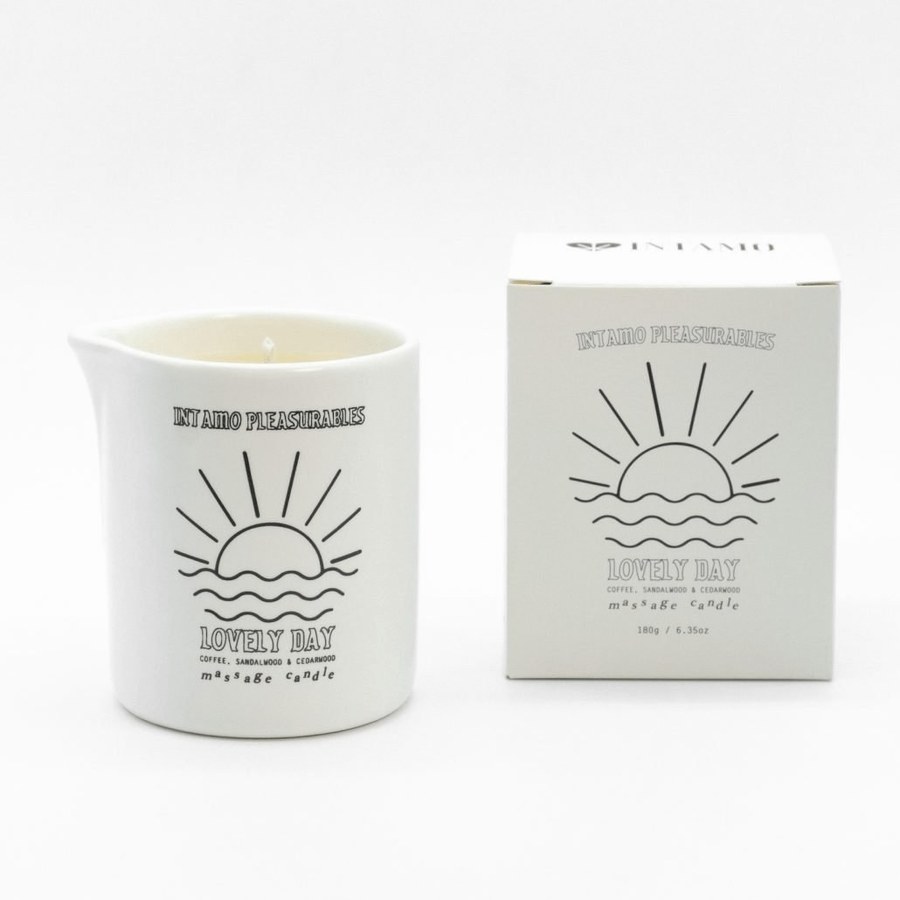
  • Massage Oil Candle Soft Touch — a plant-based massage oil candle with a pouring spout, so one object covers both the light and the oil. The simplest single addition if aftercare for you happens through touch.
  • Touch My Body – Ylang-Ylang — a 2-in-1 massage and lubricant fluid, for a wind-down that does not have a clean edge.
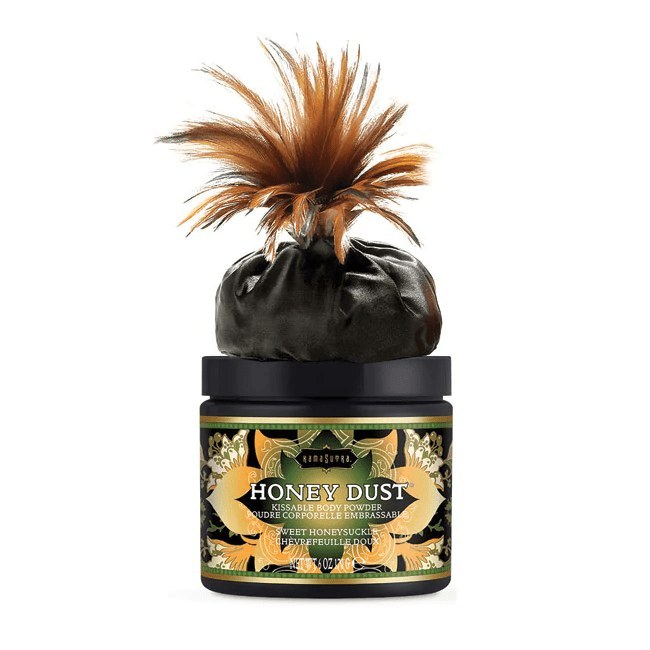
  • Massage Indulgence Kit — five small Kama Sutra Naturals oils in a zippered case, for finding out which one actually settles each of you.
  • The full Bondage & Kink collection, for browsing gear alongside the scenes it supports.
  • Restraints, if the scene you're planning for calls for something to hold onto.
  • Massage oils and candles, for the part of aftercare that happens through touch.

Aftercare is where intensity becomes intimacy – not because it softens the scene, but because it honors what the scene asked of both of you.

Posted on — Leave a comment

The Intimacy Pyramid: How Physical, Emotional, and Sensory Closeness Build on Each Other

Professional header image for industry analysis: The Intimacy Pyramid: How Physical, Emotional, and Sensor...

Most people treat intimacy as something that either happens or it doesn’t. A moment of connection, a feeling that arrives uninvited, an experience you hope to stumble into rather than something you consciously build. That framing, while common, is also why so many relationships plateau. It mistakes a destination for an architecture.

The intimacy pyramid offers a more honest model. It maps connection as a layered structure with emotional safety at the base, sensory attunement in the middle, and physical closeness at the apex. Each tier depends on the one beneath it. Skip a layer, and the whole structure becomes unstable, no matter how much effort you invest at the top.

This piece works through each tier methodically. You will learn what separates the foundation from the apex, why sensory attunement is the layer most couples bypass entirely, and how physical wellness practices become significantly more effective when they rest on what comes before them. Most importantly, you will finish with a clearer, more honest read on where you and your partner currently stand within that stack, because that self-location is where any intentional practice has to begin.

Intimacy Is Architecture, Not an Event

Intimacy is not an event. It is a structure. And like any structure, what holds it up matters more than what sits on top.

Secure bonds develop through cumulative relational experience, not spontaneous connection. Research positions intimacy as genuinely multi-dimensional, with emotional, physical, and relational layers developing in relation to one another. You cannot isolate one tier and call it the whole.

The intimacy pyramid gives this structure a name: emotional safety at the foundation, sensory attunement in the middle, physical closeness at the apex.

That dependency is not a metaphor to be appreciated and set aside; it is the operational logic of how closeness actually works. Foundations must bear weight before upper tiers can stand.

This matters for anyone who has ever reached for physical connection and found it strangely hollow, or invested in sensory experience and felt it land without warmth. The reason is almost always structural. As explored in what emotional intimacy actually means and why it comes first, physical wellness is most powerful when it rests on emotional and sensory foundations, not beside them.

What follows is a reflective mapping exercise. The goal is honest self-location, not optimisation. There is no checklist here, only a framework for understanding where you currently are and what that tells you about where to go next.

What Is the Intimacy Pyramid?

The pyramid’s three tiers, emotional safety, sensory attunement, physical closeness, are sequential, not interchangeable. The pyramid presented here draws on attachment research and therapeutic frameworks as an applied model for self-reflection, not a formally validated clinical instrument.

This sequencing matters because intimacy is routinely conflated with sex, romance, or physical affection alone. In reality, intimacy exists across all relationship types; it appears in a long friendship conducted through shared vulnerability, in a family bond held together by consistent emotional presence, in a working relationship built on mutual intellectual trust. The form changes; the underlying architecture does not. Romantic intimacy simply asks all three tiers to carry more weight simultaneously.

The framework also reframes a persistent cultural assumption: that intimacy arrives spontaneously, or not at all. Conscious intimacy is a deliberate practice rather than a climate that either exists or doesn’t. This shift is visible in the growing demand for guided frameworks, structured conversations, and intentional rituals.

One clarification is worth holding from the start: the pyramid is not a hierarchy of value. Emotional safety is not more important than physical closeness in any absolute sense. It is simply earlier in sequence. That distinction, sequence versus value, is the insight the model offers. Knowing where you are on the stack is a more honest starting point than any technique, tool, or intention applied without it.

Tier One: Emotional Safety, The Load-Bearing Floor

Emotional safety is where the pyramid earns its weight. It is the condition in which both partners can be vulnerable without fear of judgment, rejection, or ridicule. Without it, every tier above is built on an unstable surface.

Vulnerability is not a personality trait; it is a relational act. Revealing an authentic self, including the uncertain, the unresolved, and the uncomfortable, is only possible when the environment feels genuinely secure enough to hold it. Attachment research consistently shows that secure relational bonds are not incidental to how we experience everything else; they change the experience itself.

What “safe enough” actually looks like is less dramatic than most people expect. It is a partner who responds consistently rather than unpredictably. It is the ability to name a difficult feeling without first calculating how that disclosure will land. Perhaps most tellingly, it is the absence of contempt during conflict, the moment when a partner’s expression curdles from disagreement into disdain is a reliable signal that the emotional floor is thinning.

A pattern worth recognising: many couples seek physical closeness as a repair mechanism when emotional safety is underdeveloped. The closeness that follows can feel hollow even when everything is technically present. That hollowness is diagnostic. Physical proximity without the relational foundation beneath it is contact, not connection.

Two questions locate you in this tier more honestly than any framework can. Do you feel genuinely heard in this relationship, not agreed with, but actually heard? Can you share something uncomfortable without rehearsing how it will land? These are not small questions. They are the floor.

This matters for queer relationships and relationships of every configuration, because emotional safety takes distinct shapes depending on the relational context. The principle is universal; the practice is personal.

Conscious intimacy and intentional love both begin here. No technique, exercise, or tool substitutes for this layer being structurally sound. The pyramid cannot be built from the top down.

Tier Two: Sensory Attunement, The Layer Most Couples Skip

Two hands resting together on a wooden table beside a red mug.

Emotional safety is the floor. Sensory attunement is where most couples lose the thread.

This middle tier is the practice of deliberately noticing and responding to sensory experience together: the weight of a hand, the warmth of proximity, a familiar scent, the texture of skin. Not as prelude or performance, but as a form of relational presence in itself. Sensory attunement is attention made physical.

It is also the tier most commonly bypassed. After an honest conversation, many couples move directly toward physical closeness, treating the emotional and the physical as adjacent rooms with no hallway between them. The sensory layer is that hallway. Skipping it is why physical closeness can follow genuine emotional openness and still feel like something is missing.

Presence lives here. Slowing down enough to notice what your body is experiencing, and staying genuinely curious about your partner’s sensory world, is itself a relational act. It does not require a destination.

Couples intimacy exercises that build this capacity tend to be disarmingly simple: sitting together in shared stillness, practicing intentional touch without any outcome attached, or using scent and texture as anchors that draw attention into the present moment rather than toward what comes next. The practice is noticing, not achieving.

This is also where intentional wellness tools enter the picture honestly. Massage, aromatherapy, and textured touch are not shortcuts to the apex; used with curiosity rather than agenda, they function as attunement aids, invitations to slow down and attend. Their value lies in what they make possible, not what they produce.

In a 2019 imaging study of 30 women in committed relationships, a partner’s touch reduced the brain’s “neurologic pain signature”, with larger effects among women who reported greater closeness to their partner. Sensory experience is not purely physical; it is shaped, at a neurobiological level, by the relational context surrounding it.

Tier Three: Physical Closeness, The Apex, Not the Whole

When sensory attunement is present, physical closeness becomes possible in its fullest sense. Without it, what passes for closeness is often something quieter and lonelier: proximity.

Physical closeness sits at the apex of the pyramid. It is the most visible tier, the one most commonly equated with intimacy itself. That conflation is the central misunderstanding this essay is built against.

The neuroscience points the same way, though it is early research. In a study published in the Proceedings of the National Academy of Sciences, romantic partners who held hands while one of them was in pain showed more synchronized brain activity, and stronger synchrony went with greater pain relief. The lower tiers are not merely context for the upper one; they are physiologically present within it. Emotional safety and sensory attunement change what the body actually experiences.

This is what structural instability looks like in practice: two people physically present, physically close, yet each quietly unreachable by the other. The architecture has not failed dramatically. It has simply never been built from the ground up. That absence is most legible at the apex, where trust finally shows its presence or its lack.

The distinction worth making is not between types of physical contact but between contact as reflex and closeness as arrival. One is what the body does by default; the other is what becomes available when the lower tiers are sound. Technique is irrelevant here. Foundation is everything.

When emotional safety and sensory attunement are genuinely developed, the apex tier rewards them. Physical closeness becomes more resonant, more sustaining, and more legible as care rather than habit.

This is also where most couples begin when they sense something is missing. They seek solutions at the apex, which is understandable but rarely sufficient. Disconnection rarely lives where it is first noticed.

Where Are You on the Stack? An Honest Self-Location

The pyramid is most useful not as a theory to admire but as a mirror to look into honestly.

Three questions, one per tier, offer a starting point:

Emotional safety: When did you last share something that made you feel genuinely exposed? How did your partner receive it?

Sensory attunement: When did you last notice something sensory about your partner, a texture, a scent, a quality of their touch, with real attention rather than reflex?

Physical closeness: Does physical connection currently feel like arrival, or like avoidance dressed as contact?

Sit with those before comparing answers. Most couples, when they do, discover they are not uniformly developed across all three tiers. One partner may hold emotional safety with ease while sensory presence has gone quiet. Another couple may be physically close in habit but thin on the vulnerability that gives that closeness weight. This unevenness is not a failure. It is simply where most relationships live at any given point in time, and naming it accurately is more productive than pretending otherwise.

Relational assessment tools and couples coaching frameworks are built on a shared premise: honest self-mapping precedes any productive practice. You cannot intentionally tend a foundation you have not yet located.

One note on how to use these questions. Treat them as a conversation to have together, not a private audit to complete separately. Discussing where you each feel strongest and where the structure feels thinner is itself an act of emotional safety. The willingness to say I think we are thin here to someone you love is already a practice, not just a prelude to one.

The goal here is orientation. These questions are a compass reading, not a diagnosis.

Intentional Love Begins With the Foundation

Once you have a clearer sense of where you currently stand on the stack, the next question is less “what should we add?” and more “what deserves tending?”

That distinction is the essay’s whole argument, restated plainly: returning, with attention, to whatever tier is asking for care is where intentional intimacy is actually built.

Physical wellness tools and sensory practices have a genuine role in that work. But their role is one of accompaniment, not replacement. A beautifully chosen object can deepen sensory attunement when it arrives inside a structure already being built. The same object cannot construct the structure on its behalf.

One thing to carry into this week, by tier:

  • Emotional safety: Name one thing you have been carrying alone and share it, without softening it for easier reception.
  • Sensory attunement: Choose one sensory practice with no outcome attached; notice a texture, a warmth, a quality of presence, and let that noticing be enough.
  • Physical closeness: Approach one moment of physical connection this week as arrival rather than habit. Let it be a conscious choice, not a reflex.

Intimacy is not something that happens to you. It is something you build, tend, and return to with intention.

If you are looking for tools that support the sensory tier of that work, the curated collection at XtasyXperience is selected for exactly this kind of intentional use. You can read how every product earns its place in our curation, or explore considered picks for Canadian couples at every budget when you are ready to bring something tangible into the practice.

An older hand resting on an open hand-drawn notebook on a wooden table, with books and a mug behind.

Conclusion

Where you are on that stack right now is useful information, not a verdict.

The pyramid is not a performance standard. It is a map.

Intimacy built this way does not just feel better. It holds.

Frequently Asked Questions

What are the three tiers of the intimacy pyramid?

The intimacy pyramid consists of three sequential tiers: emotional safety (the foundation), sensory attunement (the middle layer), and physical closeness (the apex). Each tier depends on the one beneath it, creating a load-bearing structure. Emotional safety is where partners can be vulnerable without fear of judgment; sensory attunement is the practice of deliberately noticing and responding to sensory experiences together; and physical closeness is the most visible tier but not the whole of intimacy.

Why do many couples experience hollow physical intimacy despite being physically close?

Physical closeness often feels hollow because couples skip the foundational tiers of emotional safety and sensory attunement. When couples move directly from emotional conversations to physical contact without the 'hallway' of sensory presence, they experience proximity rather than true connection. Research shows that lower tiers are not just context—they are physiologically present within physical intimacy itself. Without the structural foundation, physical contact becomes a reflex rather than an arrival.

What is sensory attunement and why is it the tier most couples bypass?

Sensory attunement is the practice of deliberately noticing and responding to sensory experiences together—the weight of a hand, warmth, scent, or texture of skin—as a form of relational presence rather than as a prelude to something else. Most couples bypass this layer entirely, moving directly from emotional conversation to physical closeness. This is why the content describes it as 'the hallway' between emotional and physical connection. Simple practices like sitting in shared stillness, intentional touch without outcome, or using scent as an anchor can build this capacity.

Can intimacy exist in non-romantic relationships, and does the pyramid structure apply?

Yes, intimacy exists across all relationship types—in deep friendships built on shared vulnerability, family bonds held together by emotional presence, and working relationships based on intellectual trust. The underlying architecture of emotional safety, sensory attunement, and physical closeness (adapted to context) remains constant across all relationships. Romantic intimacy simply asks all three tiers to carry more weight simultaneously. The form of intimacy changes; the underlying structure does not.

How should couples use the three reflection questions to assess their relationship?

The three reflection questions are: (1) Emotional safety: When did you last share something that made you feel genuinely exposed, and how did your partner receive it? (2) Sensory attunement: When did you last notice something sensory about your partner with real attention rather than reflex? (3) Physical closeness: Does physical connection currently feel like arrival or like avoidance dressed as contact? Couples should treat these as a conversation to have together, not a private audit. Discussing where you feel strongest and where the structure feels thinner is itself an act of emotional safety and helps identify which tier needs tending rather than what should be added.

Posted on

Intimate Wellness Gifts for Her (2026)

Intimate Wellness Gifts for Her, a curated holiday guide from XtasyXperience

Last updated: September 24, 2026

Most gift guides for her are written as though she were a category. A candle, a robe, something pink. Safe choices that say very little.

An intimate gift is different. It says I have been paying attention. To her body, to her rest, to the parts of her life that rarely get room. Chosen well, it is one of the most personal things you can give. Chosen carelessly, it lands as a joke or a hint.

This guide is for the first kind of giver. Every pick below is in our curated shop, priced in Canadian dollars and shipped within Canada. They are grouped by budget and by what each gift quietly says. Mature, never crude. Thoughtful, never clinical.

In this guide

Before you choose: three questions

The right gift starts before the browsing. Ask yourself three things.

Is this for her, or for the two of you? Both are lovely. They are not the same gift. A gift for her own rest and pleasure says you deserve this, for yourself. A gift for the two of you says I want more of us. Know which one you mean.

Where is she right now? Someone new to this category needs something gentle and unintimidating. Someone with established taste will notice quality, materials and design. Neither is more sophisticated than the other.

Would she want to open it in front of people? If there is any chance this gift ends up under a shared tree, give it privately. Intimacy deserves a closed door.

Under $100 CAD: the thoughtful beginning

Considered, not cheap. These are the gifts that open a door without pushing anyone through it. They work beautifully as a first intimate gift, or as a small, private addition to something larger.

Lovely Day Massage Candle, Coffee Sandalwood Cedar · $64.99 CAD

Lovely Day massage candle in coffee, sandalwood and cedar, with its box

A hand-poured soy candle that melts into a warm massage oil, made with shea butter, cocoa butter and sweet almond oil. Light it for the scent alone, or pour it slowly across her shoulders at the end of a long week. Thirty to forty hours of burn time means this is a ritual, not a single evening.

What it says: Let me take care of you tonight.

Kama Sutra Honey Dust, Sweet Honeysuckle · $74.99 CAD

Kama Sutra Honey Dust kissable body powder in sweet honeysuckle, with feather applicator

A talc-free, kissable body powder that leaves skin silky and delicately scented, with a soft feather applicator in the box. It has been a quiet classic for decades for a reason. It is playful without being loud, and it turns an ordinary evening into something slower.

What it says: I still want to discover you.

Je Joue Ami Kegel Balls · $79.99 CAD

Je Joue Ami progressive kegel ball set in black silicone

A progressive set for pelvic floor training, in soft, body-safe silicone. This is the most wellness-forward gift in the guide, and one of the most caring. Pelvic floor strength supports comfort, confidence and sensation at every stage of life, and especially after childbirth or into perimenopause. For more on how to choose, read our guide to kegel balls and pelvic floor trainers.

What it says: Your body matters to me, all of it.

Dame Fin 2.0, Quartz · $84.99 CAD

Dame Fin 2.0 finger vibrator in quartz pink

A small finger vibrator in medical-grade silicone that adds gentle, adjustable vibration to your own touch. Five intensity levels, waterproof, USB-C rechargeable, with a three-year warranty. For someone new to the category, it is the least intimidating object imaginable. It barely looks like anything at all.

What it says: No pressure. Just curiosity.

$100 to $200 CAD: the considered sweet spot

This is where most thoughtful gifts live. Better materials, better design, and the kind of quality she will notice the moment she opens the box.

Temp, Tangerine · $124.99 CAD

Temp lay-on warming and cooling massager in tangerine

A lay-on massager that shifts between gentle warmth (up to about 38°C) and cool (down to about 20°C), with deep, rumbly vibrations in three intensities. Temperature is one of the most overlooked senses in intimacy. This makes it the centre of the evening. Waterproof, rechargeable and made for solo or shared use.

What it says: Let’s try something new, slowly.

Je Joue Naughty Gift Set · $144.99 CAD

Je Joue Naughty Gift Set with massager, candle, blindfold and card game in its box

A complete evening in one box: a limited-edition rose gold and black Mimi massager, a ylang-ylang and mandarin massage candle, a satin blindfold and restraint, and an intimate truth-or-dare card game. Beautifully packaged, so the unwrapping is part of the gift. The best choice here if the gift is for the two of you.

What it says: I planned this. All of it.

LELO ORA 3, Deep Rose · $179.99 CAD

LELO ORA 3 external massager in deep rose

An award-winning external massager with a softly rotating node and twelve patterns, designed to mimic the sensation of oral pleasure. Extra-soft silicone, waterproof and USB rechargeable. LELO’s design is the kind that looks at home on a nightstand, and the deep rose finish is quietly beautiful.

What it says: Your pleasure is worth investing in.

Over $200 CAD: the investment gift

These are the gifts that stay. Built to last for years, from brands that take materials and warranties seriously. Give one of these when the gift is the main event.

LELO INA WAVE 2, California Sky · $219.99 CAD

LELO INA WAVE 2 dual-stimulation massager in California Sky blue

A dual-stimulation massager with LELO’s WaveMotion technology, a gentle “come hither” movement paired with twelve vibration settings. Thirty percent more power than its predecessor and a longer-lasting charge. For someone with established taste who notices when something is done properly.

What it says: You know what you like. So do I.

LELO Smart Wand 2 Large, Deep Rose · $229.99 CAD

LELO Smart Wand 2 Large full-body massager in deep rose

Officially a full-body massager, and a very good one: ten patterns for sore shoulders and tired backs, a steadier handle and a long-lasting charge. Unofficially, it is one of the most beloved intimate tools ever made. It is the most versatile gift in this guide, and the easiest to give without explanation.

What it says: Rest is something you’ve earned.

LELO ENIGMA Cruise, Deep Rose · $239.99 CAD

LELO ENIGMA Cruise dual-action sonic massager in deep rose

The most complete gift here. ENIGMA Cruise pairs gentle sonic waves for external stimulation with synchronized internal vibration, absorbed through premium silicone for a sensation that is deep but never harsh. It is a gift for someone ready to know her own body more fully, and it is made to last.

What it says: I want you to have the best of everything.

Giving it well

The product is only half the gift. The rest is how it arrives.

Write the note first. Before you add anything to your cart, write one sentence about why you are choosing it. If the sentence is kind, the gift will be too. If you cannot write it, choose something else.

Choose the moment. Give it privately, when neither of you is rushed. An intimate gift opened in a crowded room is a performance. Opened alone, it is a conversation.

Mind the calendar. Every order ships from within Canada, but December is busy for every carrier. For delivery before Christmas, we recommend ordering by December 12.

Running out of time? Our digital gift card arrives by email, never expires and lets her choose for herself. It is the one gift on this list that is never late.

Keep it discreet. Orders arrive in plain, unmarked packaging, so the surprise stays yours to reveal.

If the gift is for the two of you, our intimate wellness gift guide for Canadian couples goes deeper on choosing together.

Frequently asked questions

What is a good first intimate gift for her?

Start gentle and external. A massage candle, a kissable body powder or a small finger vibrator like Dame Fin are unintimidating and easy to enjoy alone or together. They open the door without asking anyone to walk through it.

Is it appropriate to give an intimate gift to a partner?

Yes, when it is chosen for her rather than for you. Frame the gift around her rest, comfort and pleasure, give it privately, and let her decide how and when to use it. The note matters as much as the product.

What makes an intimate product “body-safe”?

Look for non-porous materials such as medical-grade or premium silicone, and products labelled phthalate-free and latex-free. Every massager in this guide is made of body-safe silicone. Pair silicone products with a water-based lubricant to protect the surface.

How much should I spend on an intimate gift?

Spend for quality, not size. Under $100 CAD is perfect for a first gift or an addition to something larger. $100 to $200 CAD buys the design and materials she will notice. Above $200 CAD is an investment gift, built to last for years.

The gift she keeps

The best intimate gift is not the most impressive one. It is the one she opens and understands, immediately, as chosen for her. Start with the note. Choose the moment. Then choose something worthy of both.

Browse the full curated collection →

Posted on

Silicone Cuffs vs Leather Restraints

Silicone Cuffs vs Leather Restraints — cover image

You notice a restraint on your skin before you notice anything else about it — not the buckle, not the price tag, the material. That’s the real question behind “silicone or leather,” and it deserves a straight answer before anything else: this store doesn’t stock silicone cuffs, and what it sells as “leather” isn’t leather either. Here’s what’s actually on the shelf, and why the real trade-off is more useful than the one the title promises.

A quick disclosure, up front. Every cuff and restraint in this catalogue’s Restraints collection is tagged, in the product data itself, as either “Leather / Faux Leather,” “Nylon,” or “Stainless Steel.” Silicone shows up in this catalogue exactly once — on a line of impact paddles, not cuffs. And the “leather” pieces are consistently vegan or faux leather in their own descriptions — nowhere is a hide product sold as a restraint here. If a silicone-vs-leather comparison brought you here, that’s the honest state of things before you spend anything.

What actually changes: structured faux leather vs. soft nylon-and-microfiber

The real material split in this catalogue isn’t silicone versus leather. It’s structured versus soft — faux-leather cuffs built around visual presence and a firmer hold, against nylon-and-microfiber tether systems built around comfort, adjustability, and long wear. That split covers most of what people are actually asking when they ask about silicone versus leather: which one is gentler on skin, which one holds its shape, which one disappears into storage.

Faux leather: presence and a firmer hold

The Saffron Cuffs are the clearest example — adjustable vegan-leather wrist restraints with a soft inner lining, priced at $64.99, built to link together like standard cuffs or separate and connect to a spreader bar. They hold their shape the way people expect “leather” to behave: structured, visually deliberate, more ceremonial than casual. The step up is the Saffron Chained & Tamed set at $94.99, which adds a posture collar and a double ankle cuff to the same wrist restraints — genuinely built for full-body positioning rather than a single pair of wrists.

Faux leather asks for a little care: kept dry, wiped down rather than soaked, stored flat so the buckles don’t crease the material. In exchange it looks and feels the most “serious” of anything on this list, and that visual weight is exactly what a lot of buyers are shopping for when they say “leather.”

Nylon and microfiber: adjustability and comfort

The Bed Buckler Tether and Cuff Restraint Kit is the catalogue’s actual nylon entry — four 20-inch adjustable nylon tethers with Velcro wrist and ankle cuffs, priced at $124.99, designed to slip under a mattress or box spring rather than attach to anything rigid. It’s the closest thing here to what a “silicone cuff” shopper is usually after: soft against the skin, machine-washable in spirit if not in instructions, and forgiving of a beginner’s first few sessions. The bonus D-rings also make it compatible with rope, scarves, or the leather cuffs above, so the two material families aren’t mutually exclusive purchases.

If portability matters more than a bed setup, the Pivot Connection Kit uses the same soft-tether logic in a smaller footprint — its two tethers adjust from 10 to 47 inches, a specific, published range rather than a vague “adjustable,” which is worth knowing before you buy for anything other than a bed frame.

The trade-offs: when each one is right

Faux leather is the better pick when the visual and psychological weight of the restraint matters as much as the function — when part of the point is what it looks like on the nightstand, not just what it does. It is the wrong pick for anyone who wants to machine-forget about maintenance, or whose skin reacts to synthetic leather’s stiffer surface during longer sessions.

Nylon and microfiber are the better pick for first-timers, for anyone prioritizing comfort over ceremony, and for couples who want a setup that disappears into a drawer between uses. It is the wrong pick for anyone who wants the restraint itself to carry visual authority — a soft tether under a mattress doesn’t do the same work in the room that a structured cuff does.

Neither material solves the problem silicone is usually marketed to solve — full waterproofing and zero absorbency — because nothing in this catalogue’s restraints line is silicone. If that specific property matters more than anything else here, it’s worth saying plainly rather than stretching a faux-leather or nylon product to fit a claim it can’t back up.

Care and longevity

Faux leather lasts longest kept dry and stored flat; a damp cuff left folded is the most common way these develop a crease that never fully relaxes. Nylon tethers and Velcro cuffs hold up to far more casual handling and the occasional wipe-down, which is part of why they’re the easier recommendation for anyone still deciding how often this gear will actually get used.

Finding your fit

  • Saffron Cuffs ($64.99) — adjustable vegan-leather wrist cuffs with a soft lining; the structured, visually deliberate option.
  • Saffron Chained & Tamed ($94.99) — posture collar plus wrist and ankle cuffs, for full-body positioning once you’ve outgrown a single pair.
  • Bed Buckler Tether and Cuff Restraint Kit ($124.99) — genuine nylon tethers with Velcro cuffs, the softest and most beginner-forgiving option here.
  • Pivot Connection Kit ($84.99) — the same soft-tether comfort in a compact, 10–47 inch adjustable form for setups away from a bed frame.
  • The full restraints collection, for comparing materials side by side before deciding.

The honest version of “silicone or leather” is “structured or soft” — and once the actual materials are on the table, that’s a much easier decision to make well.

Posted on

Dominance and Submission, Explained

Dominance and Submission, Explained — cover image

The word “dominance” tends to arrive with equipment already attached — a room, a wardrobe, a scripted scene. For most couples who actually try it, the first version is smaller than that: one partner says “let me take this tonight,” the other says yes, and something in the evening changes shape. That is the whole mechanism. Everything else is refinement.

D/s — dominance and submission — is one of the most misread dynamics in intimate relationships, usually cast as either extreme or transgressive. In practice it tends to be one of the most communication-heavy, consent-driven things two people can choose to do together. This is the plain version, without the costume.

What makes power exchange different from “being in charge”

Every relationship has moments of one partner leading and the other following — deciding where to eat, whose week was harder, who plans the trip. D/s takes that ordinary asymmetry and makes it explicit, temporary, and negotiated. The dominant partner takes an active, directing role for a defined stretch of time. The submissive partner chooses, on purpose and repeatedly, to hand that direction over.

The difference from everyday leading and following is the word “chooses.” Nothing here is passive. The dominant is reading, pacing and taking responsibility for another person’s experience in real time. The submissive is exercising a specific, active form of trust — one that can be withdrawn at any point, which is exactly what keeps it from being anything else.

Why this is its own category, and who it’s actually for

Power exchange sits on a spectrum. At the light end, one partner asks the other to follow their lead for a single encounter, with no roles outside that hour. At the structured end, a couple negotiates an ongoing dynamic with explicit agreements that extend past the bedroom. Most people trying this for the first time land near the light end — and there is nothing preliminary about that. Plenty of couples keep it there permanently and are done exploring.

It is worth saying plainly who this is not for. If either partner is uncomfortable with any imbalance of control, if the relationship doesn’t yet have a baseline of trust and honest conflict, or if one person is hoping the dynamic will fix a communication problem rather than express one that’s already healthy, D/s is the wrong tool. It rewards a relationship that already works. It does not repair one that doesn’t.

What to look for before you start

The instinct is to shop first. The more useful order is roles, then structure, then equipment — because gear only works once the conversation underneath it exists.

The pre-scene conversation

Before anything is attempted, both partners need a plain-language account of three things: what interests them, what is off-limits without exception, and what safe word or signal will stop everything immediately, no questions asked in the moment. This conversation is not a formality standing between you and the fun part. Done honestly, it is itself a form of intimacy — arguably a more vulnerable one than what follows it.

The roles

The dominant partner directs: what happens, at what pace, at what intensity, and — continuously — how the submissive partner is actually doing, not how the script says they should be doing. A dominant who stops paying attention has stopped doing the role. The submissive partner yields, on purpose, renewing that choice throughout rather than surrendering it once. Their leverage is real: the safe word, the stated limits, and the consent that makes the entire arrangement possible in the first place. Plenty of people don’t settle into one side consistently — “switch” describes someone comfortable in either role, often because having done both makes them better at each.

Structure: how much, how often

A dynamic can be a once-a-month arrangement confined entirely to the bedroom, or something with its own vocabulary and rituals that touches daily life. Neither end is more legitimate than the other. The honest question is whether the level of structure you’re choosing matches what both people actually want, rather than what looks more serious from the outside.

Safety framework and aftercare

The safe word system needs to be simple enough to use under stress — a single word, or a traffic-light scale, agreed in advance and never relitigated mid-scene. Aftercare is the part beginners most often skip and experienced practitioners most often credit for making a dynamic sustainable: after anything with real intensity, both partners need deliberate time to come back down together, not just the one who was receiving direction.

The trade-offs: when this fits, and when it doesn’t

D/s tends to work best for couples who already communicate well under ordinary circumstances and want a structured way to deepen that. It tends to go badly when it’s introduced to paper over resentment, when one partner agrees out of a fear of disappointing the other rather than genuine interest, or when either person treats the safe word as something to be talked out of rather than honored instantly. None of that makes the dynamic itself unhealthy — it means the timing or the footing is wrong, and that is worth noticing before anything physical is involved.

It is also fine to try a single light session and decide it isn’t for you. Nothing about D/s requires an ongoing identity or a permanent label, and plenty of curious people confirm it isn’t their thing after one evening. That is a complete and useful outcome, not a failed one.

A quiet guide · free

Curious where to begin?

Where to Start is a short, private guide to your first piece: the one soft tool we’d begin with for trust and surrender, three agreements to make before anything, and exactly how your order arrives. Free, by email.

You’ll also receive the Wednesday letter, one email a week. Unsubscribe any time. See our Privacy Policy.

Where gear enters, once the conversation exists

Products are a way to make an already-agreed dynamic physical, not a substitute for agreeing to it. Restraints are usually the first addition, because they give a verbal agreement something to hold onto. The Edge Collar & Leash is a common starting point for exactly that reason — a padded faux-leather collar built for extended wear, with a large center ring for the leash and two additional side connection points for positioning, which is a fair example of gear doing nothing more than making a role visible.

From there, most people move into restraints proper — simple wrist and ankle cuffs before anything more structured — and eventually into the wider bondage and kink range, including impact tools for sensation-focused play or nipple play for couples working with a lighter touch. That is usually a later step, not a first one.

The questions people actually ask

Do I need to identify as dominant or submissive?

No. A single session carries no obligation to claim an ongoing identity. The experience doesn't require the label.

Is D/s the same as BDSM?

D/s is one piece of the BDSM umbrella, which also covers bondage and discipline and sadism and masochism. Plenty of people practice D/s without the other elements. The overlap is real but not total.

What if one partner is curious and the other isn't?

This is common, not a sign of incompatibility. It calls for patience and a genuinely honest account of what each person is comfortable with — not persuasion, and not silent disappointment on either side.

How important is aftercare, really?

Central, not optional. After anything with real intensity, both partners need intentional time to reconnect and re-ground. It is the piece beginners most often underestimate and experienced couples most often name as the reason their dynamic lasts.

Finding your fit

A short list of where to start, in the order most couples actually move through it:

  • Edge Collar & Leash — padded faux leather, a large center ring plus two side connection points; the clearest way to make a role visible without committing to a full kit.
  • Saffron Cuffs — adjustable vegan-leather wrist restraints with a soft inner lining, made to link together or attach to a spreader bar as the dynamic develops.
  • Saffron Chained & Tamed — a posture collar with matching wrist and ankle cuffs, for couples who have already found their footing and want a more structured full-body option.
  • The wider restraints and bondage & kink collections, for anyone who wants to browse before deciding what the first piece should be.

None of this is about how much equipment ends up in the drawer. It's about whether the conversation underneath it was honest.

D/s, done well, is not a performance of extremity — it is a structured, unusually attentive way of paying attention to another person. Start with the conversation, keep the safe word sacred, and let the rest follow at whatever pace actually suits the two of you.

Posted on — Leave a comment

The Intimate Wellness Gift Guide for Canadian Couples: Considered Picks at Every Budget

Professional header image for list-based article: The Intimate Wellness Gift Guide for Canadian Couples: Co...
Hands tying a twine bow on a kraft gift box holding a small cream-coloured wellness device, on a wooden table.

Most guides for gifts for couples are, honestly, a little lazy. They recycle the same wine-and-candle combinations, lean hard on novelty, and treat the whole thing like a scavenger hunt for something surprising rather than something meaningful. You deserve better than that. So does your relationship.

This guide is built on a different premise: the gift you choose is never just the gift. It is a signal. It says something about how you see your partner, how you see your relationship, and what you are willing to invest in both. That framing changes everything, including what ends up in your cart.

What follows is a carefully considered intimate wellness gift guide written specifically for Canadian buyers, with real CAD pricing, domestic sourcing options, and honest shipping context built in throughout. Whether you are a few months into something new, years into something established, or somewhere in the middle of reconnecting, there is a section here for you.

By the time you finish reading, you will not just have a list of ideas. You will have a clearer sense of what you actually want to say.

Why the Gift Is Never Just the Gift

An open wooden keepsake box holding a brass compass, a folded map and a small velvet pouch.

Every gift you give to a partner is a small act of positioning. It says something about how you see this relationship, what you believe it deserves, and where you imagine it going. That meaning exists whether you intended it or not.

Most gifts are chosen the other way around: something noticed while scrolling, a price point that feels safe, a deadline that narrows the options fast. Novelty and convenience are not bad instincts, but they produce generic outcomes. The recipient receives the object and, somewhere beneath the gratitude, registers that it could have gone to almost anyone.

The intentional alternative is quieter and more specific. It starts not with “what should I get?” but with “what do I want this to say?” Research on gift-giving and relationships consistently finds that experiential and emotionally resonant gifts strengthen relationships more durably than material ones, precisely because they carry the weight of being chosen with someone specific in mind.

Intimate wellness gifts, when selected thoughtfully, do this as well as almost any category can. A product chosen to support connection, sensory attention, or shared ritual communicates investment without requiring a single word of explanation. The object itself carries the message.

Most couple gift guides don’t operate this way. The standard format offers 27 or more picks sorted by price, organized for the reader who needs something rather than the reader who wants to give something meaningful. Budget tiers without relational context are just a shopping filter.

This guide is built differently. The organizing logic here is occasion and relationship moment first, price second, because the moment you are in together matters more than what you can spend. What follows is not a list of things to buy. It is a framework for choosing something worth giving.

How to Read This Guide

An open notebook on a wooden desk with 'Occasion' and 'Budget' sketched on the page, beside reading glasses and a mug.

This guide is organized by relationship moment first, budget second. The occasion or milestone you are navigating determines which section you start in; the price tiers within each section let you calibrate from there. That sequence is deliberate: the moment shapes what the gift needs to do, and the budget follows.

All prices are in CAD, with shipping and discretion notes specific to Canadian buyers folded into each relevant section. Most guides omit that context entirely. It matters here because landed cost, delivery timing, and packaging privacy are practical factors, not afterthoughts, especially in this category.

A note on what “intimate wellness” means in this guide. It refers to products that support connection, self-knowledge, sensory awareness, and shared ritual. It is not a performance category, and it is not defined by novelty. The framing is closer to considered self-care than to anything you would find in an adult entertainment context.

Alongside each recommendation, you will find a short “what this gift says” note. Its purpose is to translate the object into relational language, because a product description tells you what something is, not what it communicates to the person receiving it. That translation is where the intentionality becomes visible.

The practical details, CAD pricing, discreet packaging, and shipping context, are covered in the “Ordering in Canada” section.

Gifts for the Early-Stage Couple: Opening a Conversation

Early-stage gifting is the most delicate work in this guide. The gift needs to signal curiosity and care without overreaching; it should open a door, not walk through it uninvited.

The right occasion anchors for this tier: a first Valentine’s Day together, a three-to-six-month milestone, or the first birthday one of you marks as a couple. These moments share a quality worth noting. They are early enough that the relationship still carries some formality, but established enough that a considered gift lands as intentional rather than presumptuous.

Budget: CAD $40–$90. This is the right register. Enough to feel genuinely chosen, modest enough not to create the quiet pressure that comes with an expensive gift received before the relationship has earned that weight.

What to Consider at This Tier

Three product directions work well here:

  1. Intimate conversation card sets. Structured prompts that give both people permission to go somewhere honest without either person having to initiate it from scratch. The format does the work of starting the conversation.
  2. Shared sensory products. A massage candle, a bath ritual designed for two, a body care set with enough for both of you. These are low-stakes and tactile; they create a shared experience without requiring any particular vulnerability.
  3. A small curated wellness kit framed around “things we haven’t tried together yet.” The framing matters as much as the contents.

What This Gift Says

“I am curious about you, and I want to invest in the version of us that makes space for that curiosity.” That is a statement about openness, not urgency. It is one of the more generous things you can offer someone early in a relationship.

A practical note for Canadian buyers: products in the $40–$90 range typically arrive within standard shipping windows to most provinces.

Shop this moment: Lovely Day Massage Candle ($64.99 CAD), Kama Sutra Oil of Love Collection ($79.99 CAD) and Massage Indulgence Kit ($84.99 CAD).

Wellness Gifts for Her, Within the Couple Context

The shift from early-stage gifting to gifts for her within the couple context is a small but meaningful one. The occasion may be the same; the intention is different.

There is a familiar pattern in couple gift-giving: one partner, often a woman, receives something labelled a “wellness gift” that turns out to be a bath set, a candle, or a skincare item that could have come from anyone. These are not bad gifts. But they carry no relational signal. They say “I know you like nice things” rather than “I see you.”

This section reframes that pattern as an opportunity.

Two Types of Gifts for Her

The first type is genuinely individual: a personal ritual tool, a premium body care formulation she has mentioned wanting, or a curated sensory kit oriented around her own self-knowledge. This gift requires no participation from a partner and asks for none. It is complete on its own terms.

The second type invites conversation or shared experience. It begins as hers, but its nature creates an opening. A massage oil she introduces into the relationship. A body ritual that becomes a shared one over time.

Both are valid. The distinction is worth making before you buy, because the intention shapes everything.

The Most Meaningful Version

The most considered gift in this category does something quieter than either of the above: it acknowledges that her relationship with her own body and her own pleasure is worth investing in, independent of what that means for the relationship. This is not a solo self-care product dressed up with a bow. It is a deliberate act of recognition.

Budget guidance: CAD $55 to $150. This range communicates that her individual experience carries the same weight as the couple experience. That symmetry matters.

Product direction: personal wellness tools built around sensory self-knowledge, premium body care formulated specifically for her, or a small curated kit she can explore alone and, if she chooses, invite her partner into later.

What this gift says: “I see you as a whole person, and I want you to have something that is entirely yours.” That is one of the most quietly powerful things a partner can communicate, and it rarely requires a large budget to land.

Shop gifts for her: Je Joue Ami Kegel Balls ($79.99 CAD), Dame Fin 2.0 ($84.99 CAD) and Temp warming and cooling massager ($124.99 CAD).

Gifts for Established Couples: Deepening What Is Already There

Established partnerships ask something different from the gift: not discovery, but renewal.

This is the most specific gifting problem a couple faces, and it deserves a more deliberate answer than most guides offer.

When this gift makes the most sense: anniversaries at years three, five, and ten tend to mark genuine relationship transitions rather than simply elapsed time. Post-travel reunions carry a similar quality, as do quieter moments of recommitment after a demanding season. Any occasion that feels like a threshold rather than a calendar date is the right one.

Budget range: CAD $90 to $200. Below this, the gift risks reading as an afterthought. Within it, something shifts: the gift stops functioning as an object and starts functioning as an event. That register is exactly right for a partnership with history behind it.

What to look for in this range:

  • Shared ritual kits designed around a specific evening, with a clear arc from beginning to end, rather than general-use products with no particular occasion in mind
  • Intimacy games or guided conversation tools that create structured permission for vulnerability; long-term partners often know each other’s surface well and need something that reaches deeper
  • Premium massage or sensory tools that reward unhurried attention, because slow attention is itself a form of care that busy partnerships often deprioritise

The thread connecting all three is participation. The best gifts for couples at this stage are not passive. They are invitations that require both people to actually show up, on the same evening, with the same intention.

What this gift says: I am not done learning you. For someone who already knows you well, that may be the most generous thing they can hear.

Shop this moment: Je Joue Naughty Gift Set ($144.99 CAD), LELO TOR 2 ($149.99 CAD) and We-Vibe Sync O ($154.99 CAD).

Unique Gifts for Couples Navigating Reconnection

Renewal and reconnection are related but not the same thing. The previous section is about deepening a partnership that is already functioning well. This one is for something quieter and more specific: the period after distance. New parenthood. A year of grinding career pressure. Grief that made everything feel far away. Or simply the slow drift that accumulates in long partnerships without either person choosing it.

This is, arguably, the most meaningful gifting moment in any relationship. There is no occasion obligating it. No calendar date requiring it. A gift chosen here is chosen entirely on its own terms, which makes it more communicative than almost anything else you could give.

The budget for this moment sits between CAD $120 and $250, and that spend is itself part of the message. It says: I am not just acknowledging that distance happened. I am willing to invest in re-entry. There is a meaningful difference between those two positions.

The product direction matters just as much as the amount. What this moment does not need is anything framed around “spicing things up,” a phrase that carries implicit performance pressure and assumes a deficit rather than a pause. What it needs instead are kits oriented around sensory slowness: tools that create permission to be present with each other without any agenda attached. Massage rituals that ask for sustained attention. Guided prompts that reopen conversation at whatever pace feels right. Products designed around noticing, not achieving.

You will not find this category in most mainstream couple gift guides. Those guides treat reconnection as interchangeable with anniversaries or Valentine’s Day, when the emotional logic is entirely different. An anniversary celebrates continuity. A reconnection gift says something more exposed than that.

It says: I chose this because I want to find my way back to you, and I am willing to be deliberate about it.

No gift card communicates that. Very few gifts do.

Shop this moment: Melt Together Massage Oil Candle ($79.99 CAD), We-Vibe Chorus Pro ($164.99 CAD) and LELO TIANI DUO ($194.99 CAD).

Under $75 CAD: Considered, Not Cheap

Budget is not the most interesting thing about a gift. At the sub-$75 tier, that truth becomes the entire strategy.

Nearly one in five Canadians cut back on gift spending this past Valentine’s season, and the under-$75 range is where most considered gifting actually happens. The editorial job here is to close the gap between “affordable” and “forgettable,” because those two things are not the same.

Three categories do this reliably:

  • Intimate conversation tools: card sets, prompt decks, and guided question formats cost very little to produce and almost nothing to ship, but a well-designed deck can generate an hour of genuine conversation that most couples haven’t had. The value is in what happens after the box opens.
  • Introductory sensory products: a massage candle, a bath ritual for two, or a curated sample kit gives a couple something to do together, not just receive. Single-use or introductory formats are low-stakes by design, which matters more than most guides acknowledge.
  • Beautifully packaged wellness accessories: at this price point, the unboxing experience carries real weight. When the packaging is considered, the product inside reads as considered too.

This tier is also the most welcoming entry point for couples who are newer to the intimate wellness category. A lower price point quietly removes self-consciousness from the equation, making it easier to give and easier to receive without any pressure attached.

Check shipping costs at checkout, knowing the landed cost before you finalise keeps the budget honest.

One thing worth holding onto: the product is rarely what makes a sub-$75 gift land. The note you write, the occasion you name, the specific intention you put into words, that framing is doing most of the work. The gift is the occasion; the meaning is yours to supply.

Our picks under $75: Space Oddity Massage Candle ($64.99 CAD), Lovely Day Massage Candle ($64.99 CAD), Touch My Body Massage & Lubricant and Ylang-Ylang ($69.99 CAD).

$75 to $175 CAD: The Considered Sweet Spot

Move one tier up, and the gift changes register entirely.

The $75–$175 CAD range is where the gift noticeably changes register. It is enough to signal that you thought about this, without creating any financial weight on either side of the exchange. That balance is rarer than it sounds.

This is also the tier where curated bundles become viable. Under $75, you are largely working with a single well-chosen product. Here, you can assemble two or three complementary pieces around a shared ritual: a premium massage tool paired with a sensory oil, an intimacy game alongside a bath ritual kit, or matched items that give each partner something of their own. The gift stops being an object and becomes a designed experience.

What to look for at this tier:

  • Premium massage tools or sensory accessories with considered design and tactile quality
  • Intimacy games built for extended, repeated use rather than single-session novelty
  • Personal wellness tools where packaging and presentation are part of the offering
  • Paired ritual kits, one for each partner, that create a sense of symmetry and equal investment

At this level, the gift reads as a genuine self-care investment rather than a casual purchase, the same mental register as premium skincare or a considered fitness accessory.

This is where XtasyXperience’s curation earns its keep most clearly. The $75–$175 window is underserved by most mainstream guides, which means a thoughtful buyer here gets disproportionate return on a considered choice.

Check current shipping thresholds directly on the XtasyXperience site before completing your purchase, this tier is where free or flat-rate shipping thresholds, if any, are most relevant.

Our picks from $75 to $175: Massage Tranquility Kit ($84.99 CAD), Je Joue Naughty Gift Set ($144.99 CAD) and We-Vibe Chorus Pro ($164.99 CAD).

Above $175 CAD: The Investment Gift

There is a meaningful difference between spending more and investing more. A premium anniversary dinner costs more than a weeknight meal, but nobody calls it extravagant, because the occasion, the intention, and the durability of the memory justify the number. The same logic applies here.

Above $175 CAD, the gift stops being a gesture and becomes a statement.

The occasions that belong in this tier are ones with genuine weight: a fifth anniversary or beyond, a significant reconnection after a season of distance, or any moment where you want to mark a deliberate new chapter rather than simply acknowledge a date on the calendar. The price point earns its place when the relationship moment earns it first.

What belongs at this level is not novelty. Novelty is for lower tiers. Here, the right product direction is a premium personal wellness device with real lasting utility, a bespoke intimate wellness kit assembled around this specific couple’s context, or a high-end ritual set that brings the quality of a spa experience into your own space, together. The throughline is intention, not extravagance.

The quality that separates a good investment gift from an expensive one is revisability. The best gifts for couples at this price point are ones you return to. Products that reward slower attention on the third use than the first. Items that become part of an ongoing shared ritual rather than a single unboxing moment. If a product cannot offer that, the price tag is not justified regardless of the category.

For packaging and delivery details, see “Ordering in Canada” below.

What this gift says, in the end, is this: “This is not about the occasion. This is about us, and I wanted to mark that properly.”

Our picks above $175: Lovense Lush 3 (for couples apart) ($179.99 CAD), LELO TIANI DUO ($194.99 CAD) and LELO ENIGMA Cruise ($239.99 CAD).

Ordering in Canada: What You Need to Know Before You Buy

Once you have chosen the right gift, the practical side matters just as much as the sentiment behind it. Most couple gift guides skip this entirely. For Canadian buyers, that gap is real.

Pricing on XtasyXperience is in CAD. Cross-border retailers often list in USD and convert at the worst moment; buying domestic removes that variable entirely. Confirm the currency display at checkout before completing your order.

Build in more lead time than you think you need. A rough guide by occasion:

  • Valentine’s Day (February 14): For Valentine’s Day, allow at least one to two weeks; rural and remote postal codes need more buffer than urban ones, check current Canada Post service standards before ordering.
  • Anniversaries and birthdays: As a baseline, allow ample business days from order to arrival; rural addresses consistently require more lead time than urban ones. Confirm current timelines at checkout.
  • Last-minute gifting: Standard shipping is not guaranteed expedited shipping. If the date is within a week, check current timelines at checkout before confirming.

Discreet packaging is standard on every order. In practice, nothing on the outside of the package identifies the sender, the brand, or the category, confirm current packaging practice on the XtasyXperience site. For shared households, apartment building parcel lockers, and any gift being shipped directly to the recipient, this matters more than it would with almost any other purchase category.

When the date is too close: our digital gift card arrives by email, never expires and lets your partner choose for themselves. Nothing ships, so it is never late.

Domestic-only shipping is a deliberate choice. XtasyXperience ships within Canada, with product selection, pricing, and fulfilment calibrated for this market.

What the Gift Is Really For

Once you have chosen, you have everything you need to evaluate the gift itself. That is the whole guide, condensed.

A couple of things to carry forward:

Start with the moment, not the product. The occasion or relationship context determines the right category and budget. Working backwards from a product you already like is how well-intentioned gifts miss. Ask what this particular moment calls for, then find what fits.

Treat the logistics as part of the gift. The logistics, pricing, packaging, timing, are the practical side of the same intention.

That opening argument, the gift is an act of relationship positioning, is what every pick in this guide is designed to serve.

The most considered gifts are not the most expensive, and they are not the most surprising. They are the ones the recipient recognizes as having been chosen specifically for them, in this relationship, at this moment. That recognition is the thing no product alone can manufacture. It comes from the work you did before you added anything to your cart.

Conclusion

Everything this guide has argued reduces to a few practical steps: start with the moment, write the note first, and handle the logistics as carefully as you chose the product.

The right gift is not the most impressive one. It is the one your partner receives and immediately understands as chosen for them, specifically, right now.

If this guide has done its job, you are leaving with a clearer sense of what this moment calls for. Start there, work forward, and choose something worthy of the relationship you are tending.

Browse our curated gift sets →