
Posted on

Twitch 2 Vibrator Review

Twitch 2 Vibrator Review

Three motors. Ten speeds each. Two separate pieces that talk to each other without an app. On paper the Twitch 2 answers a question a lot of people actually have — why should I choose between external and internal?

The idea is sound. The execution has one ceiling that decides whether you’ll love it or shelve it, and it is not the one the box warns you about.

First, the honest disclosure

We do not stock the Twitch 2. It was on our previous storefront and Shots is not a brand our current supplier carries, so there is nothing for us to sell you at the end of this review.

The review stays up because the question behind it is a good one, and because the toys that answer it best are ones we do carry. Where that matters, we will say so plainly — including where they cost more.

What the Twitch 2 actually is

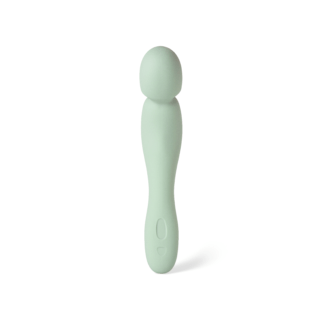
Two pieces. A dual-ended external stimulator — a flapping tongue on one end, a clitoral suction mouth on the other — and a separate insertable vibrating egg. Three motors between them, ten speed modes each, and the external unit doubles as the egg’s remote.

That last detail is the quietly clever one. No Bluetooth pairing, no app update at eleven at night, no dead phone ending the evening. The remote is a toy you are already holding.

Both pieces are waterproof, which is less common at this price than it should be, and the silicone reads as more expensive than $124.

The ceiling nobody mentions until it happens

Battery. Three motors drawing from small cells means the Twitch 2 runs out before a long session does, and you end up charging it more often than you use it.

This is the single most common reason a multi-motor toy goes in a drawer, and it is the spec almost nobody shops for. Runtime is not a luxury feature. It is the difference between a toy you reach for and a toy you have to plan around.

Which is why it is worth naming the brands that print the number. Sona 3 Cruise publishes up to 2 hours of use on a 2-hour charge, with a 520 mAh cell and 90 days of standby. Moxie+ publishes up to 2 hours on a 90-minute charge. Those are figures you can plan an evening around.

The second spec worth knowing: the Twitch 2 measures 60 decibels. That is not loud, but it is conversation-across-a-room rather than fridge-in-the-next-flat. If you share thin walls, treat it accordingly.

What to look for in a dual-stimulation toy

Four things separate the ones people keep using from the ones that get charged once and forgotten.

1. One device or two

Two pieces give you independence — external and internal can run at different intensities, and either can be used alone. The cost is two things to charge, two things to clean, two things to lose.

One device that does both is simpler and usually better made at the same price. Enigma is the clearest example we carry: sonic waves against the clitoris and gentle pulses internally, at the same time, from one body. Eight settings rather than thirty, which is the trade — fewer options, better executed.

2. Suction, sonic, or tongue — they are not the same sensation

The Twitch 2 offers a suction mouth and a flapping tongue, and treats them as two flavours of the same thing. They are not.

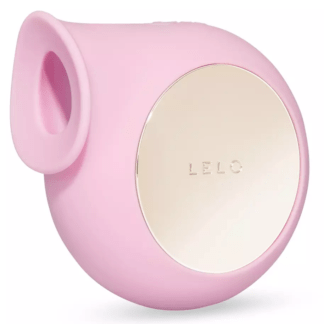
Suction pulls. Sonic waves press without contact, which suits people who find direct clitoral pressure too sharp — that is what Sila Cruise is built around, with a deliberately wider mouth for broader coverage. A rotating tongue, like the one in Ora 3 with its 12 modes, is a moving, circling sensation rather than a pulsing one.

Knowing which of the three your body answers to narrows the whole clitoral range faster than any feature list.

3. Whether a phone is involved

The Twitch 2’s no-app remote is a genuine advantage and an obvious limitation in the same breath: it works across a room, not across a country.

If in-the-room control is what you want, Tiani Duo runs two motors from a motion-sensitive remote — you change the intensity with a flick of the wrist rather than a menu. If you want distance, that is a different purchase entirely, and the app-controlled range is where to look.

4. How many modes you will genuinely use

Thirty settings across three motors sounds generous. In practice most people find two they like and stay there.

Mode count is the easiest number for a brand to inflate and the least useful one to shop on. What matters is whether the low end is genuinely low — the harder thing to engineer, and the setting more people actually use.

The trade-offs: when the Twitch 2 is right, and when it is not

It is right if you specifically want external and internal running independently, you like the idea of a remote that is also a toy, and your sessions are short enough that battery is not the deciding factor.

It is wrong if this is your first or second toy — a two-piece system is a lot of decisions to make before you know what you like. Start with one function, learn your preference, then buy for it. Lily 2 at $109.99 or Volta at $109.99 are better first purchases than anything with three motors.

It is also wrong if you want long-distance play, or if you need endurance more than variety. And it is worth saying plainly: the toys we would put in its place cost more — $177 to $230 rather than $124. What you get for the difference is published runtime, better silicone and a single device instead of two. Whether that is worth seventy dollars is a fair question, and the answer depends on how often you would actually reach for it.

Care, briefly

Warm water and a gentle cleanser before and after use, dried fully before storage. Anything with a suction mouth or a moving tongue needs the recess cleaned properly rather than wiped — that is where a toy starts to smell before it starts to fail.

Pair silicone with a water-based lubricant rather than a silicone one, which degrades the surface over time.

Finding your fit

If the Twitch 2’s dual-stimulation promise is what brought you here, these answer the same want from stock we actually hold.

  • Volta · $109.99 — flexible fluttering tips, external only. The least intimidating way to find out whether you like this kind of sensation at all.
  • Lily 2 · $109.99 — small, quiet, deliberately simple. A first toy rather than a fourth.
  • Moxie+ · $124.99 — wearable and magnetically held, 10 modes, IPX7, and a published 2-hour runtime on a 90-minute charge.
  • Ora 3 · $179.99 — a rotating tongue node with 12 modes. The closest thing we stock to the Twitch’s tongue end, executed far better.
  • Sila Cruise · $184.99 — sonic rather than suction, with a wider mouth for broad, indirect pressure. For people who find direct contact too sharp.
  • Tiani Duo · $194.99 — two motors, eight settings, motion-sensitive remote. Wearable during sex.
  • Enigma · $229.99 — sonic clitoral and internal pulses simultaneously, in one device. The single best answer to what the Twitch 2 was trying to do.
  • Sona 3 Cruise · $229.99 — the fullest published spec sheet here: 112 × 51 × 55 mm, 128 g, 2-hour runtime, 90-day standby.

Or browse the whole clitoral collection and the couples range with your two answers in hand — which sensation, and how long you need it to last. If you are earlier in the decision than that, our guide to choosing a vibrator works through placement, intensity, pattern, size and noise before you spend anything. Everything ships across Canada in plain packaging, under a sender name that gives nothing away.


The Twitch 2 got the question right. Wanting external and internal at once is not greedy or advanced — it is just how a lot of bodies work, and for a long time the market treated it as a niche.

What it got wrong was assuming more motors was the answer. The better answer turned out to be fewer, running longer, in one hand.

Posted on

Best Thrusting Vibrators in Canada 2026

Best Thrusting Vibrators in Canada 2026

Most “best thrusting vibrator” lists are written by people who have never held one. You can tell, because they rank by price and call everything powerful.

This one ranks the thrusting vibrators we actually stock by the things that change the experience — how far the toy travels, how fast, how loud, and whether the shape suits what your body responds to. Where a manufacturer publishes a real number, it is here. Where they do not, that is here too, because a spec nobody will print is worth knowing about.

Fourteen toys, all in stock, all shipped discreetly across Canada.

How these are ranked

Not by price, and not by star ratings we cannot verify. By four things:

Stroke length — the distance travelled per thrust. Almost nobody publishes it. Two of these do.

Pace — strokes per minute, and whether the slow end is genuinely slow.

Noise — one brand in this list publishes a decibel figure. One.

Shape — curve, head profile and girth, because sensation is architecture.

Every product below is one we stock, at the price you will actually pay.


Best overall — Fun Factory Bi Stronic Fusion · $149.99

Fun Factory invented the pulsator category, and it shows. The Bi Stronic Fusion pairs a thrusting shaft with clitoral vibration and vibrating wings against the labia, and it is genuinely hands-free once positioned — which is rarer than the marketing suggests.

It sits mid-price, mid-stroke and mid-intensity, which sounds like faint praise and is actually the point: it is the one most bodies get along with. If you are buying one thrusting toy and want the highest chance of loving it, this is the pick.

Not for you if you want a long, deep stroke. The Stronic movement is deliberate rather than dramatic.

Best for beginners — ROMP Jiggle · $84.99

The cheapest thruster we stock and the gentlest way in. Short stroke, strong suction base, and light enough that you stop thinking about holding it.

At $84.99 it is the only one in this list you can buy to find out whether you like thrusting at all, rather than committing to the answer in advance.

Not for you if you already know you want depth. You will outgrow it.

Quietest — Dorcel Deep Thrust · $119.99

50 decibels. That is a published, measured figure, and Dorcel is the only brand in this list willing to print one. For context, 50 dB is a quiet room, or a fridge humming next door.

It gets there with magnetic thrusting rather than a conventional gear motor, which removes most of the mechanical whine. Insertable length is 4.31 inches, also published, and the remote works to about 10 metres.

If you live with roommates, thin walls, or children who wake easily, buy this one. The decision is that simple.

Not for you if you want a clitoral arm — this is a single-focus toy.

Best published stroke — Lovense Gravity · $219.99

1.18-inch stroke, up to 140 strokes per minute. Two real numbers, which makes Gravity the only toy here you can evaluate before it arrives.

The suction cup means true hands-free against a wall, floor or chair, and the app opens up pattern control and long-distance play. The stroke is moderate, deliberately — it reads as insistent rather than punishing.

Not for you if you want something discreet in a drawer. It is a full-size dildo form factor.

Best for G-spot — Dorcel G-Stormer · $199.99

A linear motor behind a curved, firmer head, with seven up-and-down speeds. Linear motors move in a straight reciprocating line rather than converting rotation, which is why the stroke feels cleaner and more directed than most.

The curve is pronounced enough to hold pressure at the front wall without you fighting the angle.

Not for you if you are sensitive to firm internal pressure. This one commits.

Best app-controlled — Lovense Vulse · $169.99

120 strokes per minute, full app control, and genuine long-distance operation — a partner can drive it from another city.

Vulse is the one to buy if the appeal is handing over control rather than holding it. It also syncs to music and responds to sound, which is either delightful or gimmicky depending on your temperament.

Not for you if you would rather not involve a phone. The onboard controls are limited.

Best for couples — Together Double Delight · $169.99

Dual-ended and ribbed, with ten thrusting and vibration levels on central controls both partners can reach. Built for simultaneous use rather than one person operating a toy on another.

Not for you if you want solo hands-free. It needs a second pair of hands to earn its price.

Best blended sensation — Le Wand Thrust Rabbit · $139.99

A curved thrusting shaft aimed at the G-spot with a dedicated clitoral vibrator, from a brand whose finish quality is unusually good at this price. Le Wand’s silicone has almost no drag, which matters more on a thrusting toy than a static one.

Not for you if the clitoral arm does not sit where you need it. Rabbit geometry is personal, and no rabbit fits everyone.

Best two-sensation design — Dorcel Power Ride · $164.99

Dual motors: deep internal thrusting plus rapid external tapping you can reposition. Tapping is a distinctly different sensation from vibration — sharper, more percussive — and pairing it with a slow thrust is a combination most rabbits cannot produce.

Its sibling in feel is the Love to Love Sassy Bunny at the same $164.99, which runs the same thrust-plus-tap idea in a softer silhouette.

Best splurge — Lovense Spinel · $249.99

Thrusting, vibration and heating in one device, with 150 degrees of angle adjustment, a hands-free mount, and interchangeable attachments that switch it between clitoral, G-spot and classic shapes.

It is the most adjustable toy we stock, which makes it the closest thing to buying three toys at once. The warming is not a gimmick either — silicone at body temperature feels considerably less like an object.

Not for you if you want to take it out of the box and use it. There is a learning curve.

The rest of the range

  • Fun Factory Sundaze · $149.99 — pulsing, thrusting, stroking and fluttering, hands-free. The Bi Stronic’s more experimental sibling.
  • Dorcel Furious Rabbit · $89.99 — three up-and-down and rotating modes with a seven-speed clitoral arm. The best-value triple-stimulation toy here.
  • Dorcel Furious Rabbit 2.0 · $134.99 — dual motors, auto-thrusting head, rotating beads. Everything the original does, with more behind it.

What nobody tells you about buying one of these

Louder is not better, and it is not even neutral. A thrusting motor doing more mechanical work makes more noise, and a toy you feel self-conscious using is a toy you stop reaching for. This is the most common reason a thrusting vibrator ends up in a drawer.

Stroke length matters more than motor power. A quarter-inch stroke and a two-inch stroke are different experiences, not different intensities of the same one. Power sells; travel is what you feel.

Adjustable depth barely exists. Plenty of guides tell you to look for it. Almost nothing in this category offers it at a sane price, so choose the fixed stroke that suits you rather than hunting a feature that mostly is not there.

If you are unsure, start shorter. It is far easier to graduate up than to talk your body into something that felt like too much on day one.

Quick answers

Cheapest way to try thrusting? ROMP Jiggle at $84.99.

Quietest? Dorcel Deep Thrust — 50 dB, published.

Best for long distance? Lovense Vulse.

If you only buy one? Bi Stronic Fusion.

Care, briefly

Wash with a gentle cleanser after every session and dry it fully before storing — a thrusting shaft has a moving seam, and water sits in it. With silicone, use a water-based lubricant rather than a silicone one; silicone lube can soften and degrade a silicone surface over time. If a toy is going unused for months, top the battery up occasionally rather than leaving it flat.


New to the category? Our guide to thrusting vibrators and penetration-led pleasure walks through stroke length, pace, shape and noise before you spend anything. Or browse the full Thrusting Vibrators collection — fourteen options from $84.99 to $249.99, every one in stock, shipped in plain packaging under a sender name that gives nothing away.

A best-of list is not really a ranking. It is fourteen different answers to the question of what your body responds to, and the only wrong pick is the one chosen because it was loudest in the marketing.

Start with the spec that matters most to you — the stroke, the decibels, the price — and let the rest follow.

Posted on — Leave a comment

The Conversation Before the Conversation

The Conversation Before the Conversation

There’s a sentence you’ve rehearsed in your head for two weeks.
You’ve run it a dozen different ways, softened it, sharpened it, picked
the exact right unhurried moment for it — and it’s still sitting there,
unsaid. Nothing about the sentence itself is dangerous. It’s a question,
not a confession. But somewhere in the rehearsing it turned into
something that has to be gotten right, which is exactly why it keeps not
happening.

The gap nobody names
correctly

A study of 101 couples found that open communication about sex
predicted sexual satisfaction far more strongly than general
communication did — a correlation of .67 versus .29. The couples in
question weren’t bad communicators. They talked about money, schedules,
family, all of it, competently. The one category that lagged,
consistently, was this one — and it’s the category that turned out to
matter most for how satisfied they actually were.

That’s worth sitting with. Good general communication doesn’t
transfer automatically to this specific kind. Being easy to talk to
about everything else doesn’t make the one sentence any easier to
start.

Why it feels like “A Talk”

The reason it stalls isn’t the topic. It’s the shape people give it
in their heads. A new interest, said out loud, gets treated like a
proposal that needs a yes or no on the spot — which means the person
hearing it has to produce an instant, considered verdict about something
they’ve maybe never thought about, and the person saying it has to
survive whatever that verdict turns out to be. Both sides are bracing
for a moment that was never supposed to be this heavy. The stakes are
self-inflicted, built entirely out of how the sentence gets framed
before it’s ever spoken.

The conversation
before the conversation

There’s a version of this that doesn’t require the rehearsal at all.
It’s smaller, curious, and reversible: I read something about this
the other day — ever thought about it?
Nothing in that sentence
asks for a yes. Nothing in it commits either person to anything. It’s
not a proposal, it’s a question about a question — an opening, not a
pitch.

That distinction changes everything about how it lands. A proposal
has to be answered. A curious remark can be shrugged at, laughed off,
sat with for a week, or picked back up later without either person
having staged a moment neither can walk back from.

What that removes

Mostly, it removes the requirement to have an answer ready. Nobody
has to know, on the spot, whether they’re interested — they just have to
be honest about not being sure yet, which is a much easier thing to say
than yes or no under pressure. It also makes the negative answer
smaller. “Not really my thing” in response to a passing comment costs
nothing. The same words in response to a rehearsed, vulnerable speech
can land like a verdict on the whole relationship, which is a wildly
disproportionate cost for one honest sentence.

The trade-off, stated plainly

Sometimes the honest answer really is no. That’s not a failed
conversation — that’s the conversation working exactly as intended. The
goal was never persuasion. It was finding out something true, and a true
“not for me” is a better outcome than a maybe extracted under pressure
that quietly resents having been asked at all.

Being considered
about this particular sentence doesn’t mean planning it more carefully.
It means making it smaller — reversible enough that saying it costs
almost nothing, so it can actually get said.

The version that gets spoken is rarely the practiced one. It’s the
throwaway line, tossed out on an ordinary evening, that neither person
had to prepare for.

Posted on — Leave a comment

Intimacy After a Long Day

Intimacy After a Long Day

It’s 9:40pm. The dishes are done, the last email is answered, and the
feeling that shows up first isn’t desire — it’s relief that the day is
finally over. That relief gets treated like a verdict: if I actually
wanted this, I wouldn’t feel this
. It isn’t a verdict. It’s just
what a depleted nervous system feels like at the end of a Tuesday.

The gap nobody names
correctly

A 2020 study in the Archives of Sexual Behavior tracked 657
married women over fourteen weeks of biweekly diaries. Women aged 25 to
29 wanted sex about 6.4 times a month and averaged 3.69 — 58% of what
they actually wanted. Women 30 to 34 wanted 5.23 times and got 2.55 —
49%. Stress and fatigue were the identified cause, concentrated on
weekdays, and couples didn’t make it up on weekends.

That gap gets read as a desire problem. It’s a bandwidth problem
wearing a desire problem’s clothes. The wanting is intact. What’s
missing is the capacity to act on it on a Tuesday specifically — which
is a completely different thing to fix, and a much less alarming
one.

Why “just relax” doesn’t work

The usual advice treats desire like a switch: stop thinking about the
day, and it’ll turn on. It doesn’t work because desire, treated with any
intention at all, isn’t a reflex — it’s closer to a decision made in
advance than a feeling that arrives on cue. Waiting for the feeling to
show up unprompted at 9:40pm, after a day that used up everything the
feeling would have run on, is waiting for something that was never going
to spontaneously appear. The failure isn’t the tiredness. It’s expecting
spontaneity from a system that’s already spent.

Repair is also small

Distance between two people rarely opens in one dramatic moment. It
opens in a hundred small ones — a distracted goodnight, a question not
asked, an evening spent in separate rooms out of simple depletion rather
than any decision. None of those moments look like a problem at the
time. That’s exactly why they add up to one.

If the drift is small, the correction can be small too. A five-minute
version of actually paying attention — put the phone down, ask a real question, stay in the room — outperforms an occasional grand gesture
that takes a rested night to pull off and therefore hardly ever happens.
Consistency at low intensity beats intensity that’s too rare to
compound. This is the part exhaustion actually makes possible instead of
impossible: nobody’s too tired for five honest minutes.

What
changes when exhaustion is the normal condition

Most couples build their intimate life around an unstated assumption:
that the good version requires energy neither of you reliably has. So it
gets scheduled for a hypothetical rested night that arrives rarely
enough to feel like a special occasion — and everything below that bar
starts to feel like a consolation prize.

The more useful assumption is the opposite one: exhaustion is the
baseline, not the exception. Build around it instead of waiting it out.
That means lowering the bar for what counts on purpose — attention
without a production, a few unhurried minutes instead of a whole evening
— so the depleted version isn’t a lesser version of the real thing. It’s
just the version that fits a Tuesday.

The trade-off, stated plainly

Some weeks this means less sex. Said plainly, not apologized for: a
demanding week will produce a quieter one, and no amount of good
communication changes that arithmetic. The alternative — treating every
quiet week as a problem to solve — turns an ordinary fact of a full life
into a referendum on the relationship, which is a worse outcome than the
quiet week itself.

What’s worth being considered
about isn’t how to manufacture more energy. It’s deciding, in advance,
what the tired version of closeness actually looks like — so it’s still
recognizable as care rather than as absence.

The version of this that lasts isn’t the one that tries hardest at
the end of an exhausting day. It’s the one that stopped expecting itself
to — and it’s built, most weeks, out of the small five minutes rather
than the rare big night.

Posted on — Leave a comment

What “Considered” Means to Us

What “Considered” Means to Us

The word is on the homepage twice before you’ve scrolled past the
first screen. Intimate wellness, considered. Then, a line down:
Intimacy, elevated. Pleasure, considered. It would be easy to
read past it — one adjective among the usual ones a brand reaches for.
It isn’t decoration. It’s the whole argument, compressed into a single
word doing more work than it looks like.

What “considered” is
standing against

A thing is only considered in contrast to something. Here, the
something is excess — buying more because more feels like progress,
choosing based on what’s loudest or best-reviewed rather than what
actually fits, treating a purchase or a moment as a performance to get
through rather than an experience worth being present for.

Considered means the opposite of rushed. It means a decision that
survived a second thought. Not slower for its own sake — slower because
the pause is where the actual preference shows up, the one underneath
the impulse.

Where it shows up in what we
sell

This is the part that costs something, which is also how you know
it’s real rather than a tagline. A considered catalogue means turning
down products that would sell, if selling were the only measure. It
means writing guides that name who a product is wrong for, even when
that costs a sale. It means never printing a spec we can’t verify, and
saying plainly when a category has nothing in it worth recommending,
rather than padding a list to look complete.

None of that is generous. It’s just what “considered” requires once
you take the word seriously instead of using it as a mood.

Where it shows up
somewhere more personal

But the word isn’t really about the shop. It’s about what the shop is
trying to be useful for — and that’s where “considered” gets
more specific than a brand value.

Intimacy, treated with intention rather than pressure, looks
different in practice than intimacy treated as a performance to
complete. It looks like naming what you actually want instead of
guessing at what’s expected. It looks like a conversation before an
assumption. It looks like the slow version of something a person could
rush, chosen on purpose instead of by default.

That’s not a claim about anyone’s technique. It’s a claim about
attention — where it goes, and whether it’s actually there or just
performing being there. A body responds differently to a partner who is
paying attention than to one who is going through familiar motions.
That’s not a controversial idea; it’s closer to obvious once it’s said
out loud. It’s just rarely said out loud, because “be more intentional”
sounds like advice with nothing underneath it.

Here’s what’s underneath it: intention is a decision made
before the moment, not during it. You can’t manufacture
presence in real time if you haven’t already decided that this — this
partner, this evening, this specific act of attention — is worth being
considered about. The decision comes first. The feeling of confidence
people describe afterward is what happens once the decision has been
made enough times that it stops feeling like a decision at all.

The confidence that’s
supposed to follow

The brand line puts it this way: the slow, considered art of
knowing yourself and your partner more deeply — and the confidence that
comes with it.
Confidence, in that sentence, isn’t a starting
point. It’s what’s left over after enough considered choices — about a
product, about a conversation, about how a particular evening gets spent
— stop requiring deliberation and start feeling like simply who you
are.

That’s a slower promise than most of what gets sold in this category.
Nothing here works instantly, and nothing here is trying to. What we’re
actually offering — in the things we stock and in what we write — is a
bet that intention outlasts excitement, and that the considered choice
is usually the one you don’t regret making.

Where we’d begin

If you want to see what “considered” looks like in practice, these are the three pieces we’d hand a friend first — quiet, well made, and easy to live with.

Posted on — Leave a comment

Why We Rebuilt XtasyXperience From Scratch

Why We Rebuilt XtasyXperience From Scratch

Eight times fewer pages. Nearly three times the traffic.

That was the number that stopped us. Not a marketing insight — an
accident, found while going through Google’s own records of our old
store. The blog, a small fraction of the site, was quietly outperforming
the entire catalogue. Somewhere in that gap was the whole problem, and
eventually, the whole reason to start over.

The
site that Google could see, and the site that Google couldn’t

Every website has two versions: the one a visitor sees, and the one a
search engine sees. Ours had drifted apart without anyone noticing.

Google’s own coverage report told the story. Our old store held
roughly 12,400 pages. Fewer than 2,000 of them were indexed — meaning
fewer than one in six could ever show up in a search result, no matter
how good the writing or the product underneath it. Google had looked at
the other 7,000-plus and simply declined to include them: found, but not
worth crawling. Another 1,700 were thrown out entirely as duplicates,
because nothing on the page told Google which version was the real
one.

None of this was visible from the front end. The store looked fine.
It functioned. Products loaded, checkout worked, the pages rendered
exactly as intended — for a person. For the automated systems that
decide what gets found, most of it may as well not have existed.

The number that
reframed the whole business

Here’s what sixteen months of search data showed, section by
section:

Section Pages Clicks Impressions
Blog 96 129 6,682
Products 773 49 2,356
Collections 36 2 285

Ninety-six blog posts, sitting alongside 773 product pages. The blog
earned nearly three times the clicks on roughly one-eighth the page
count. The writing was carrying the business, and the catalogue
was not.

There’s one page in that data worth naming on its own: a chastity sizing guide that collected 1,228 impressions at an average position of
10 — the single most-seen page on the entire old site. It sat just below
the fold of a results page for a year and a half, on a platform that
technically couldn’t get out of its own way. It’s a strange kind of
proof: even hobbled, honest, useful writing still found an audience.
Imagine what it could do without the hobble.

And the plainest measure of how invisible the old site had become: in
sixteen months, eight pages anywhere on the internet linked to it. Seven
of those were our own. Not one earned link from anyone else. That’s what
invisible looks like when you can finally see it measured.

Why
this mattered more here than it would almost anywhere else

Every business wants to be found. For most, being hard to find is a
growth problem. For a shop selling intimate wellness products, it’s
closer to an existential one — because this category can’t buy its way
around the problem.

Meta and Google both restrict advertising for anything in this space.
There’s no paid campaign to run to compensate for a site search engines
can’t read. When you cannot buy attention, being worth finding
is not one strategy among several. It is the only one.
That
single fact reframed everything about how the new site had to be built —
not as a redesign, but as a foundation.

What actually changed

Nobody got a new logo out of this. The brand, the voice, the products
— all the same. What changed was the ground underneath it.

  • A platform we control, instead of a white-label
    storefront where a support ticket could sit unanswered
    indefinitely.
  • Pages a crawler can actually read — real structured
    data, canonical tags that resolve correctly, and no content hidden
    behind JavaScript a search engine never executes.
  • The editorial moved to the front door. The guides
    aren’t a blog bolted onto a shop anymore; they’re the reason people arrive at all.
  • Evidence instead of adjectives. Published decibel
    figures, stroke lengths, runtimes — the specific numbers most brands in
    this category never print, because a number is either true or it isn’t,
    and most marketing prefers the second option.
  • Named disqualifiers. Every guide says plainly who a
    product is wrong for. It costs the occasional sale. It is also, as far
    as we can tell, the only way to be trusted by someone who’s read a dozen
    guides that told them everything was perfect for everyone.

That last point is close to the whole philosophy in one sentence:
honesty is a distribution strategy. When the usual
channels are closed, being the one source willing to publish the real
number — or say plainly that a category has nothing worth recommending
yet — is how you get found at all.

What this doesn’t change

We’re not going to pretend the new foundation is finished, or that
indexing problems vanish the moment you fix the plumbing. Rebuilding a
site’s visibility takes time; search engines have to re-crawl, re-trust,
and re-rank at their own pace, not ours. What changed on the day we
rebuilt is that the pages are now readable at all. What happens next is
patience, and more writing.

If you run a business that can’t advertise the normal way — intimate
wellness, cannabis, supplements, firearms, anything the platforms have
decided is too much — the lesson generalizes past this one shop: check
whether your site is actually visible to the systems deciding whether
you exist, before you spend another dollar or hour on anything else —
starting with what’s on
the shelves now
.

Posted on — Leave a comment

Thrusting Vibrator for Penetration-Focused Pleasure

Thrusting Vibrator for Penetration-Focused Pleasure

You know that moment when vibration feels great, but your body keeps asking for something more specific – pressure, depth, cadence, the steady insistence of penetration. That is exactly the lane a thrusting vibrator is built for. Not louder, not wilder. Just more intentional.

A thrusting toy is less about constant buzz and more about motion you can feel in your hips and pelvic floor. It creates a rhythm you can sink into, and for many people, that rhythm is what flips pleasure from “nice” to “focused.”

What makes a thrusting vibrator different

Most vibrators deliver stimulation through surface-level oscillation. A thrusting vibrator adds a second dimension: in-and-out motion that mimics penetrative sex. Some models combine thrusting with vibration at the tip or along the shaft, while others focus almost entirely on the push-pull sensation.

That distinction matters because penetration pleasure is often about pressure and movement rather than pure intensity. Thrusting can create that “full” feeling, stimulate internally with a repeatable tempo, and offer a more lifelike pattern than a traditional internal vibrator.

Why penetration-focused pleasure is its own category

If penetration is the main event for you, your preferences are usually specific. It might be deep pressure at the front vaginal wall, a steady pace that builds gradually, or the way consistent motion helps your mind relax into arousal.

Penetration-focused pleasure can also be about convenience and control. A partner’s stamina, angle, or rhythm can vary. A toy lets you dial in what works and keep it there – especially valuable if you know your body responds best to consistency.

It also “depends,” and that is worth saying plainly. Some bodies love thrusting right away. Others need warm-up first, or prefer thrusting paired with external stimulation. And for some, strong thrusting can feel too intense unless the shape and depth are right.

What to look for in a thrusting vibrator

There is no single “best” thrusting vibrator – the right choice comes down to a few design decisions that change the entire experience.

Thrust length and depth: shallow, medium, or deep

Thrust length is the distance the toy travels in each stroke. Shallow thrusting can feel teasing and controlled, often ideal for beginners or anyone sensitive to deep pressure. Medium-to-deep thrusting tends to feel more “real,” but it can also become overwhelming if the toy is thick or the angle is aggressive.

If you tend to enjoy deep penetration, look for a toy that publishes its stroke length rather than a vague promise of “deep.” The Lovense Gravity, for example, states an exact 1.18-inch stroke at up to 140 strokes per minute, so you know what you’re choosing before it arrives. Genuinely adjustable-depth models are less common – when you find one, treat it as the more forgiving luxury feature, since it keeps you from buying something that only works on its highest setting.

Speed, rhythm, and pattern variety

The best thrusting toys are not just fast, they are nuanced. A good motor offers slow, weighty strokes that feel deliberate, plus faster options when you want urgency.

Pattern variety matters because pleasure is not linear. Some days you want a steady metronome. Other days you want irregular pulses, pauses, or ramping intensity. If a toy only has “slow” and “jackhammer,” it can feel limiting quickly.

Shape and head design: sensation is architecture

A smooth, rounded head tends to feel comfortable and beginner-friendly. A more pronounced head can add friction and definition with each stroke, which can be incredible if you like a realistic feel. Curved shapes can help target internal pleasure zones, but they also demand a little more attention to angle.

If you know you like pressure toward the front (often associated with G-spot stimulation), a gentle curve and a slightly firmer head profile can be a smart choice. If you prefer an even, filling sensation, a straighter silhouette may feel more consistent.

Material and finish: luxury is also comfort

For thrusting toys, silicone quality is not just a nice-to-have. The repetitive motion means any drag, tackiness, or seams become obvious.

A body-safe silicone finish that feels smooth and refined will glide comfortably with lube and reduce friction over longer sessions. That matters for penetration-focused play, where stamina and comfort are part of the experience.

Noise, weight, and “bedroom confidence”

Thrusting motors can be louder than standard vibrators because they are doing more mechanical work. If discretion is part of your lifestyle, look for designs that emphasize quiet engineering and solid construction. The Dorcel Deep Thrust is one of the few in the category with a published figure to check against: a measured 50 decibels, quiet enough to run without announcing itself, with a 4.31-inch insertable reach and full remote control.

Weight also plays into usability. A heavier toy can feel premium and powerful, but it can also be tiring to hold in position. If you prefer hands-free or semi-hands-free use, pay attention to ergonomics, handle shape, and whether the base design stabilizes well.

How to use a thrusting vibrator (so it feels incredible, not awkward)

Thrusting toys reward a little setup. The goal is not to “power through” settings, it is to create a controlled experience that stays comfortable and builds.

Start with lubrication – more than you think you need. Thrusting motion increases friction compared to a stationary internal toy. A high-quality water-based lube pairs well with silicone toys and keeps the sensation smooth and elevated.

Give your body a warm-up. Even if penetration is your favorite, easing in with fingers, external vibration, or low thrust settings helps your muscles relax and makes deeper strokes feel pleasurable rather than intense.

Then find the angle before you chase speed. Small shifts in pelvis position can change everything. Many people prefer thrusting toys when they can control depth with their body, not just the motor. You are not trying to replicate porn pacing. You are trying to replicate what your body actually responds to.

If you love blended sensation, pair thrusting with clitoral stimulation. Some thrusting toys include an external arm, but you can also use a separate compact vibrator. This is one of the most reliable ways to make penetration-focused pleasure feel complete rather than singular.

The trade-offs: when thrusting is perfect, and when it is not

Thrusting is powerful, but it is not universally perfect.

If you are sensitive to impact-like motion, thrusting can feel too “direct” on higher settings. In that case, a toy with shorter strokes and better control at low speeds will feel more refined.

If you prefer grinding pressure rather than in-and-out motion, a classic internal vibrator or a wand used externally may feel better. Some bodies respond more to steady pressure than movement.

And if your goal is partnered play, thrusting toys can be either an enhancement or a distraction. They can feel amazing when one partner controls the toy’s pace and the other receives, but they can also require coordination. Remote-controlled thrusting models or toys with simple, intuitive controls tend to support couples better than devices that require button-hunting mid-session.

Care and longevity (because premium should stay premium)

A thrusting toy has moving parts, so care matters.

Clean it before and after use with warm water and a gentle toy cleanser, then let it dry fully. Avoid submerging toys that are only splash-resistant, and store it somewhere dust-free so the silicone finish stays smooth.

Also, do not underestimate charging habits. Keeping the battery healthy preserves motor strength, and motor strength is what keeps thrusting feeling controlled rather than strained.

Finding your fit without overthinking it

If you are choosing your first thrusting toy, prioritize adjustability and comfort over maximum power. If you already know you crave deeper penetration and stronger pace, look for longer stroke length, a stable handle, and a shape that supports your preferred internal pressure points.

Within XtasyXperience’s Thrusting Vibrators collection, that range plays out product by product. The Furious Rabbit and its dual-motor successor, the Furious Rabbit 2.0, pair an up-and-down, rotating head aimed at the G-spot with a separate clitoral arm for triple stimulation. The Le Wand Thrust Rabbit and Sassy Bunny – Purple Rain follow a similar idea – a curved, thrusting shaft alongside dedicated external stimulation – while the Power Ride uses dual motors to combine deep internal thrusting with rapid external tapping you can reposition as needed. For a more singular focus on rhythm, the Double Delight offers ten thrusting and vibration levels on a dual-ended, ribbed shaft, and the app-connected Vulse and Spinel add pattern control and hands-free options, the Spinel’s interchangeable attachments switching between clitoral, G-spot, and classic shapes in one device.

For shoppers who prefer an elevated, curated approach to pleasure products – where design, discretion, and intention all matter – you can explore thrusting and penetration-forward options at XtasyXperience.

The best part about a thrusting vibrator is not that it imitates sex perfectly. It is that it gives you repeatable control over a sensation your body already understands – and lets you build pleasure with confidence, on purpose, at your pace.

Let your next session be less about trying something “new,” and more about choosing something that feels unmistakably right.

Posted on — Leave a comment

How Luxury Design Elevates Modern Intimacy

How Luxury Design Elevates Modern Intimacy

Most people will spend more time choosing a coffee maker than they’ll spend choosing what they bring into their most intimate moments. That’s not a criticism — it’s a pattern worth noticing, because it says something about what we’ve quietly been taught intimacy is allowed to be.

Good design works the way good lighting works in a room: you rarely notice it directly, but you feel its absence the moment it’s missing. The same is true here. When intimacy is approached with the same intention you’d bring to a well-tailored coat or a thoughtfully furnished home, something changes. Not because the moment needs to be complicated. Because it deserves to be considered.

What follows is a look at what actually shifts — in the body, in confidence, in the way people show up for themselves and each other — when design stops being an afterthought.

Why Your Body Notices Before Your Mind Does

Long before you consciously decide a moment feels right, something else has already made the call. The body tends to respond to proportion, texture, and light well before conscious thought catches up — it settles, or it doesn’t, often before you could explain why. Harsh light and rushed transitions read as tension to the nervous system. Soft light and unhurried pacing read as safety.

This is the quiet mechanism behind why the same act can feel entirely different depending on the setting around it. It isn’t about spending more. It’s about giving the senses something coherent to respond to — a few extra minutes to set the mood, a material chosen for how it feels rather than just how it looks. The simplest way to notice this for yourself: compare how differently a rushed, poorly lit moment feels against one where you gave the environment even five minutes of intention beforehand.

The Overlooked Ingredient in Better Intimacy

Ask people what they wish they’d had more of during an intimate moment, and the answer is rarely a specific feature or function. It’s almost always some version of feeling more at ease in their own skin.

Confidence works differently than most people assume. People tend to behave differently — more open, more present, less guarded — when they feel confident, and that shift has less to do with what they own and more to do with how thoughtfully it was chosen for them. Refined materials and simple, well-made design remove friction rather than add pressure, freeing up attention for the moment itself rather than for the object in it.

If confidence is the actual goal, start there rather than with features. Choose fewer things, chosen well, and notice how much more present you are without something demanding your attention.

When Intimacy Becomes Part of How You Live

There was a time when anything related to intimacy stayed in a drawer — out of sight, and mostly out of the larger conversation about how someone actually lives. That’s changing quickly. The global market for sexual wellness products is now widely estimated in the tens of billions of dollars, with steady growth expected to continue, driven largely by rising comfort talking about it openly and buying it the way you’d buy anything else you’ve actually considered.

That shift matters more than the number itself. It means these choices are increasingly treated as part of a considered lifestyle — alongside skincare, home goods, or a well-chosen wardrobe — rather than something separate and hidden. Bringing the same attention to material and craftsmanship that you’d bring to anything else you keep in your home is itself part of that shift. If you’re just beginning to explore this space, our guide to thrusting vibrators for beginners walks through exactly what that looks like in practice.

What Your Choices Say Before You Say Anything

Nobody needs to explain a well-chosen object. It explains itself.

That’s the logic behind the shift toward quieter, more considered luxury across nearly every category right now — less about visible branding, more about material, craft, and restraint. The people who study this trend describe its appeal in four words: if you know, you know. The same logic applies here. A piece chosen for how it’s made, rather than how loudly it announces itself, says more about taste and self-knowledge than anything with a name printed on it ever could.

This is also where self-expression actually lives — not in performing a version of intimacy for anyone else, but in choosing what genuinely fits you. Browse the full collection with an eye for what feels like an extension of your own taste, not a trend you’re borrowing.

Choosing Well Instead of Choosing More

More options are not the same thing as better ones.

As this category has matured, so has the craftsmanship behind it — body-safe silicone, thoughtful engineering, and design details that used to be rare are now closer to standard, because manufacturers are finally treating the space with the seriousness it deserves. That maturity is what makes intentional choosing possible in the first place. You’re no longer trading quality for discretion, or discretion for quality. You can have both.

Choosing well, rather than choosing more, is the whole philosophy. A handful of thoughtfully made pieces will serve you — and outlast — a drawer full of things bought on impulse. That’s true of luxury design generally, and it’s just as true here.

Luxury design was never really about excess. It’s about intention — the kind that shows up in how something feels in your hand, how a space is lit, how much thought went into a choice most people never think to make thoughtfully at all.

None of this requires you to overhaul how you live. It just asks you to bring the same consideration to this part of your life that you already bring to the rest of it. Browse the curated collection to see what that looks like in practice, or start with our complete guide for beginners if you’re still finding your footing. Either way, the idea holds: chosen well, this becomes just one more considered part of a life you’re already building with intention.

Posted on

Natural Realskin Hot Cock #1 Review

Natural Realskin Hot Cock #1 Review

A dildo that heats itself to 113°F sounds like a solution to a problem nobody has. Then you hold one that has been warming for five minutes, and the thing you notice is not warmth. It is the absence of the small flinch that comes with room-temperature silicone.

That flinch is real, and most people stop noticing they brace for it. The Natural Realskin Hot Cock #1 is built around removing it. This review covers what it does well, the material trade-off almost nobody mentions, and — since we no longer carry it — what in the realistic dildo range solves the same problem without the catch.

First, the honest disclosure

We do not stock the Natural Realskin Hot Cock #1. It was on our previous storefront and it is not in our current supplier’s catalogue, so there is nothing for us to sell you at the end of this page.

We have kept the review up anyway, because it is still the honest answer to the question people arrive with — is a warming realistic dildo worth it? — and because the answer turns out to be more interesting than yes or no.

What the Hot Cock #1 actually is

Ten inches overall, 7.25 inches insertable, moulded from RealSkin — a thermoplastic elastomer engineered to sit closer to skin than silicone does. The shaft heats to 113°F, roughly a degree or two above body temperature. Twelve vibration functions, USB charging, waterproof, and a fully bendable core that holds whatever angle you set it to.

The bendability is the underrated part. Length and girth get all the attention, but angle is where most realistic dildos quietly fail — a shaft that will not sit where your body wants it becomes a toy you fight rather than use.

What the warming function actually does

Not what the marketing implies. It is not a heat sensation and it is not arousing on its own. What 113°F does is remove the moment where your body registers object — the involuntary half-second of adjustment that silicone at room temperature always produces.

It takes several minutes to come up to temperature, so it is not a mid-session toggle. You warm it before you begin, the same way you would warm massage oil in your hands.

Whether that matters depends entirely on why you bought a realistic toy. If realism is the point, it closes a real gap. If you are indifferent to realism and just want good sensation, it will not convert you.

The material catch nobody puts on the box

Here is the part that decides whether this toy is a good buy, and it is not in the feature list.

RealSkin is TPE, and TPE is porous. That porosity is not a defect — it is exactly why the material has give and grip and warms quickly. But porous means microscopic channels that hold moisture, which means it cannot be sterilised, cannot be boiled, and has a finite life measured in months rather than years. It also means a dedicated toy cleaner and full drying time before storage are not optional.

Compare that with a toy like the Tantus Destiny, which is boilable and dishwasher safe. Same category, entirely different relationship with hygiene.

For a long time this was simply the price of realism. Silicone was safe and inert; TPE felt alive. You picked one. That trade-off no longer holds, and it is the single biggest change in this category in the last few years.

What to look for in a realistic dildo

Four things decide it, and only one of them is on the front of the box.

1. Dual-density silicone, not single-density

This is the innovation that made TPE’s compromise unnecessary. A dual-density toy has a firm inner core wrapped in an ultra-soft outer layer, so it gives under pressure and moves against the shaft the way skin does — while remaining completely non-porous.

Strap-On-Me’s Sliding Skin range is the clearest example on our shelves, and b-Vibe’s Slipskin takes the same idea further with pressure-reactive silicone that slides and squishes rather than simply flexing. Both are boilable. Neither has a shelf life.

2. A published insertable length — and the discipline to use it

Overall length is a marketing number. Insertable length is the one your body experiences, and the gap between them is often two or three inches.

The Hot Cock #1 publishes 7.25 inches insertable, which is longer than most people’s actual preference. For comparison, here is a range that publishes every rung: Sliding Skin runs 5.28 inches at M, 5.59 at L, and 6.22 at XXL; the Destiny sits at 5 inches with a 2-inch maximum diameter tapering to 1.5.

If you have never measured what you actually like, start shorter than instinct suggests. Graduating up is easy. Talking your body into something that felt like too much on day one is not.

3. Girth, which matters more than length and gets discussed less

Most disappointment in this category is a diameter problem wearing a length costume. A toy that is too thick registers immediately; a toy that is too long you simply do not insert all the way.

Published diameters are worth hunting for. The Tantus Echo lists 1.55 inches — genuinely slim, and a sensible first realistic toy. The Rotating & Vibrating Realistic lists 1.61 inches at the glans and 1.57 along the shaft, which is the more common realistic build.

4. Whether you want a motor in it at all

Twelve modes sounds generous until you notice most people use two. The question is not how many patterns a toy has — it is whether vibration adds to a realistic toy or fights it.

Vibration through a realistic shaft can break the illusion it was built to create. If you want both, look for something that separates the two: the Rotating & Vibrating Realistic runs two independent motors with three intensity levels, 5.91 inches insertable, IPX7 waterproof, and a published 55 minutes of runtime on a 175-minute charge. The rest of the vibrating dildo range is small and deliberately so.

If it was the warmth you wanted

Then be honest with yourself about which feature you are actually chasing, because warming and realism are separable and almost nobody sells both.

We stock exactly one toy that heats: the Lovense Spinel at $249.99, which combines warming with thrusting and vibration and swaps between interchangeable heads. It is not a realistic dildo and it does not pretend to be. But if the warmth was the part that sold you, it is the only honest answer we have.

There is also a cheaper, older answer that costs nothing: a bowl of warm water and three minutes. Silicone holds heat well. It is less elegant than a heating element and it works.

The trade-offs: when this toy is right, and when it is not

It is right if maximum realism is genuinely the point, 7.25 inches is a length you have already tested and liked, and you are willing to run a stricter cleaning routine and replace the toy sooner than you would a silicone one.

It is wrong if you are buying your first realistic dildo — the length is ambitious and the material is unforgiving. It is wrong if you share toys, because porous material and sharing do not belong in the same sentence. And it is wrong if you want something that lasts, because TPE has a shelf life and silicone does not.

It is also wrong if what you actually want is movement rather than realism. That is a different category entirely — thrusting toys do a thing no static dildo can, and the Lovense Gravity publishes a 1.18-inch stroke at up to 140 strokes per minute if you want to see what that looks like in numbers.

Care, briefly

Non-porous silicone: warm water and a gentle cleanser before and after, dried fully, stored away from dust. Several of the Tantus toys are boilable and dishwasher safe, which is a genuine convenience rather than a spec-sheet flourish.

Pair silicone with a water-based lubricant rather than a silicone one, which degrades the surface over time. And if you are using any of these in a harness, check the base diameter against the harness before you buy, not after.

Finding your fit

If this review brought you here looking for the Hot Cock #1, these are the toys that answer the same want — realism you can feel, in a material you can keep.

  • Tantus Destiny · $79.99 — 5 inches insertable, tapers from 2 inches to 1.5, boilable. The least intimidating way into realistic.
  • Tantus Echo · $84.99 — 6.5 inches insertable at a slim 1.55-inch diameter, with a removable bullet. Realistic plus vibration, without committing to either.
  • Sliding Skin M · $104.99 — dual-density, 5.28 inches insertable. The entry point to the non-porous realism argument.
  • Sliding Skin L · $119.99 — 5.59 inches insertable. The size most people land on.
  • Sliding Skin XXL · $139.99 — 6.22 inches insertable, the closest published match to the Hot Cock’s proportions.
  • Rotating & Vibrating Realistic · $164.99 — two independent motors, 5.91 inches insertable, 55 minutes of runtime. Realism with a motor that does not overwrite it.
  • b-Vibe Slipskin Curvy 8″ · $174.99 — pressure-reactive silicone that slides and squishes. The most convincing realism we stock.
  • b-Vibe Slipskin Girthy 9″ · $194.99 — the same material with substantially more girth, if you already know that is your variable.
  • Lovense Spinel · $249.99 — the only warming toy on the site. Not realistic, but it is the one that heats.

Or browse the full dildo collection with your insertable length and diameter in hand. If you are still working out which category suits you at all, our guide to choosing a vibrator covers the same five-factor framework from the other direction. Everything ships across Canada in plain packaging, under a sender name that gives nothing away.


The Natural Realskin Hot Cock #1 was a good answer to a question the industry had not finished asking. It solved for the feel of realism and paid for it in the material — which was the only deal available at the time.

It is not the only deal any more. Dual-density silicone gives you the same give, the same grip, and a toy you can boil — which means the interesting question is no longer whether realism is worth a compromise, but what you would choose now that it isn’t.

Posted on

How to Choose a Vibrator: The Complete Guide

How to Choose a Vibrator: The Complete Guide

The vibrator market is enormous. That is useful information for exactly no one standing in front of a screen trying to decide.

Abundance does not clarify. It complicates. What you need is not more options — it is a way of knowing which five things about a vibrator actually determine whether it suits your body, and which are marketing.

What you are actually choosing between

Almost every vibrator is a motor, a shape and a surface. The motor decides how the vibration feels — buzzy and high-frequency, or rumbly and low. The shape decides where the sensation lands. The surface decides whether it glides or drags.

Everything else — app control, colour, the number of patterns on the box — sits on top of those three. Get the three right and the extras are a bonus. Get them wrong and no feature list rescues it.

Why this decision is harder than it should be

Because the thing that matters most is unmeasurable from a product page. Two toys with identical specifications can feel completely different, and the word most brands use to describe the difference — “powerful” — means nothing.

It also depends, and that is worth saying plainly. Some bodies want broad, external, low-frequency pressure. Some want narrow and precise. Some want internal pressure and barely notice vibration at all. None of these is the advanced version of the others, and a toy that is wrong for you is not a toy that failed.

What to look for in a vibrator

Five factors decide it. Most people discover them after buying the wrong thing once, which is an expensive way to learn.

1. Where on your body you want the stimulation

This is the first fork, and it narrows the field faster than anything else. External, internal, or both.

For external and precise, a bullet or a clitoral toy like Fin Quartz 2.0 at $84.99 gives you focus without bulk. For broad external pressure, a wand such as Le Wand Dive covers more surface with less precision. For internal work, curved shapes in the G-spot range hold pressure against the front wall. And if you want both at once, a rabbit does two jobs — with the caveat that rabbit geometry is personal and no rabbit fits everyone.

2. Intensity range, not maximum intensity

The number that matters is not how strong a toy gets. It is how wide the gap is between its lowest setting and its highest.

A toy with one effective speed is a toy you either match or you do not. A genuine range lets you start low, build, and stop where your body wants rather than where the motor happens to sit. This is also why “most powerful” is the wrong thing to shop for — plenty of people find the top setting unusable and buy for a number they never touch.

Check the low end before the high end. It is the harder thing to engineer and the thing more people actually use.

3. Pattern variety versus steady vibration

Know which of these you are. Some people build best on an unchanging, predictable vibration; interruption pulls them out of it. Others plateau on steady and need pulses, waves or ramping to keep climbing.

If you are the steady type, pattern count is a spec you can ignore entirely — and paying for twenty modes you will never use is a common way to overspend. If you are the pattern type, look for toys that publish a real count: Temp at $124.99 lists 3 intensities and 3 patterns, which is honest and modest; SVibe Gizi Pro at $149.99 lists 5 speeds and 5 modes.

4. Material and size — the non-negotiables

Body-safe silicone is not a premium feature. It is the baseline, and anything that will not tell you its material is telling you something.

Size is where most first purchases go wrong, and almost always in the same direction — too big. Published dimensions are your friend here: DOT lists 165 mm at $179.99, OhMiBod Esca2 lists 185.4 mm by 33.1 mm at $104.99. A number on a page beats a photograph every time, because photographs have no scale.

Buy for the size you want today, not the one you imagine wanting later.

5. Sound level — the practical reality

This is the spec people care about most and research least, largely because so few brands publish a figure at all. Two of ours do, and the gap between them is bigger than it looks.

DOT publishes 60 decibels. Le Wand Dive publishes 68 decibels. Decibels are logarithmic, so 68 is not marginally louder than 60 — it is roughly the difference between conversation across a room and a vacuum in the hallway. For comparison, the quietest toy we stock is the Dorcel Deep Thrust at 50 dB.

If you live with roommates, thin walls, or children who wake easily, treat any toy without a published figure as an unknown rather than as quiet.

Two more things worth checking

Battery runtime, not charge time. Published runtimes vary more than you would expect — Jive 2 lists 240 minutes at $119.99, Tango X lists 120 at $99.99. A toy that dies mid-session is a toy you resent.

Whether you want a phone involved. App-controlled toys open up long-distance play and pattern-building, and they add a device to charge and an app to update. Neither answer is wrong; decide before you buy rather than after.

The trade-offs: when a vibrator is not the answer

If what you want is pressure and depth rather than vibration, a vibrator will keep almost satisfying you. That is the lane thrusting toys are built for, and it is a genuinely different sensation rather than a stronger version of the same one.

If you are sensitive to buzzy, high-frequency motors, more power will make it worse rather than better. Look for rumbly low-frequency instead, and test at the bottom of the range.

And if you have tried vibration before and found it numbing rather than building, that is common and not a defect. Lower settings, more lubricant and a longer warm-up fix it more often than a bigger motor does.

Care, briefly

Warm water and a gentle toy cleanser before and after use, dried fully, stored somewhere dust-free. Pair silicone toys with a water-based lubricant rather than silicone lube, which can degrade the surface over time.

Finding your fit

Run your five answers against the range and it narrows quickly. A shortlist across the price ladder:

  • Fin Quartz 2.0 · $84.99 — external, precise, and the least intimidating way into the category.
  • Tango X · $99.99 — a bullet with 7 modes and a 120-minute runtime. Small, focused, travels well.
  • Jive 2 · $119.99 — wearable and internal, with the longest published runtime here at 240 minutes.
  • Moxie+ · $124.99 — app-controlled and magnetically wearable, for hands-free and long-distance.
  • OG · $139.99 — curved for internal pressure rather than vibration alone.
  • Dame Arc · $164.99 — curved handle and a ridged bulb for internal and external use, with 5 intensities and 5 patterns.
  • Le Wand Dive · $169.99 — broad external pressure, 2-hour runtime, 68 dB published.
  • Dame Com · $169.99 — a wand with a travel lock, 5 speeds and 5 patterns. The Com 2.0 at $179.99 adds USB-C charging and a larger battery, and Dame lists it as 30% quieter than the original.
  • Dame Eva · $174.99 — wearable and hands-free, made for partnered use, with 3 intensities and an inductive charging case.
  • DOT · $179.99 — 60 dB, the quietest published figure in the vibrator range.
  • Spinel · $249.99 — thrusting, vibration and heating with interchangeable heads, if you would rather buy once.

Or browse the full vibrators collection with your five answers in hand. Everything ships across Canada in plain packaging, under a sender name that gives nothing away.


The right vibrator is not the most powerful one, or the one with the longest feature list. It is the one that matches where you want sensation, how much of it, and in what rhythm — three answers only you have.

Start with those, and the rest of the market stops being noise.